Rural communities in Zambia have been strongly affected by climate change and other issues such as deforestation, poverty and malnutrition.
To tackle all of these issues, the Global Ecovillage Network (GEN) developed a pioneer project adopting a systemic approach, integrating strong social and ecological aspects, but also the economic dimension.
Green Economy and Social Enterprise for Climate Resilient Communities pilot project was implemented 2018-2020 in several rural communities in the regions of Kapiti Mposhi and Monze in Zambia, in cooperation with ReScope Programme. This pilot project is a continuation of our wider greening schools partnership in Africa.
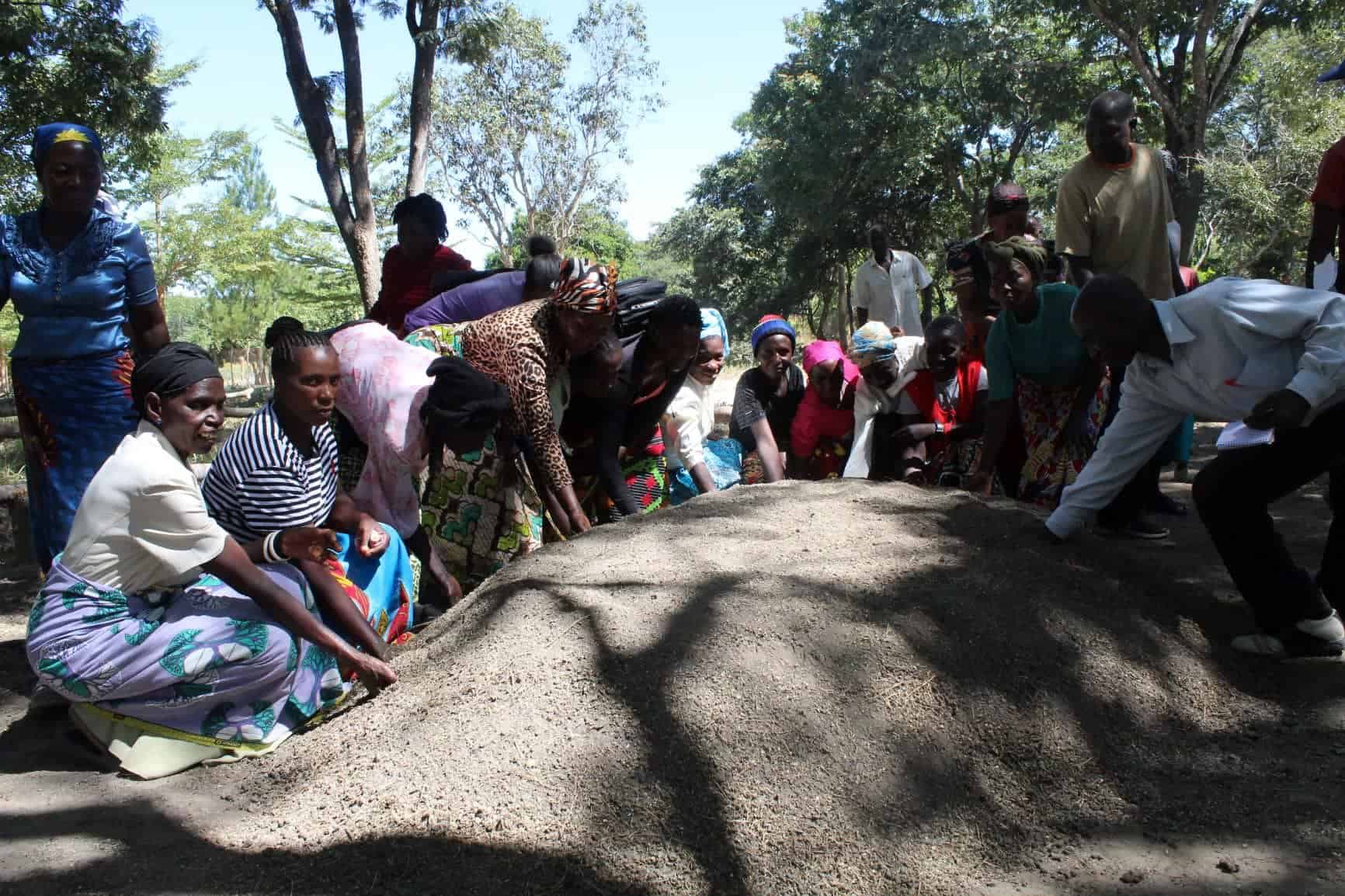
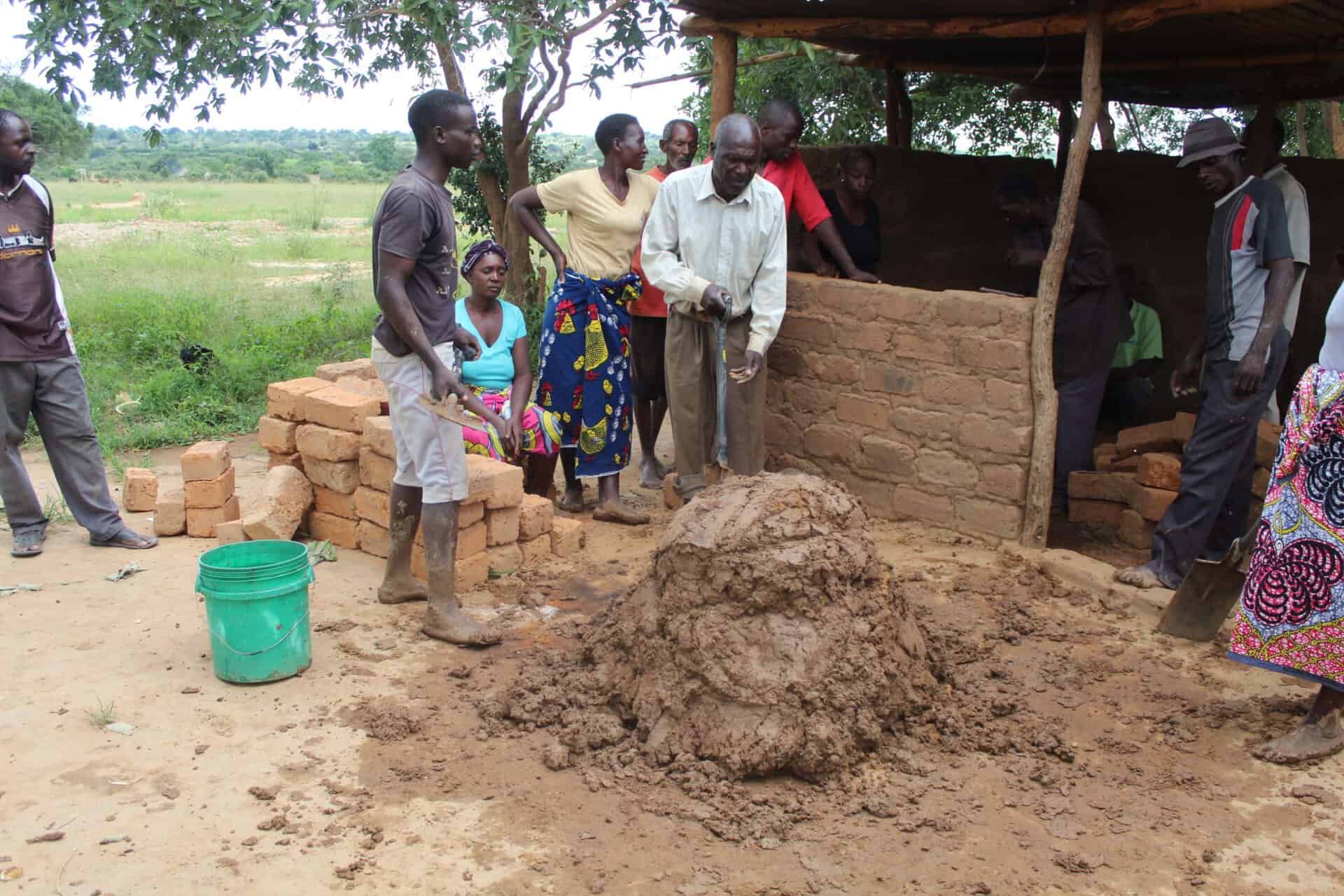
Schools are our entry points to engage with the local communities. Villagers, including the farmers, teachers, parents and youth, joined workshops in topics such as agroecology, rocket stoves, natural building and social enterprise.
As a result, 8 social enterprises were created in these local communities. The youth is empowered, communities become more resilient to climate change, households improve their economic status.
Farmers using Bokashi natural fertiliser
A Green Economy approach
The approach consisted of a strategy for Social Enterprise development in three groups:
Production group: This group grew crops, the raw materials. Examples included lemongrass for harvesting as an essential oil, or planting drought-tolerant and perennial crops such as moringa, neem, castor beans.
Value-addition group: This group processed raw materials, transforming them into products with a higher economic value. Diversity is key, as part of one permaculture principle applied in this project.
Marketing group: This group took the final step by creatively presenting the value-added products to the market surrounding the traditional villages and across the country.
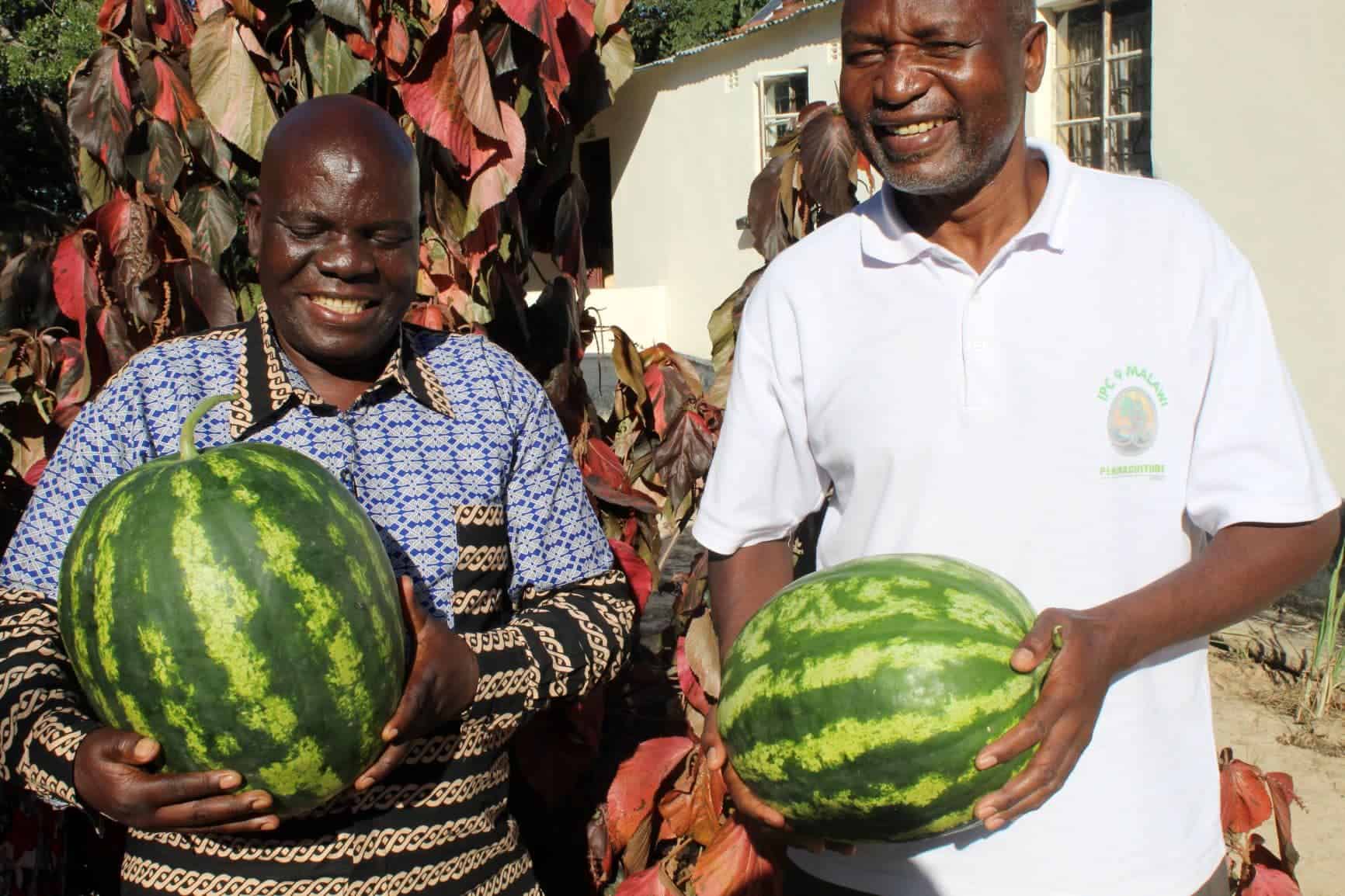
Enjoying the fruits of permaculture!
Outcomes of the Green Economy project
360+ villagers (100+ of whom were women) benefited from training in social enterprise creation
100+ farmers have adopted organic and sustainable ways of farming (such as planting climate resilient food forests)
6 schools implemented demonstrations for water conservation methods, and
8 social enterprises were established with a strong emphasis on the participation of women and vulnerable youth.
A significant increase in household income was reported for several families. Our innovative social enterprise model was the production of lemongrass oil to be sold to the international market.
Food forests were established and based in permaculture principles, and with climate resilient crops such as cassava, pigeon peas, moringa, legume trees, bambara nuts, mangoes, sweet potatoes, neem, paw paws and others. Diversity is key for climate resilient (and for good nutrition).
Generations meet at the workshop on natural building!
Learn more about GEN’s Green Economy project
We kindly invite you to join us in a Free webinar next Wednesday on the 18th November at 12-14 GMT, entitled “Greening schools and Green Economy, schools as entry points towards climate resilient communities”. Registrations are closed, but you can watch it for free. To watch, just follow the Global Ecovillage Network facebook page and switch notifications on.
We have done other webinars on this topic in the past weeks and it has been a success, with dozens of people from all over the world joining us. This webinar showcased how schools can apply ecovillage principles in their learning as well as the rich potential for community development through schools. We invited dynamic educators bringing ecovillage principles and methodologies to formal and informal learning environments:
Greening schools and Green Economy Manual
Another outcome of the project is that GEN created a Manual on this very topic that will be launched in soon (by mid November) and available for download in our website.
Join our newsletter to be notified when the Greening schools and Green Economy Manual is available:
[gravityform id=”6″ title=”false” description=”false”]
Know more about the Rescope Programme
The ReSCOPE Programme was born out of the pioneering work of promoting Permaculture in schools in Zimbabwe in the mid 1990’s which led to the establishment of the Schools and Colleges Permaculture (SCOPE) Zimbabwe. In 2006 the ReSCOPE Programme was set up to promote this work in the region of east and southern Africa. Now the programme has country chapters in Kenya, Malawi, Uganda, Zambia and Zimbabwe.
Learn more about the project on this inspiring interview with Mugove Nyika, the director of ReScope when they were awarded the Hildur Jackson Award in 2019.
Green Economy and Social Enterprise for Climate Resilient Communities Funding
Our pilot project in Zambia has been funded by the Scottish Government, via the Climate Justice Innovation Fund from the Corra Foundation. Much appreciation for them, for allowing us to create visible change for the lives of hundreds of people in Zambia.
This project has seen several UN SDGs (Sustainable Development Goals) being tackled, such as 1) No poverty, 2) Zero hunger, 4) Quality education, 5) Gender equality, 7) Affordable and clean energy, 8) Decent work and economic growth, 11) Sustainable communities, and 13) Climate action.
Do want to support our work? Consider becoming a Friend of GEN!
As a Friend of GEN, you become a sustaining contributor to the work of the Global Ecovillage Network. Together we can continue to implement sustainable solutions and help catalyze the power of community for a regenerative future.
By becoming a Friend of GEN you will receive exclusive benefits to bring you closer to GEN’s work on the ground and connect with communities worldwide. Friends of GEN sustain the work of the Global Ecovillage Network through creating a grassroots community of supporters for ecovillage solutions and collaboration. Learn about the levels of giving below and find the one that is right for you.
[donation_form button=”Become a Friend of GEN!” type=”monthly” amount=”10″]
There are moments when a dream stops being something you carry alone and becomes something the world can finally hold. This is one of those moments. The laun…
Presenting Proven Climate Solutions: 30 Years of Regenerative Living The Global Ecovillage Network (GEN) brings nearly three decades of proven climate so…
By Cynthia Tina, founder of Ecovillage Tours and author of Intentional Community: How to Choose Community Living for Better Housing, Health, and Happiness On…
The flag defines if the Security Firewall was passed.
Session
spbc_cookies_test
Cookie to test cookies so we know that everything working properly
Session
ct_sfw_
Group of cookies used for our SpamFireWall technology.
Session
ct_
Group of cookies used for storing dynamic variables from browser
Session
apbct_
Group of cookies which are set from backend and contain information about the current user
Session
apbct_cookies_test
Сookie to validate other cookies, so they can’t be spoofed.
Session
ct_timezone
Used in order to detect spam and improve the website's security.
Session
ct_ps_timestamp
Used in order to detect spam and improve the website's security. Does not store visitor specific data.
session
ct_pointer_data
Used in order to detect spam and improve the website's security. Does not store visitor specific data.
session
ct_has_scrolled
This cookie is used to distinguish between humans and bots.
session
ct_fkp_timestamp
Used in order to detect spam and improve the website's security. Does not store visitor specific data.
session
ct_check_js
Used in order to detect spam and improve the website's security.
session
apbct_antibot
This cookie is used to distinguish between humans and bots. This is beneficial for the website, in order to make valid reports on the use of their website.
session
spbc_2fa_passed
Dashboard. Flag defines if Two-Factor Authentication was passed.
Session
spbc_log_id
Dashboard. User identification.
Session
spbc_timer
Dashboard. Time spent on the page.
Session
These cookies are needed for adding comments on this website.
Name
Description
Duration
comment_author_url
Used to track the user across multiple sessions.
Session
comment_author_email
Used to track the user across multiple sessions.
Session
comment_author
Used to track the user across multiple sessions.
Session
These cookies are used for managing login functionality on this website.
Name
Description
Duration
wordpress_test_cookie
Used to determine if cookies are enabled.
Session
wordpress_sec
Used to track the user across multiple sessions.
15 days
wordpress_logged_in
Used to store logged-in users.
Persistent
Statistics cookies collect information anonymously. This information helps us understand how visitors use our website.
Google Analytics is a powerful tool that tracks and analyzes website traffic for informed marketing decisions.
Used to distinguish new sessions and visits. This cookie is set when the GA.js javascript library is loaded and there is no existing __utmb cookie. The cookie is updated every time data is sent to the Google Analytics server.
30 minutes after last activity
__utmc
Used only with old Urchin versions of Google Analytics and not with GA.js. Was used to distinguish between new sessions and visits at the end of a session.
End of session (browser)
__utmz
Contains information about the traffic source or campaign that directed user to the website. The cookie is set when the GA.js javascript is loaded and updated when data is sent to the Google Anaytics server
6 months after last activity
__utmv
Contains custom information set by the web developer via the _setCustomVar method in Google Analytics. This cookie is updated every time new data is sent to the Google Analytics server.
2 years after last activity
__utmx
Used to determine whether a user is included in an A / B or Multivariate test.
18 months
_ga
ID used to identify users
2 years
_gali
Used by Google Analytics to determine which links on a page are being clicked
30 seconds
_ga_
ID used to identify users
2 years
_gid
ID used to identify users for 24 hours after last activity
24 hours
_gat
Used to monitor number of Google Analytics server requests when using Google Tag Manager
1 minute
_gac_
Contains information related to marketing campaigns of the user. These are shared with Google AdWords / Google Ads when the Google Ads and Google Analytics accounts are linked together.
90 days
__utma
ID used to identify users and sessions
2 years after last activity
__utmt
Used to monitor number of Google Analytics server requests