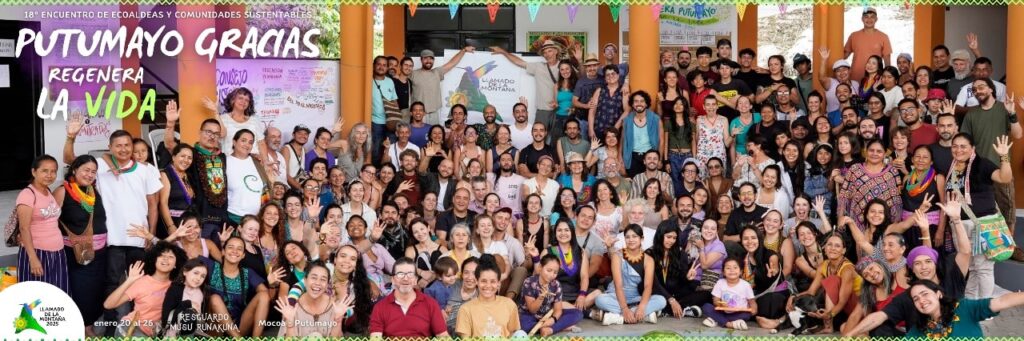
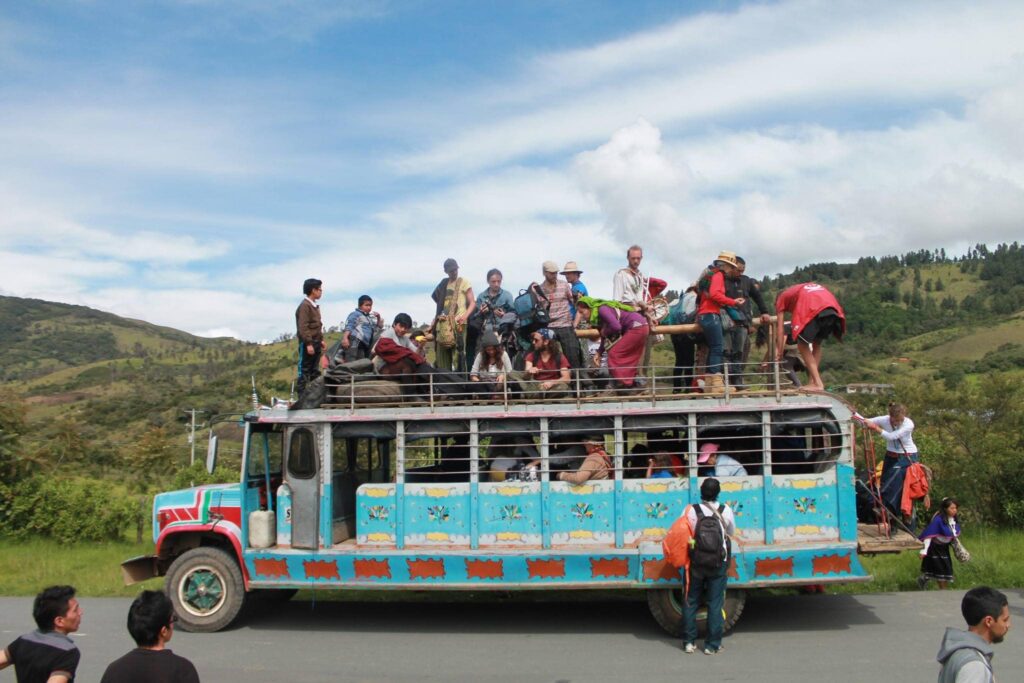
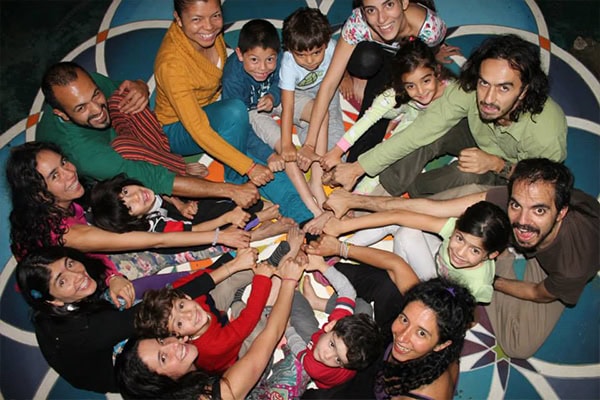
Group photo of diverse people at CASA COLOMBIA event for sustainable settlement network.

CASA COLOMBIA - COUNCIL OF SUSTAINABLE SETTLEMENT OF LATINAMERICA,. COLOMBIAN NODE

  • Communities

About the Communities

  • Established
  • Spanish
  • Ecological
  • Rural

Founding year

  • 2000

What we do

The network began in 2000 with the support of the Rainbow Caravan for Peace. Together, we organized ENA (Ecovillage Network of America) Council meeting and the first Colombian workshops on ecovillages, consensus decision-making, and appropriate technologies. In 2006, we hosted the First Call of the Mountain, a Colombian gathering of ecovillages and alternative communities, and launched RENACE Colombia—Colombian Network of Ecovillages and Alternative Communities.
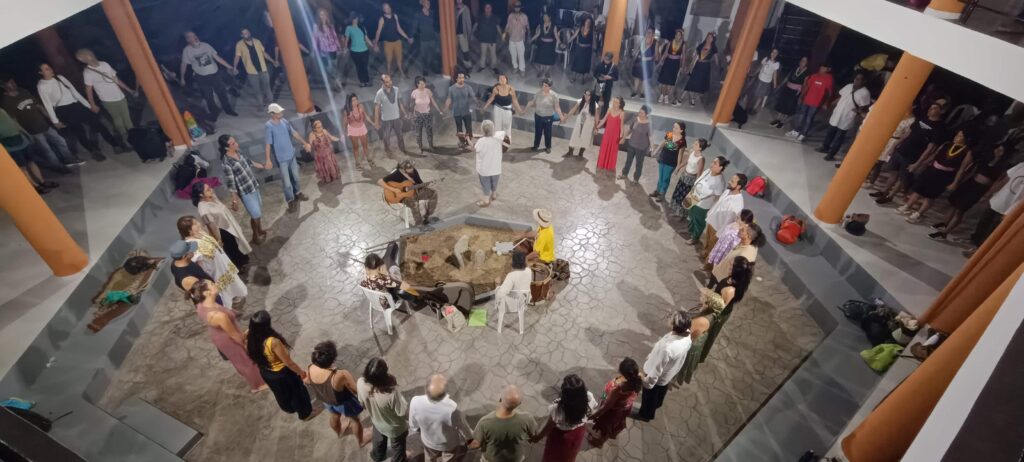
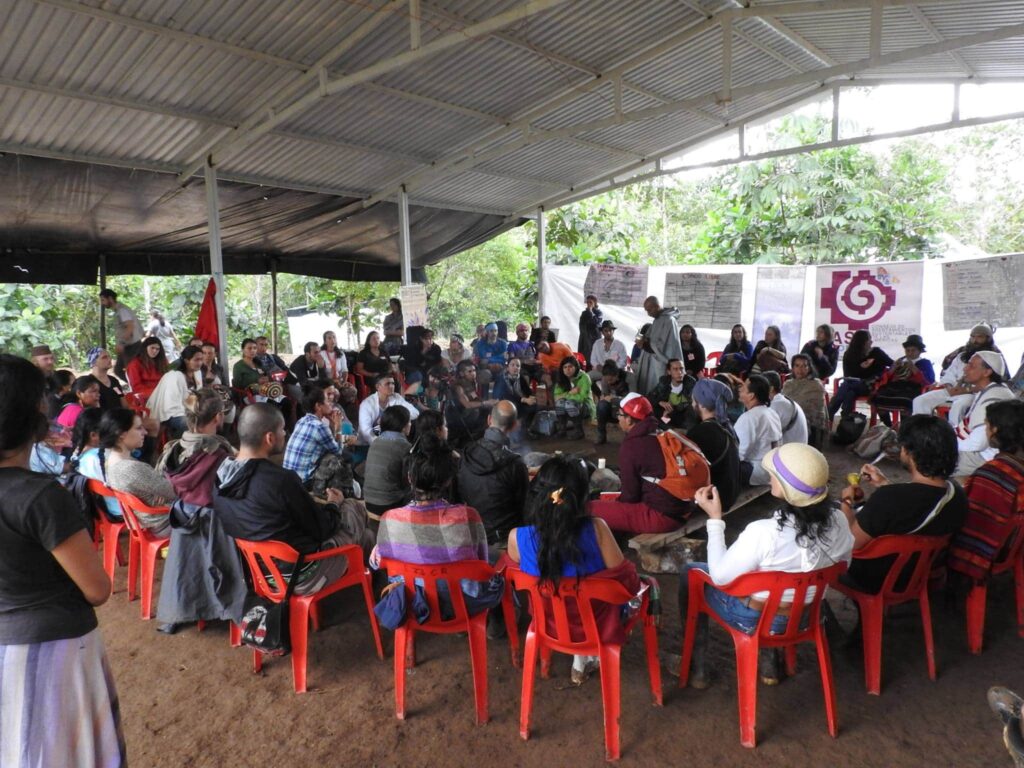
Since then, the Call has been held annually, drawing 300 to 400 attendees yearly, over its history, more than 2,000 individuals from over 150 organizations have participated—both ecovillagers and those seeking life changes—not only from Colombia but also from abroad. The Sixth Call of the Mountain in 2012 was also the first Ibero-American Ecovillage Gathering. Three days before the Call, ENA delegates met at the same venue; during this meeting, CASA Latina—the Sustainable Settlements Council of Latin America—was founded as GEN’s Latin American region. National networks were rebranded as national CASAs, and RENACE Colombia became CASA Colombia, with more than 98 organizations active in the last three years. We continue organizing the Call of the Mountain, and in 2026, we will celebrate the 19th Call and our 20th anniversary.
The venue rotate annually, including ecovillages, sustainable settlements, and indigenous reserves. We have catalyzed new initiatives, strengthened social cohesion, and fostered a tribal sense of belonging—a national family deeply connected to CASA Colombia, CASA Latina, and GEN. Our mission remains: raising awareness of regeneration, sustainability, and the Rights of Mother Earth.
CASA Colombia has been recognized by CASA Latina for its leadership and functions as the legal headquarters of the entity. The entire board of directors is based in Colombia, and several members of CASA Colombia hold active roles within GEN; three of them have served as President or Vice President on GEN’s Board.

  • Purpose
  • Ecological
  • Languages
  • Spanish
  • English
  • Community type
  • Ecovillage

Commemorative dates

  • January 1, 2000
  • Started living together

Video

Gallery

  • Open to new members
  • Open to visitors
Total
90

How to join

We are a network of ecovillages, not a single one. Each ecovillage has its own membership or onboarding process, and those interested must contact each ecovillage directly.
To become a member of the CASA Colombia network, the following criteria must be met:
Be a human settlement, organization, community, or initiative—or an individual who promotes and practices the creation of regenerative lifestyles and resilient societies in transition.
Have participated in at least three Call of the Mountain gatherings organized by CASA Colombia.
Have attended a CASA Colombia general assembly and expressed the desire to be part of the network during that event.
Have written endorsement and recommendation from another active member or co-founder of the CASA Colombia network.
Submit the Colombian membership agreement document.
Appoint a liaison person for communication with CASA Colombia.
Not have any active warnings or sanctions from CASA Colombia’s Vision Guardians group.
Applicants must also submit a membership request by completing a form and sending the signed membership agreement.

Guest Book

Written reviews are available for plus members. Click here to upgrade.

CASA COLOMBIA - COUNCIL OF SUSTAINABLE SETTLEMENT OF LATINAMERICA,. COLOMBIAN NODE

Promoted Needs and Offers

  • Events
2 months ago

IERI (International Ecovillage Research Institute) Research Lab

Logo of the Global Ecovillage Network with a stylized flower design.
The Research Lab is a new space for connection, exchange, and inspiration, bringing together researchers, practitioners, and students interested in ecovillages and regenerative communities. Our intention is to create a vibrant laboratory where we can learn from one another, strengthen collaborations, and advance collective knowledge. 📅 Date: Wednesday September 23rd🕓 Time: 10:30 Brazil / 13:30 UTC / 15:30 CEST (1.5 hour) Zoom link: https://unibas.zoom.us/j/61404061682   Register Here: https://unibas.zoom.us/meeting/register/io_jg3SJQGqRAaIi0eXazw Transitions towards the pluriverse: Place, difference, alliances and autonomy in two Latin American ecovillages Presented by Dr. Rebeca Roysen Professor at the Graduate Program in Tourism and Hospitality, Co-leader of the Sustainability Transitions and the Pluriverse of Alternatives (TranS-PlurAL) research group, Universidade do Vale do Itajaí (UNIVALI), Brazil This study proposes an alternative analytical framework for sustainability transitions research by drawing on critical scholarship on grassroots innovations and post-development studies. Rather than focusing on scalable innovations and socio-technical regime change, it introduces the concept of Transitions Towards the Pluriverse (TTP)—a bottom-up, decolonial, and context-sensitive approach that recognizes the diversity of transition pathways and places local communities and grassroots innovations at the center of transformations. Through two case studies of Latin American ecovillages, Dr. Roysen explores four key analytical dimensions—place, difference, alliances, and autonomy—to examine how ecovillages promote (or sometimes fail to promote) transitions towards the pluriverse. Whether you are an experienced researcher, a practitioner, or a student beginning your journey, you are warmly welcome to join us. We look forward to learning, exchanging ideas, and building this community together. Recent publications by Dr. Rebeca Roysen Roysen, R., Pereira Prado, M. M., Bruehwiler, N., Kos, L., & Koehrsen, J. (2026). Transitions towards the pluriverse: Place, difference, alliances and autonomy in two Latin American ecovillages. Sustainability Science. Roysen, R., Ayala, D. H. F., Ramos-Mejía, M., Kos, L., Bruehwiler, N., & Koehrsen, J. (2026). Replicating grassroots innovations in the Global South: A case study of ecovillages for marginalized groups in Colombia. Environmental Innovation and Societal Transitions. Roysen, R., Fagundes, G. M., Kos, L., Bruehwiler, N., & Koehrsen, J. (2025). Building a World-Ship: A decolonial approach to just energy transitions. Human Geography. More information: Ecovillage Research Global Ecovillage Network 
Need
Offer
  • Community Seekers
2 months ago

FOUNDING MEMBERS WANTED – OFF-GRID COMMUNITY – EASTERN CAPE, SOUTH AFRICA

Ecovillage Network logo with green leaves inside a circle.
I am looking to bring together 6–8 like-minded couples to create a small, self-sufficient, off-grid community in the Eastern Cape., South Africa. Rather than buying land first and then looking for people to join, the idea is to form the founding group first and choose the land together. By combining our resources, skills and experience, we may be able to secure a better property and create something that genuinely suits the whole group. This is intended as a long-term community, not a holiday retreat. It will involve work, responsibility, cooperation and a willingness to learn and contribute. We are particularly interested in retired or semi-retired couples without dependants who are still physically capable and have practical skills or experience in areas such as: Farming, food growing or permaculture • Livestock • Solar, electrical, IT and off-grid systems .  Water farming and Waste management • Mechanical/engines/general maintenance • Healthcare or nursing • Project management, organisation and conflict resolve Each couple would be expected to bring both a useful skill/experience and a financial contribution. The exact structure and investment would be developed collectively by the founding group, with appropriate legal agreements protecting everyone’s interests and possibly managed under a professionally set up Trust Fund There would also be a trial/assessment period before a commitment. The most important thing is finding the right people — practical, trustworthy, respectful and genuinely interested in building a simpler, sustainable life together. If this sounds like something you would seriously consider, please get in touch and tell me a little about yourselves, your skills, your current situation and why this lifestyle appeals to you. The land hasn’t been bought yet — that’s deliberate. Let’s find the right people first, and then find the right place together. I can be contacted on- Ke******@***oo.com I’m eagerly waiting to hear from you

Update to a Public Profile

  • Log in
  • Go to your profile page
  • Toggle on the "Put me on the People Map"
  • Save your profile

Information

Communities

A residential project: people live here as their primary home.

Organizations

An institution, business, network, or project that isn’t a residence (e.g. a learning center, farm, or network with no one living there full-time).

GeN logo with blue flower motif and plus sign in centre.

Become a + Community Member

  • Find people based on your community tool
  • Post Needs & Offers Listings and Events
  • Access to resources in the Members Library
  • Member badge on your community profile
  • View communities detailed reviews
  • Create Private Groups
I am an official member of this community
Disclaimer
I affirm that my information is accurate and I am authorized to manage this listing

Free Plan

Free plan
Free

Intentional Advertising

  • Subtotal

    {{ currencyFormat( pricing_summary.total_amount ) }}

GeN logo with blue flower motif and plus sign in centre.

Become a + Member

  • Find communities based on your profile tool
  • Post Needs & Offers Listings and Events
  • Access to free resources in the Members Library
  • Member badge on your profile
  • View communities detailed reviews
  • Create Private Groups