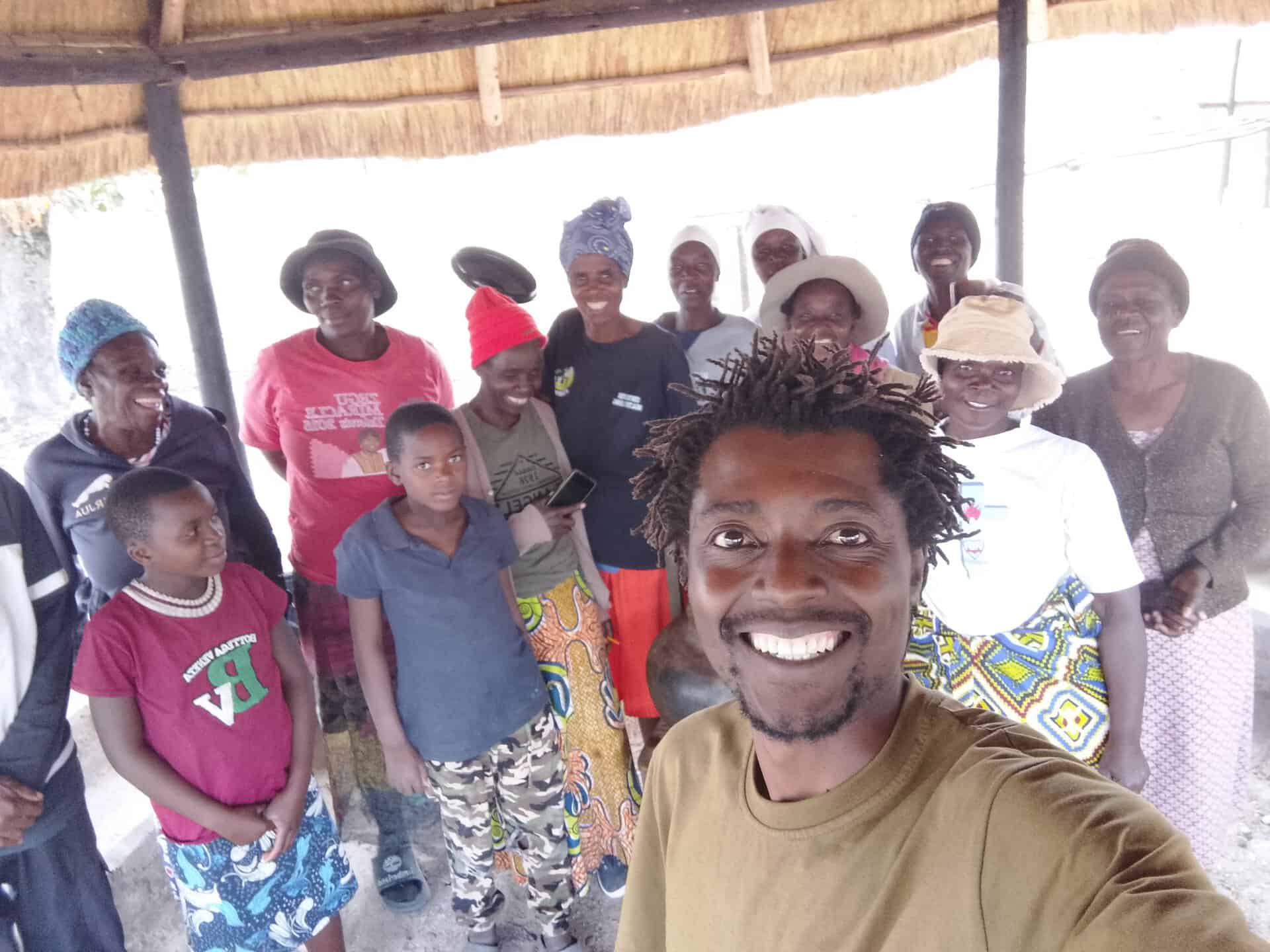
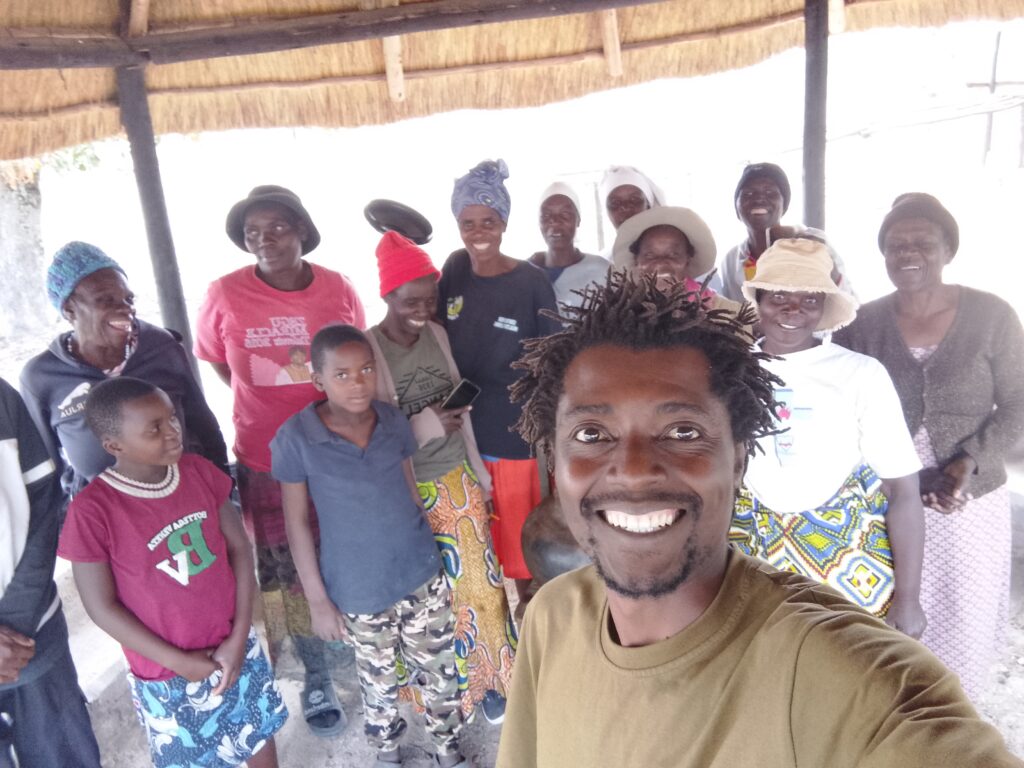
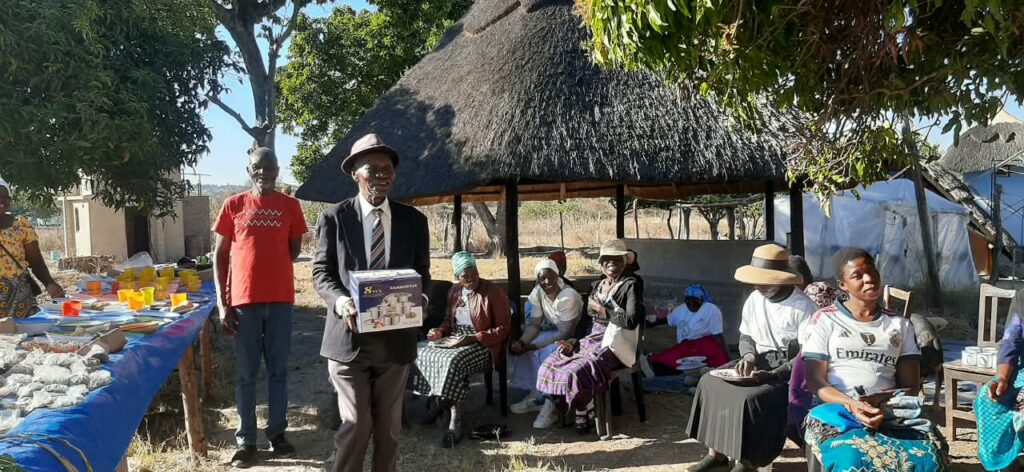
Group of smiling people in a shaded outdoor setting at Gudza Ramuka Ecovillage.

Gudza Ramuka Ecovillage

  • Communities

About the Communities

  • Established
  • 4 Areas of Regeneration
  • Rural

Founding year

  • 2020

What we do

An Intentional community with the focus to integrate the whole community while reviving and transforming the degraded sad soils into highly productive and self reliant ecosystems. This is achieved through the use of different collaborative tools like permaculture, agroecology and natural farming concepts and principles. We recognize the immense potential in working with marginalized groups such as women and youth, providing a space for them to be heard through our community meetings. Bringing the strength of diversity including to the ecosystem elements and production systems.

Our Vision

Fostering community resilience, ecological restoration and scaling up community based knowledge sharing.

Our Mission

We strive to promote local cultural lifestyles and supporting local indeginious knowledge systems to create shock absorbers in terms of disasters.

  • Purpose
  • 4 Areas of Regeneration
  • Community type
  • Ecovillage
  • Sustainability practices
  • Ecosystem restoration
  • Sustainability education and community engagement
  • Water conservation and management
  • Regenerative agriculture or permaculture
  • Permaculture design
  • Natural / low-impact building
  • Ecosystem
  • Grassland/Savanna

Gallery

  • 35 Total members
  • Open to new members
  • Open to visitors
  • Open to volunteers
Total
30

How to join

Exchange visits, touring, volunteering through applying on the addresses and contacts provided

Basic expectations or agreements for members

To attend meetings, use community tools with care. Sharing and caring

Primary decision-making authority

  • All Community Members Together

The whole membership decides collectively.

Decision-making process

  • Full Consensus

Everyone must agree before moving forward.

Governance structure

  • Collaborative/Horizontal

Power and responsibility are shared relatively equally among members.

Economic model

  • Community Land Trust Models

Land is owned collectively by the community to ensure long-term affordability and prevent speculation.

Economic scenarios for this community

  • There are job opportunities with private employers within the community

Vehicle accessibility

  • It would be easy / doable to live in this community without a car
  • Spiritual Practices
  • Mindfulness

DEI and anti-oppression training

  • No

Internal and external practices

  • Organizes trainings and workshops for your members

Age demographics

  • Family-focused (many children and parents)

Racial / ethnic demographics

  • Mostly homogeneous (primarily one background)

Socioeconomic and wealth composition

  • Mostly working class / lower income

Property status

  • Privately owned

Property owner

  • By a Community Land Trust or some other kind of nonprofit

Ecosystem

  • Grassland/Savanna

Open landscapes with predominantly grass vegetation
Subtypes include tropical, temperate, and desert grasslands
Examples: African Savannas, North American Prairies

Setting

  • Rural

Countryside locations with significant distance from urban centers.

Community type

  • Ecovillage

    Integrated communities designed around ecological principles with sustainable living practices.

Community type

  • Partially built or remodeled with recycled or environmentally friendly materials, and/or using natural building methods

Sustainability approach

  • Ecosystem restoration
  • Sustainability education and community engagement
  • Water conservation and management
  • Regenerative agriculture or permaculture
  • Permaculture design
  • Natural / low-impact building

Land practices in our community

  • The community practices permaculture
  • The community is working to restore natural habitat

Community type

  • Partially built or remodeled with recycled or environmentally friendly materials, and/or using natural building methods

Some or all of the buildings are...

  • Partially built or remodeled with recycled or environmentally friendly materials, and/or using natural building methods

Self-produced energy

  • Up to 33%

Energy production methods

solar energy

Energy sources used

  • Radiant Solar
  • Solar hot water
  • Biomass (from wood or other organic materials)

Self-produced food

  • Up to 33%

Food production methods

Agroecology/ subsistence farming

Local, organic, or fair trade food

  • Up to 33%

Food purchase methods

conventional trading systems

Food systems

  • Community garden
  • Food forest
  • Seed saving / exchange

Renewable water use

  • Up to 33%

Water recycle methods

grey water use and redirecting.

Source of water

  • Well water
  • Rainwater capture and storage for use (barrels, cisterns, etc.)
  • Greywater capture and storage for use

Wastewater management

  • Septic system

Water conservation practices

  • Rainwater capture
  • Composting toilets

Waste management practices

  • Composting
  • Recycling program
  • Land area size
    800sqm
  • Land allocated for food production
    1500sqm
  • Land used for biodiversity enhancement
    1500sqm
  • Land used for tree planting
    1500sqm

Guest Book

Written reviews are available for plus members. Click here to upgrade.

Gudza Ramuka Ecovillage

Promoted Needs and Offers

  • Events
5 days ago

Womens Tiny Mud House Workshop

Ecovillage Network logo with sun and moon symbols in purple.
Ecovillage Network logo with green leaves inside a circle.
Logo of the Global Ecovillage Network with a stylized flower design.
I’m Na, a regenerative designer, earthen builder and educator with the Global Ecovillage Network. I’m passionate about helping people step into action, however big or small. A women’s build I joined back in 2015 was a much needed transformational experience that set me on this path. Offering this workshop is a way of coming full circle and passing that same spark on. Sat 16 to Fri 22 January 2027 This is a hands-on workshop where you’ll learn earthen building techniques and build a tiny house from the earth up, with your own hands. Why tiny? A tiny house requires careful, creative design and asks – what space do we actually need to live? It uses far less material and takes less time to build, so it’s practical and economical. This also allows us to experience all stages of a house build, from design and brick-making to building and finishing. You’ll get your hands into every part of the build. We’ll work with mud brick (adobe), cob and bamboo, then earth plasters and finishes. This workshop is open to women of all ages and abilities are welcome. Come if you’re new and curious, if you want more practice on specific parts of a build, or simply to play in the mud with wonderful people. It’s genuinely good fun. We’ll be in my little forest, a small house on the edge of a village and national park, 20 km south of Chiang Mai, Thailand. You can stay on site in simple earthen dorms or tents, and we’ll share home-cooked Thai food in the cool, bright days of Thai winter. Read more and register here 
January 16, 2027 00:00 – January 22, 2027 23:59
  • Events
3 weeks ago

British Columbia Ecovillage Tour: August 7-14, 2027

Ecovillage Network logo with sun and moon symbols in purple.
Ecovillage Network logo with green leaves inside a circle.
Ecovillage Network logo with a heart-shaped handshake symbol.
Logo of the Global Ecovillage Network with a stylized flower design.
Logo of the Global Ecovillage Network with interconnected figures.
August 7–14, 2027 | British Columbia, Canada Experience community and regenerative living on Canada’s spectacular West Coast Spend eight days exploring some of British Columbia’s most inspiring ecovillages, cohousing neighborhoods and regenerative farms as you journey from the fertile Fraser Valley to Vancouver Island and Salt Spring Island. Visit communities including Abundance Community Farm, Yarrow Ecovillage, Fraser Common Farm & Glorious Organics, Creekside Commons Cohousing, O.U.R. Ecovillage and the Quarry Collective & Chorus Frog Organic Gardens. Meet founders and residents and experience a diverse range of approaches to intentional living—from multigenerational cohousing and cooperative farming to permaculture, natural building and innovative models for local food production. Learn firsthand about collaborative governance, regenerative agriculture, ecological stewardship and the successes and challenges of creating resilient communities over the long term. Along the way, connect with local Indigenous culture, walk among the ancient trees of Cathedral Grove, cross the Salish Sea by ferry and experience the slower pace of British Columbia’s coastal islands. With shared meals, workshops and overnight stays in some of the communities, the tour offers an immersive opportunity to experience community life rather than simply observe it. A great fit for: Prospective community members, aspiring community founders, people interested in cohousing, permaculture and regenerative agriculture, and travelers looking to combine meaningful community experiences with the spectacular landscapes of Canada’s West Coast. Learn more about this tour: https://www.ecovillagetours.com/british-columbia
August 7, 2027 00:00 – August 14, 2027 23:59
Offer

Update to a Public Profile

  • Log in
  • Go to your profile page
  • Toggle on the "Put me on the People Map"
  • Save your profile

Information

Communities

A residential project: people live here as their primary home.

Organizations

An institution, business, network, or project that isn’t a residence (e.g. a learning center, farm, or network with no one living there full-time).

GeN logo with blue flower motif and plus sign in centre.

Become a + Community Member

  • Find people based on your community tool
  • Post Needs & Offers Listings and Events
  • Access to resources in the Members Library
  • Member badge on your community profile
  • View communities detailed reviews
  • Create Private Groups
I am an official member of this community
Disclaimer
I affirm that my information is accurate and I am authorized to manage this listing

Free Plan

Free plan
Free

Intentional Advertising

  • Subtotal

    {{ currencyFormat( pricing_summary.total_amount ) }}

GeN logo with blue flower motif and plus sign in centre.

Become a + Member

  • Find communities based on your profile tool
  • Post Needs & Offers Listings and Events
  • Access to free resources in the Members Library
  • Member badge on your profile
  • View communities detailed reviews
  • Create Private Groups