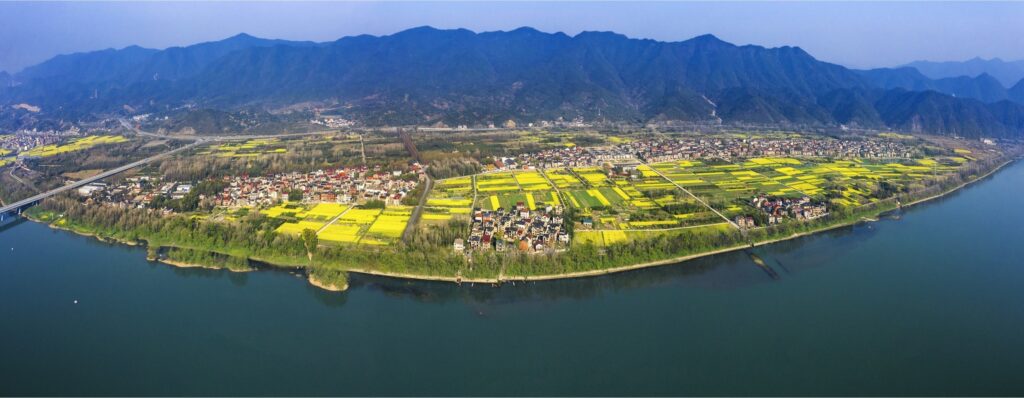
MeiRong Village(梅蓉村)

Global Ecovillage Network logo with a flower and leaf design in purple and blue.
  • Communities

About the Communities

  • Established
  • Chinese (Simplified)
  • Ecological
  • Rural

Founding year

  • 2021

What we do

MeiRong ecovillage is a loving community, where we take care of local resources and respect the limitations of the nature. We promote a sustainable value within the community, with self-cultivated food, exchange market, get together festivals, and more. Instead of stress and materialism, our village provides for a nurturing relationship, self-realisation & awareness.
MeiRong Village used to be a barren continent, which was formed by flooding and sedimentation in the past dynasties. It is surrounded by water and overgrown with thorns and grasses. There were tigers and wolves in the early years. The village was repeatedly invaded by river water due to its proximity to the Fuchun River, and crops were not harvested. Therefore, the predecessors planted fruit forests, especially plum trees, and Sui Ya called Meizhou. After the fifteenth year of Emperor Qianlong in the Qing Dynasty (1750), plum trees were planted on the flat ground. There are many kinds of bayberry on the mountain. The plum blossom bayberry is famous, and green plum has become the most important economic crop. During the War of Resistance Against Japan, large areas of plum trees were destroyed, and villagers planted peaches, plums, chestnuts, oranges, and pears. During the period of agricultural cooperation in the 1950s, a fruit professional team was established to cultivate and manage 213 acres of fruit trees in the mountain forest. In 1980, about 30 acres of mulberry seedlings were added to the sericulture group. From 1967 to 1976, 230 acres of citrus groves were built in the village, which was contracted to 7 professional groups. The fruit output in 1992 was 297 thousand kilograms.
The village includes more than 2,000 acres of arable land, more than 6,000 acres of mountain forests, and more than 80 ancient buildings. Among them, the Luo Family House, Guohouwang Temple, Gong Family Ancestral Hall, and Shukeng Ancestral Hall are county-level cultural relics protection units.

  • Purpose
  • Ecological
  • Languages
  • Chinese (Simplified)
  • Community type
  • Ecovillage
  • Land-Based Communities
  • Activities
  • Experiences

Commemorative dates

  • January 1, 2021
  • Started planning
  • January 1, 2021
  • Started living together
  • Not open to new members
  • Open to visitors
Total
3200

Guest Book

Written reviews are available for plus members. Click here to upgrade.

Location

  • China

MeiRong Village(梅蓉村)

Promoted Needs and Offers

  • Events
10 years ago

Seeds and seedlings exhange days

Seeds and seedlings exhange days Event program: -Announce starts: 01/03/2016 -Registration finish: 08/04/2016 -Location meetings: Location meetings will be held in several locations: KADIKOY : 09/04/2016 in Yeryuzu Association at 12:00-14:00 – Hasanpasa mah. Sogutlucesme Cad. No: 196/3 MERTER : 10/04/2016 in Karsi Kapi Association at 12:00-14:00 – Mete Sok. Baris Apt. B Blok No:8/6D TAKSIM : 16/04/2016 in Ek Bic Ye Ic at Gumussuyu Mahallesi, Inonu Cad. No 9/A, Beyoglu BOSTANCI : 17/04/2016 in Tohum Parki at 12:00-13:00 – 50 meter to the East direction from Bostanci Ferry Pier USKUDAR : 30/04/2016 in Kuzguncuk Bostani at 12:00-13:00 – Kuzguncuk LEVENT : 08/05/2016 in Kahve Dunyasi in Levent Carsi -12:00-13:00- Levent – Seeds and seedlings exhange day: 22/05/2016 in Yeryuzu Association at 12:00-14:00 – Hasanpasa mah. Sogutlucesme Cad. No: 196/3 Detailed info (Turkish): http://yeryuzudernegi.org/projedetay.php?id=51 Coordinators: SULE GONULSUZ sulegonulsuz@hotmail.com NURIYE KAYALI kayalinuriye@gmail.com We use local seeds and we provided those seeds from people who make organical farming. After we procure those seeds, we put them on a cycle. We organized “Seed Exchange Days”, where people could meet and exchange their seeds, their knowledge and experiences. We tried to take it one step further and we are trying to categorize the seeds. For example, -there is a bean seed. But which type of bean seed is it? Or we try to categorize the seeds according to their durabilty in which city they could grow. We believe that all the seeds in the World are people’s seeds and we want to share them with everyone.
  • Events
11 years ago

Ecotratamiento de Aguas Residuales

Agua es vida, el recurso más importante de todos. Desde la perspectiva de Sunseed como un centro educativo sobre la vida de bajo impacto nos gustaría ofrecerles un curso para aprender, profundizar e intercambiar los conocimientos teóricos y prácticos sobre el cuidado de agua. El curso va a estar enfocado principalmente en el tema de saneamiento ecológico de aguas residuales, cubriendo a la vez los aspectos teóricos de potabilización de agua y aprovechamiento de agua lluvia. Vamos a aprender como diseñar y construir un sistema completo de tratamiento de aguas grises a través de la construcción de humedales artificiales de flujo subsuperficial, en cuales se trata de la utilización de plantas acuáticas para depurar las aguas residuales que han tenido un tratamiento primario. Los humedales artificiales son canales de gravilla sembrados con las plantas depuradoras, han sido aplicadas y debidamente reguladas en varios países de Europa y ofrecen una alternativa sana y segura tanto para autogestionar los recursos de agua como poder reutilizar agua tratada en un hogar. Usando herramientas como power point, videos y charlas vamos a aprender sobre el diseño y aspectos claves para tener en cuenta construyendo nuestro sistema casero. En tiempo libre vamos a divertirnos con juegos, música y baños en una poza cercana. El curso va a estar dividido en partes teóricas y prácticas. La parte práctica va a incluir – Diseño de un sistema completo de tratamiento de aguas residuales – las tuberías, tratamiento primario (trampas de grasa y tanques sépticos), tratamiento secundario (Humedales Artificiales de Flujo Subsuperficial), riego con aguas grises. – Construcción de una trampa de grasa como el tratamiento primario – Preparación de un humedal artificial de flujo horizontal – impermeabilización y conexiones. Parte teórica va a cubrir la introducción a la potabilización de agua y aprovechamiento de agua lluvia. Para mejorar nuestra experiencia educativa vamos a definir los aspec

Information

Communities

A residential project: people live here as their primary home.

Organizations

An institution, business, network, or project that isn’t a residence (e.g. a learning center, farm, or network with no one living there full-time).

Become a + Community Member

  • Send Direct Messages and see contact information
  • Find communities based on your profile tool
  • Post Needs & Offers Listings and Events
  • Access to resources in the Members Library /// like vetted documents uploaded by communites (e.g. bylaws )
  • Member badge on your profile
  • View communities detailed reviews
  • Create Private Groups
I am an official member of this community
Disclaimer
I affirm that my information is accurate and I am authorized to manage this listing

Free Plan

Free plan
Free

Intentional Advertising

  • Subtotal

    {{ currencyFormat( pricing_summary.total_amount ) }}

Become a + Member

  • Send Direct Messages and see contact information
  • Find communities based on your profile tool
  • Post Needs & Offers Listings and Events
  • Access to free resources in the Members Library
  • Member badge on your profile
  • View communities detailed reviews
  • Create Private Groups