Global Ecovillage Network banner image with nature landscape and text.

NATURALMENTE - Holistic Living

  • Communities

About the Communities

  • Established
  • English
  • Spiritual
  • Rural

Founding year

  • 2012

What we do

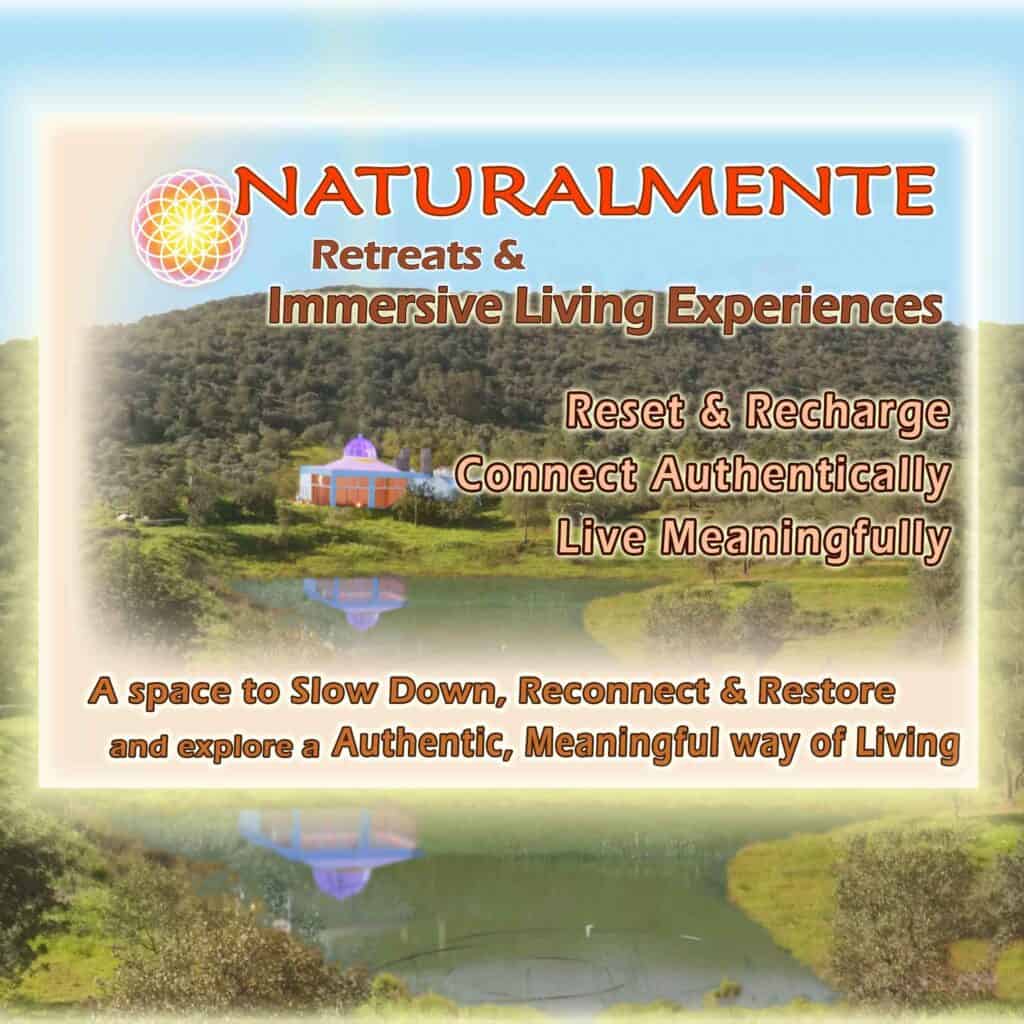
NATURALMENTE – Holistic Living Retreat

in Algarve – Portugal,

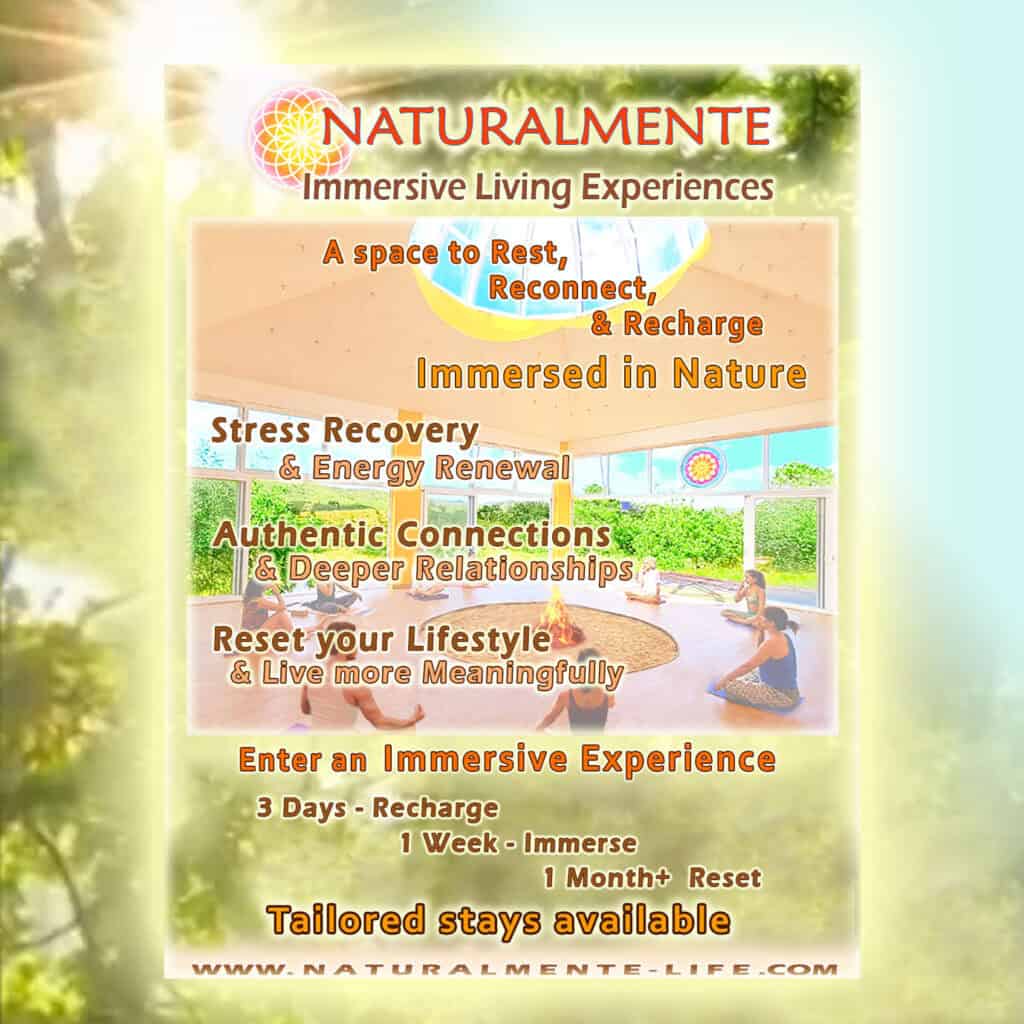
Offers immersive experiences to Reset, Recharge, Reconnect,
and explore a more balanced, Meaningful and Authentic way of Living,
immersed in Natural environment

Welcome to Join us, Living a Meaningful Life together, in a Holistic Healthy Lifestyle

– – –
We are located in a beautiful, peaceful valley, between the mountains, where you can find harmony with NATURE and connect with the SPIRIT.
– – –
We welcome GUESTS and VOLUNTEERS who feel in tune with our principles & Healthy Lifestyle
and eventually, you can join us and become RESIDENT,
Living a MEANINGFUL LIFE Together
while doing what one Loves
in Harmony with NATURE and All Beings
. . .
Welcome to JOIN US us,
Living together in a HOLISTIC HEALTHY Lifestyle
——–

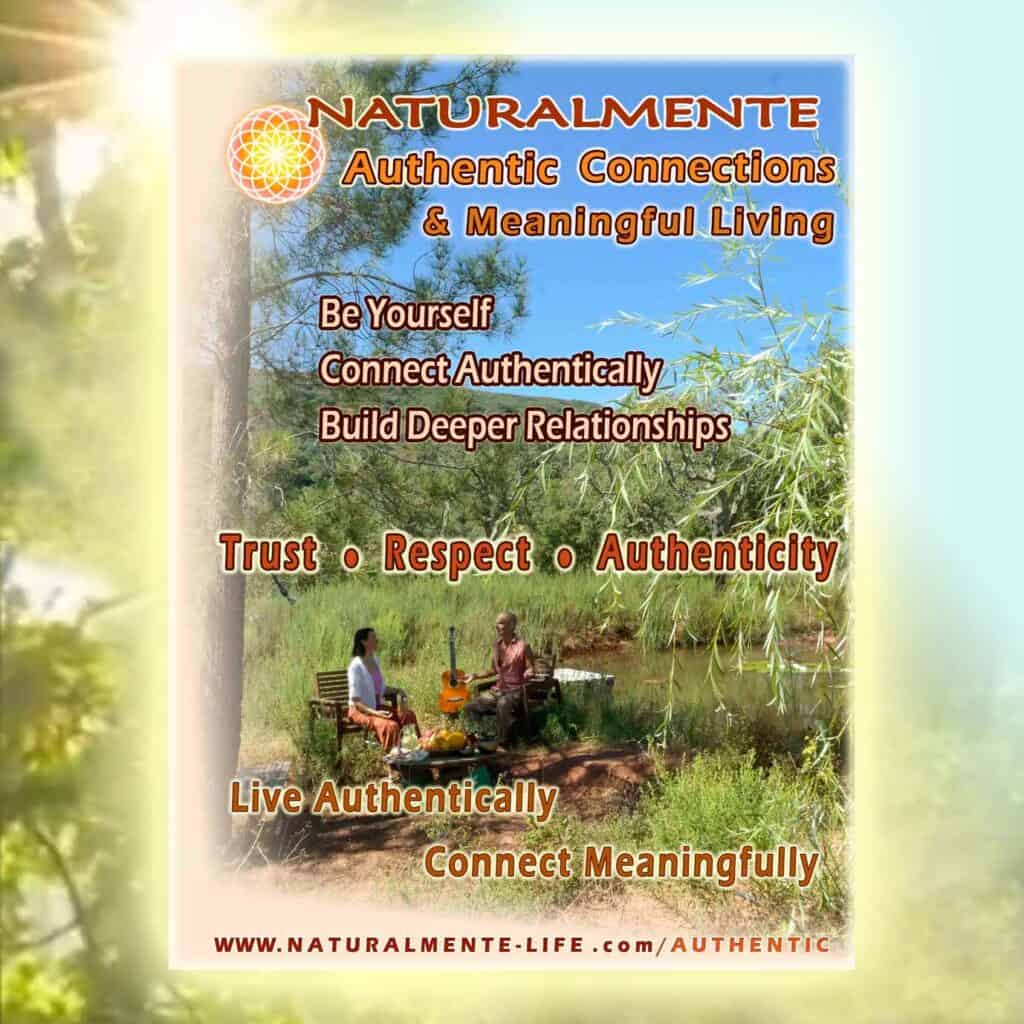
We encourage AUTHENTIC RELATIONSHIPS,
based on RESPECT and HONESTY,
and CONSTRUCTIVE, COMPASSIONATE COMMUNICATION
Where everyone is RESPONSIBLE & CARING
in a PARTICIPATIVE role
for CONTRIBUTING for a HARMONIOUS LIFE together
Encouraging everyone for AWAKENING our ESSENCE
and achieving our HIGHEST POTENTIAL,
in a NATURAL, HEALTHY way of LIVING …
Together in a LEARNING TEAM,
and in INTER-CONNECTION with other Sustainable Projects…
Inspiring our COLLECTIVE EVOLUTION …
for the CO-CREATION of a BETTER WORLD
GRATEFULLY, in ONENESS with ALL the UNIVERSE
LOKA SAMASTHA SUKHINO BHAVANTU
May All the Beings in All the Worlds Be Happy…

  • Purpose
  • Spiritual
  • 4 Areas of Regeneration
  • Ecological
  • Economical
  • Home-sharing
  • Social
  • Spiritual
  • Languages
  • English
  • Community type
  • Ecovillage
  • Land-Based Communities
  • Spiritual Retreat Centers
  • Sustainability practices
  • Ecosystem restoration
  • Renewable energy systems
  • Sustainability education and community engagement
  • Water conservation and management
  • Waste reduction / composting
  • Regenerative agriculture or permaculture
  • Permaculture design
  • Natural / low-impact building
  • Activities
  • Ecological Restoration
  • Permaculture
  • Farming
  • Construction
  • Education
  • Experiences
  • Networking
  • Others
  • Ecosystem
  • Temperate Forest

Commemorative dates

  • January 1, 2012
  • Started planning
  • January 1, 2013
  • Started living together

Gallery

  • 0 Total member
  • Open to new members
  • Open to visitors
  • Open to volunteers
Total
8

Primary decision-making authority

  • Small Leadership Group

A few people (not elected by the broader community) make the major decisions.

Decision-making process

  • Leadership Decides

A single person, couple, or small group makes most major decisions.

Governance structure

  • Founder/Leader-led

Primary authority rests with the community’s founder(s) or designated leader(s).

Conflict resolution approach

Conflict Resolution Circles inspired in Non Violent communication

Economic model

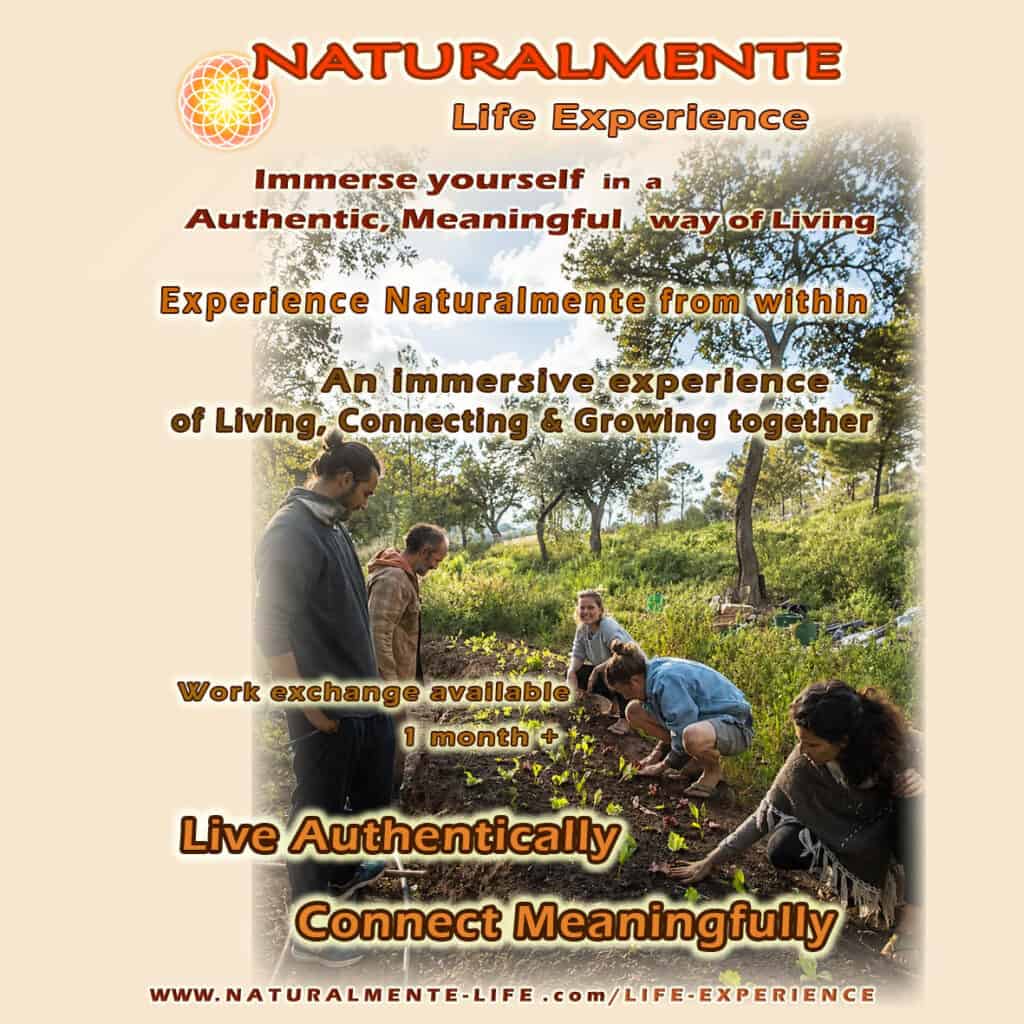
  • Work Exchange Programs

Members contribute labor instead of or in addition to monetary payments for housing and community participation.

Economic scenarios for this community

  • There is a one-time fee, investment, or share purchase to join the community separate from accessing housing
  • Members need to pay fees, dues, or similar to live there on a per month or per year basis
  • There is a labor obligation

Additional economic information

all details on our site,
page joining visiting

Vehicle accessibility

  • It would be easy / doable to live in this community without a car

Shared resources and amenities that are accessible to everyone in the community

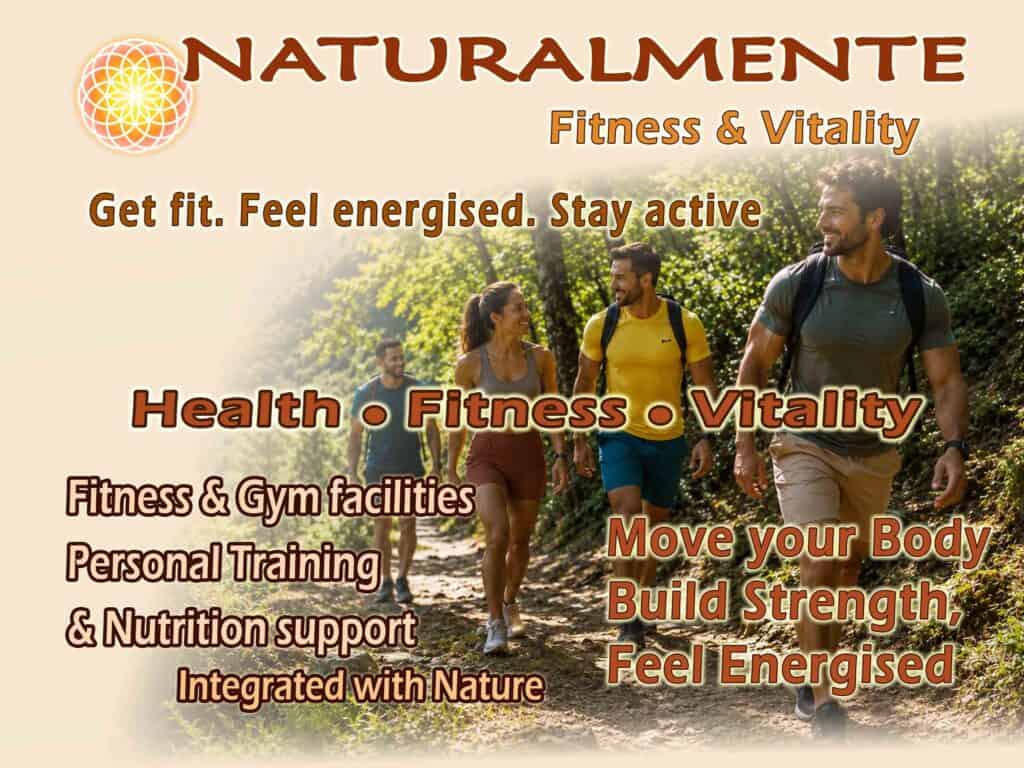
Common House, Garden(s), Swimming pond or pool, Large Scale Kitchen, Large Shala for activities, Gym and fitness facilities, Internet

Frequency of communal meals

  • Approximately 1 meal per day

Significant food acquisition practices

  • Locally sourced

Dietary type

  • Vegetarian Only

Dietary restriction

  • These restrictions are throughout the community

Nature of social activity

  • The community is pretty quiet

Educational and retreat offerings

Yoga, meditation, Chikung

Breathwork/ Rebirthing

Guided walks in nature
  wild plants – recognizing medicinal and edible properties-

Dance & Music Jams

   (and much more)

Local connectedness

  • We try to engage with our local community

Friendliness of people and local government

  • It’s a mix

Pet policy

  • No pets are allowed, except in special cases

cats ok, dogs no

Substance use culture

  • Substance use is prohibited in the community

DEI and anti-oppression training

  • Yes, some individuals

Non Violent Communication, and other conflict resolution practices

Internal and external practices

  • Creates spaces to hear marginalized voices
  • Organizes trainings and workshops for your members
  • Develops a system for addressing microaggressions

Non Violent Communication, and other conflict resolution practices

Age demographics

  • Mixed adults (few or no children)

Socioeconomic and wealth composition

  • Moderately diverse (some economic variety)

Property status

  • Privately owned

Property owner

  • By a single individual, couple, or Family Trust

Ecosystem

  • Temperate Forest

Moderate climate with distinct seasonal changes
Includes deciduous and mixed forest types
Examples: Eastern North American Forests, European Broadleaf Forests

Setting

  • Rural

Countryside locations with significant distance from urban centers.

Community type

  • Ecovillage

    Integrated communities designed around ecological principles with sustainable living practices.

  • Land-Based Communities

    Communities centered around shared land stewardship, sustainable agriculture, or connection to specific natural environments.

  • Spiritual Retreat Centers

    Residential communities focused on providing space for meditation, spiritual practice, and personal growth retreats.

Community type

  • Built or remodeled using passive solar design
  • Built or remodeled using passive house design

Sustainability approach

  • Ecosystem restoration
  • Renewable energy systems
  • Sustainability education and community engagement
  • Water conservation and management
  • Waste reduction / composting
  • Regenerative agriculture or permaculture
  • Permaculture design
  • Natural / low-impact building

Land practices in our community

  • The community practices permaculture
  • The community is working to build soil using only natural methods
  • The community is working to restore natural habitat
  • The community is working to restore the natural courses of water through the land

Community type

  • Built or remodeled using passive solar design
  • Built or remodeled using passive house design

Some or all of the buildings are...

  • Built or remodeled using passive solar design
  • Built or remodeled using passive house design

Self-produced energy

  • Up to 33%

Energy sources used

  • Photovoltaic Solar

Self-produced food

  • Up to 33%

Local, organic, or fair trade food

  • Up to 33%

Food systems

  • Community garden
  • Food forest
  • Seed saving / exchange
  • Shared kitchen or food co-op

Renewable water use

  • 33 - 66%

Source of water

  • Spring water
  • Well water

Wastewater management

  • Septic system
  • Wastewater pond

Water conservation practices

  • Greywater reuse
  • Rainwater capture
  • Efficient irrigation (drip, timed, or moisture-based systems)
  • Composting toilets

Waste management practices

  • Composting
  • Public waste collection
  • Recycling program
  • Reuse or repair systems
  • Land area size
    6 hectares
  • Land allocated for food production
    3
  • Land used for biodiversity enhancement
    3
  • Land used for tree planting
    3

Guest Book

Written reviews are available for plus members. Click here to upgrade.

Location

  • Faro District, Portugal

NATURALMENTE - Holistic Living

Promoted Needs and Offers

  • Events
7 months ago

From The Ground Up: Ecovillage Design Education

From The Ground Up is a 7-day residential Mini Ecovillage Design Education (EDE) at Entelechy, a 13.5-acre intentional community on Salt Spring Island, British Columbia, Canada. August 9–15, 2026. The course follows the Gaia Education EDE framework, covering four dimensions of sustainability: Ecological – Food systems, natural building, energy and water, appropriate technology. Social – Community governance, communication, conflict resolution, collective decision-making. Economic – Alternative economics, cooperative structures, local currencies, social enterprise. Worldview – The values, beliefs, and cultural frameworks that underlie sustainable community – why people want to live this way, and what has to shift for it to last. The course is facilitated by a graduate of both the full EDE and the Gaia Education Training of Trainers programme. It takes place at a working ecovillage where residents live what they teach. Participants stay on-site for the week in wall tents or camping. Communal meals sourced from local Salt Spring farms and Entelechy’s gardens are included. This course is for anyone interested in designing, joining, or strengthening sustainable communities — whether you’re starting from scratch, already involved in a project, or looking to go deeper than a Permaculture Design Course. Up to 22 spots. Application-based enrollment. Early bird: $950 CAD (before June 15, 2026) Regular: $1,149 CAD Payment plans, group discounts, and work-trade spots available. If interested, we invite you to apply here: https://www.entelechysaltspring.ca/ecovillage-design Salt Spring Island is accessible by BC Ferries from Tsawwassen (Metro Vancouver), Swartz Bay (Greater Victoria), and Crofton (mid-Vancouver Island). From the US Pacific Northwest, either by I-5 and ferry via Vancouver, or by taking Port Angeles ferry to Victoria and the

Update to a Public Profile

  • Log in
  • Go to your profile page
  • Toggle on the "Put me on the People Map"
  • Save your profile

Information

Communities

A residential project: people live here as their primary home.

Organizations

An institution, business, network, or project that isn’t a residence (e.g. a learning center, farm, or network with no one living there full-time).

GeN logo with blue flower motif and plus sign in centre.

Become a + Community Member

  • Find people based on your community tool
  • Post Needs & Offers Listings and Events
  • Access to resources in the Members Library
  • Member badge on your community profile
  • View communities detailed reviews
  • Create Private Groups
I am an official member of this community
Disclaimer
I affirm that my information is accurate and I am authorized to manage this listing

Free Plan

Free plan
Free

Intentional Advertising

  • Subtotal

    {{ currencyFormat( pricing_summary.total_amount ) }}

GeN logo with blue flower motif and plus sign in centre.

Become a + Member

  • Find communities based on your profile tool
  • Post Needs & Offers Listings and Events
  • Access to free resources in the Members Library
  • Member badge on your profile
  • View communities detailed reviews
  • Create Private Groups