


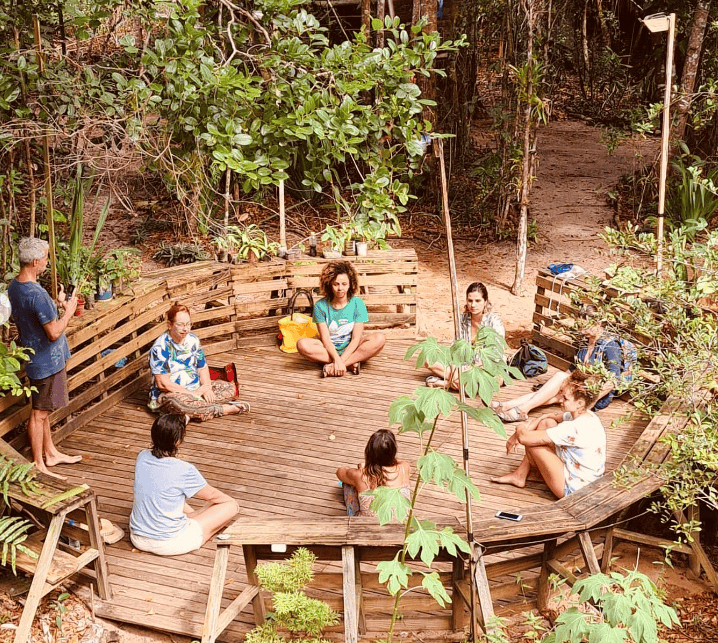
Piracanga Ecovillage, Brazil
As the community mapped their strengths and challenges regarding overall resilience, they realised their vulnerability was more significant than they had previously understood. They noticed a tension in the level of participation and decision-making concerning short- and long-term effects. They gained clarity as they identified the major tipping points they were vulnerable to, which helped them prioritise. For them, this included water, food, transport, and social engagement. However, they still face the challenge of addressing immediate issues like pollution, roads, and energy while designing a systematic and holistic plan for the future. For example, how do they allocate land for construction and development to provide immediate housing while also making it available for food production, wildlife habitat, and other benefits? They celebrated their high capacity to deal with crises and will now work to enhance their ability to implement long-term solutions.
Keep the conversation going with these pieces
There are no available blogs
Subscribe to our newsletter for fresh stories and ecovillage updates delivered to your inbox.
Get Plus and connect deeper with direct messaging, vetted content, private groups, and more.
We use cookies to improve your experience on our site. By using our site, you consent to cookies.
Manage your cookie preferences below:
Essential cookies enable basic functions and are necessary for the proper function of the website.
CleanTalk offers effective spam protection and website security solutions to enhance user experience.
Service URL: cleantalk.org (opens in a new window)
These cookies are needed for adding comments on this website.
These cookies are used for managing login functionality on this website.
Statistics cookies collect information anonymously. This information helps us understand how visitors use our website.
Google Analytics is a powerful tool that tracks and analyzes website traffic for informed marketing decisions.
Service URL: policies.google.com (opens in a new window)
A residential project: people live here as their primary home.
An institution, business, network, or project that isn’t a residence (e.g. a learning center, farm, or network with no one living there full-time).

{{ item.label }}
{{ item.value ? item.value : currencyFormat( item.amount ) }}
Subtotal
{{ currencyFormat( pricing_summary.total_amount ) }}
There are no results matching your search

