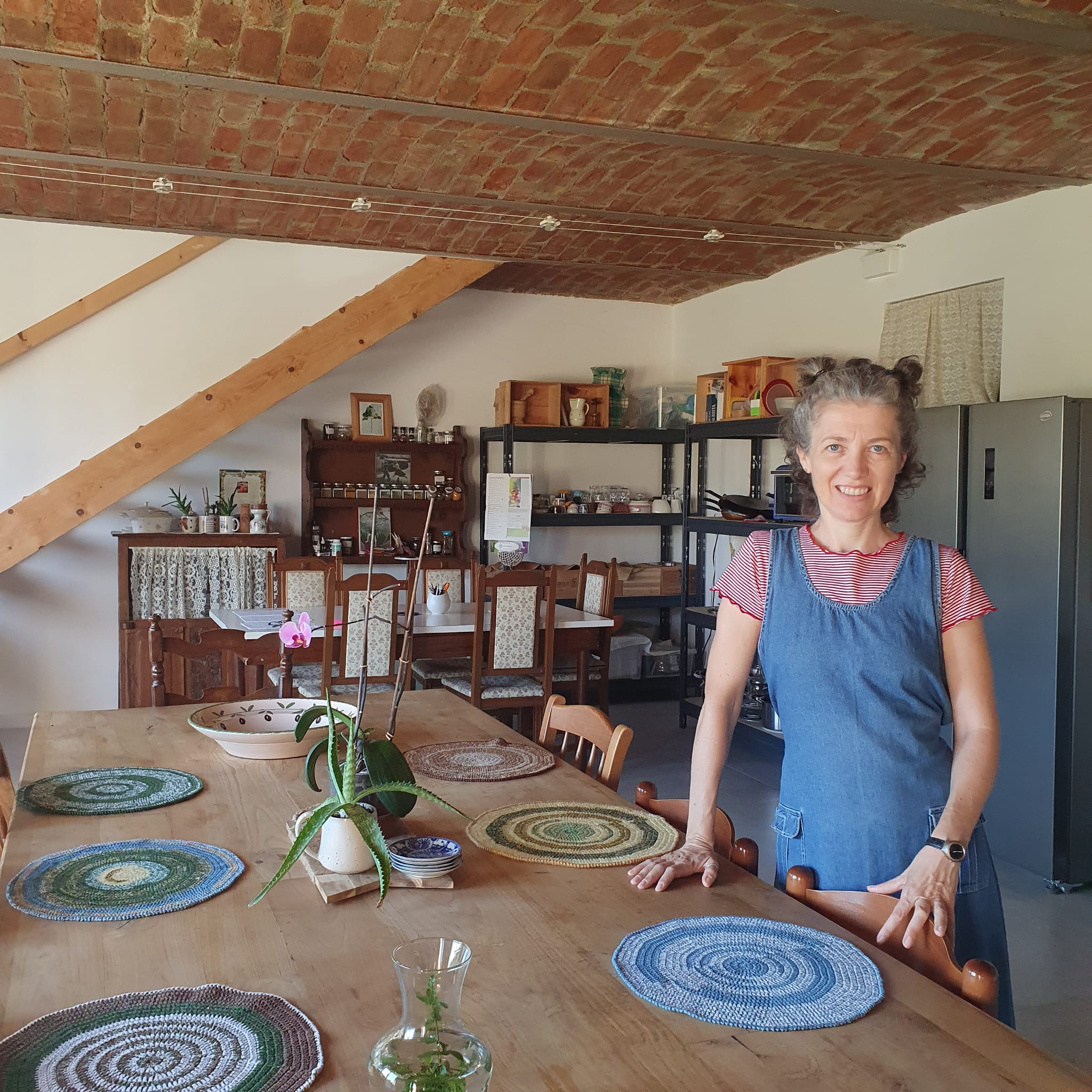
Woman in a blue apron standing by a wooden table in a cozy kitchen with colorful placemats.

Laboratorio Siderale

  • Communities

About the Communities

  • Established
  • Italian
  • Spiritual
  • Rural

Founding year

  • 2025

What we do

Laboratorio Siderale is a space for coexistence based on active listening, respect, presence, non-judgment, sincerity, honesty, attention, precision, beauty, harmony, discussion, space, order, selfless help, organization, and minimalism.

Inner work practices shared with the group through evening readings by authors such as Gurdjieff, J. Krishnamurti, Thích Nhất Hạnh, R. Steiner, Scaligero, Nisargadatta Maharaj, Carlos Castaneda, Eckhart Tolle, S. Brizzi, Vadim Zeland, Lise Bourbeau, and many others. Anyone who claims to do inner work alone, shutting themselves in their room and claiming to meditate, will not be accepted. The importance of all this is open and sincere sharing, being able to speak one’s truths openly without complaining about the world, without saying that “the world is bad outside and so I have an excuse to lock myself away in a safe place,” without taking offense, maintaining a very low ego, already being able to embrace the new, developing a conscious sense of being in the present moment. Those who have yet to undertake psychological work are not permitted to participate. Those unable to maintain even a lively discussion in a calm and controlled manner are not accepted.

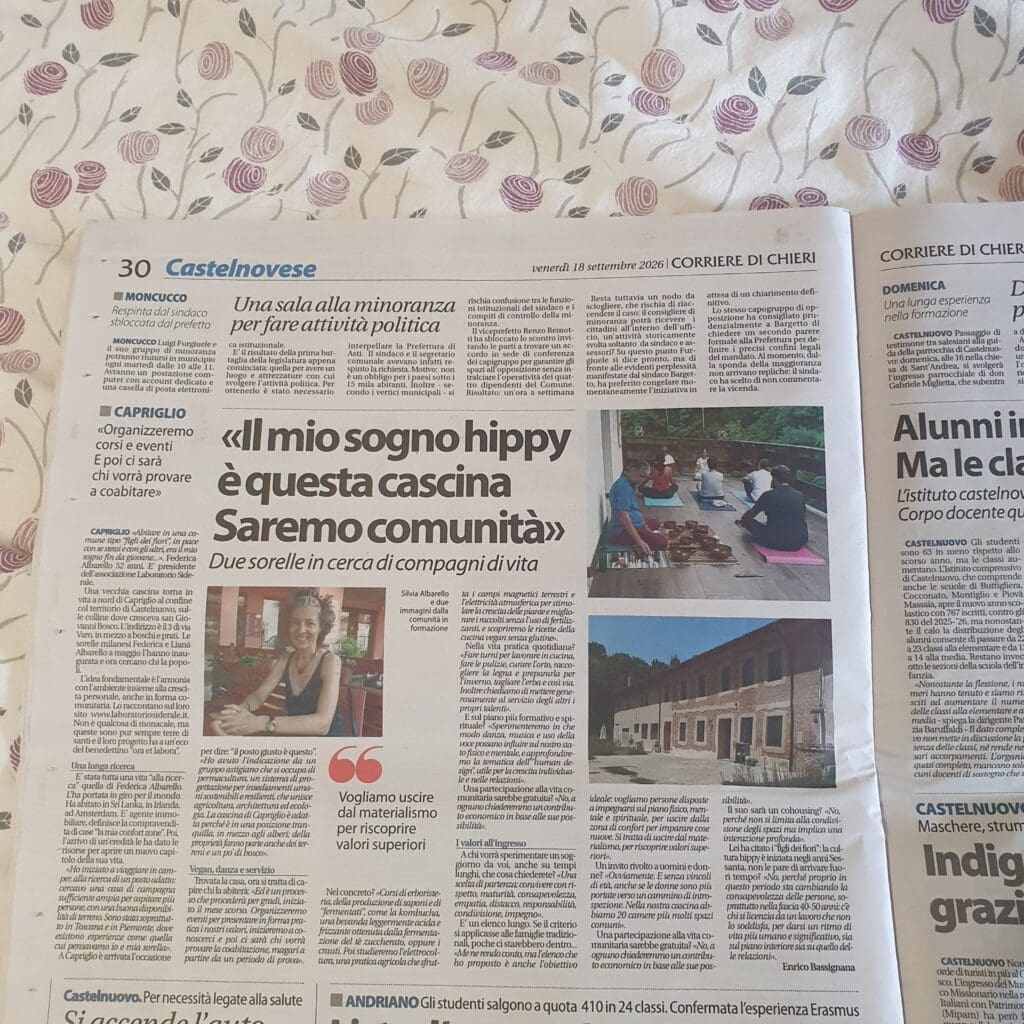
– Where: Capriglio (AT), the farmhouse is isolated and surrounded by nature in the Monferrato hills, completely renovated. There are 5 shared bathrooms.
– Accessibility: It is preferable to have a car or be able to drive, as the nearest town is about 10 km away. – Camper/Van: It is possible to park your camper for a period of time, given the outdoor space available, but there are no toilet facilities. This option is available a short distance away. Water and toilet facilities are available within the farmhouse for a fee.

Our Vision

Laboratorio Siderale is a starting point for a future community that will develop in the years. We are at the moment 4 people collaborating with local community in order to create a life closer to nature and less dependent on supermarkets and big chains. We are trying to form a net of people interested in natural ways of growing food , exchange of things, help, knowledge, parenting, natural education (schools in the woods nearby). 

Our Mission

It would be ideal to have 3-4 people permanently . A monthly contribution is required to cover living expenses. For working people, it is possible to agree on a balance between financial contribution and participation in community tasks.  We greatly appreciate people who can perform manual labor and various repairs. There will be an initial trial week to allow everyone to assess their mutual understanding, followed by evaluation.

  • Purpose
  • Spiritual
  • 4 Areas of Regeneration
  • Languages
  • Italian
  • English
  • French
  • German
  • Community type
  • Spiritual Retreat Centers
  • Sustainability practices
  • Sustainability education and community engagement
  • Water conservation and management
  • Waste reduction / composting
  • Regenerative agriculture or permaculture
  • Ecosystem
  • Temperate Forest

Gallery

  • 4 Total members
  • Open to new members
  • Open to visitors
  • Not open to volunteers
Total
4

How to join

Write me a message! Then we need a videocall in order to see each other and have a first approach.
There will be an initial trial followed by evaluation from both sides. In this week we require 10 euro per day for food.

Basic expectations or agreements for members

For working people, it is possible to agree on a balance between financial contribution and participation in community tasks. Daily management is shared through organized shifts .

Primary decision-making authority

  • It Varies/Undefined

No clear system is established.

Decision-making process

  • Supermajority Vote

Usually 66% or higher agreement needed.

Governance structure

  • Collaborative/Horizontal

Power and responsibility are shared relatively equally among members.

Conflict resolution approach

Using Non Violent Communication (Marshall Rosenberg)

Economic model

  • Membership Fees/Dues Structure

Regular payments for community services and maintenance.

Economic scenarios for this community

  • Members need to pay fees, dues, or similar to live there on a per month or per year basis

Vehicle accessibility

  • Most / all people own their own vehicles
  • There are car sharing opportunities in your community

Frequency of communal meals

  • Approximately all meals

Significant food acquisition practices

  • Locally sourced

Nature of social activity

  • The community is pretty quiet

Community activities and engagement

we usually meet with other local groups (daily events) in order to mantain a net of people on the same principle

Educational and retreat offerings

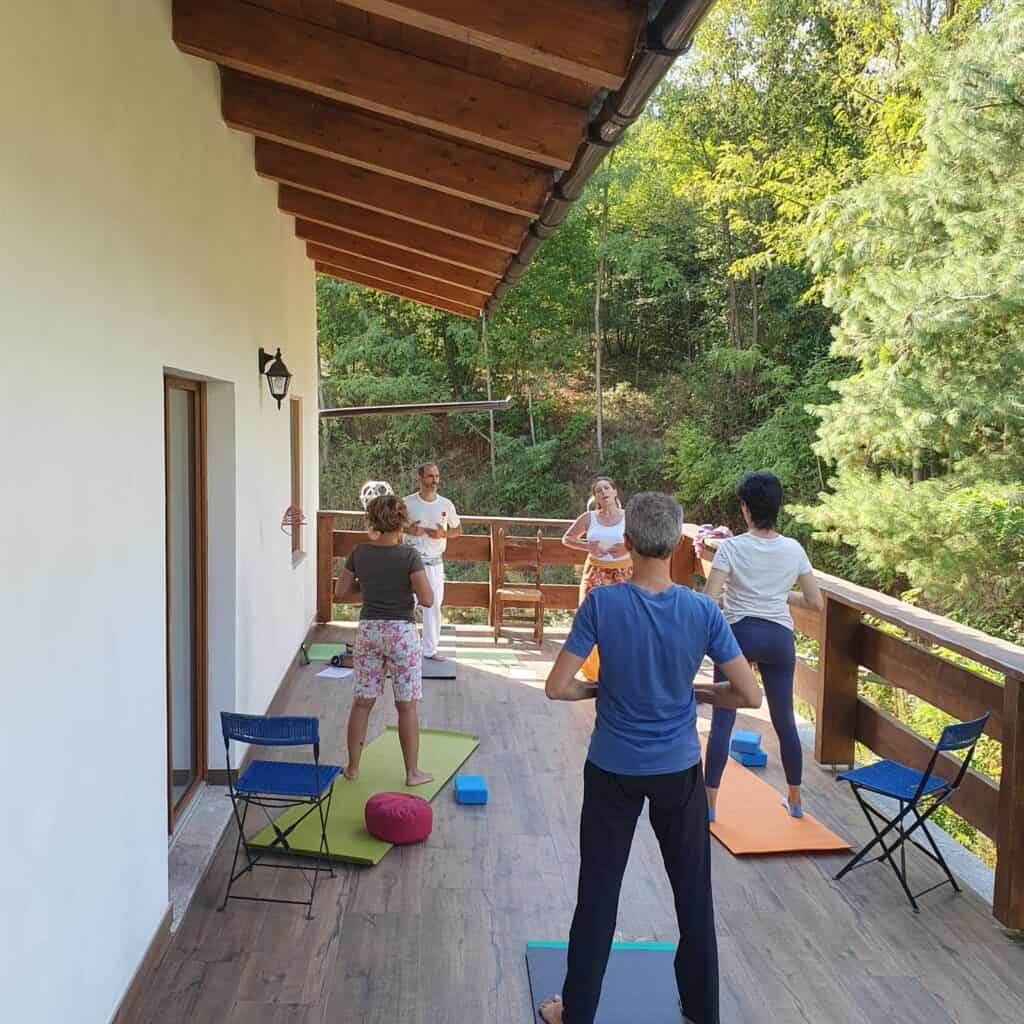
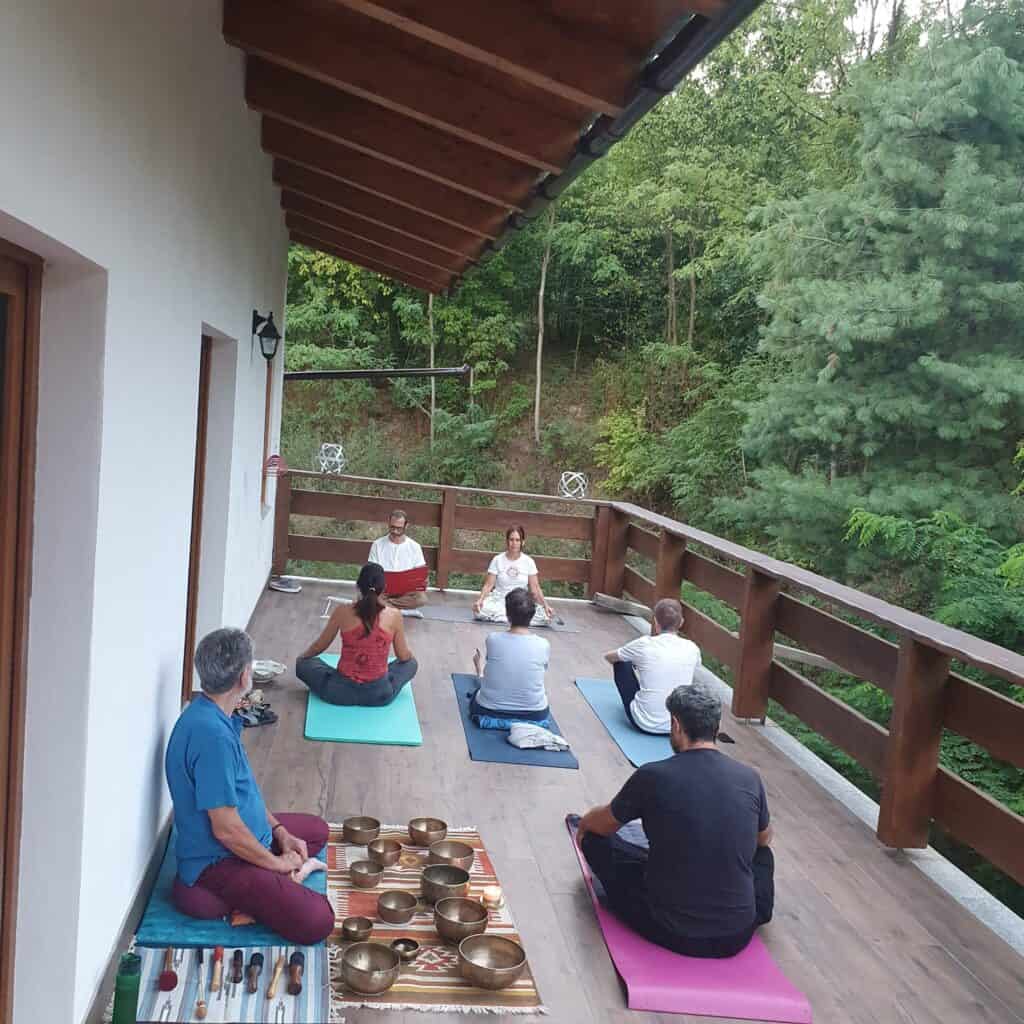
Self growth, Natural cooking, Shiatsu, fermentation, DIY, sewing, how to handle emotions, NVC

Local connectedness

  • We have strong relationships with our local community

Friendliness of people and local government

  • There is a moderate amount of connection and collaboration between people and local government

Pet policy

  • No pets are allowed, except in special cases

only 2 cats more

Substance use culture

  • Substance use is prohibited in the community

Practiced relationship models

  • Monogamy

Member support features

  • Social / emotional support available on-site or locally
  • Spiritual Practices
  • Holistic health approaches

DEI and anti-oppression training

  • No

Level of LGBTQIA+ inclusion

  • Not particularly - mostly heterosexual members

Gender composition

  • We don't track this information

Age demographics

  • Mixed adults (few or no children)

Racial / ethnic demographics

  • We don't track this information

Socioeconomic and wealth composition

  • Moderately diverse (some economic variety)

Property status

  • Privately owned

Property owner

  • By a single individual, couple, or Family Trust

Ecosystem

  • Temperate Forest

Moderate climate with distinct seasonal changes
Includes deciduous and mixed forest types
Examples: Eastern North American Forests, European Broadleaf Forests

Setting

  • Rural

Countryside locations with significant distance from urban centers.

Community type

  • Spiritual Retreat Centers

    Residential communities focused on providing space for meditation, spiritual practice, and personal growth retreats.

Sustainability approach

  • Sustainability education and community engagement
  • Water conservation and management
  • Waste reduction / composting
  • Regenerative agriculture or permaculture

Land practices in our community

  • The community is working to build soil using only natural methods
  • The community is working to restore the natural courses of water through the land

Self-produced energy

  • Up to 33%

Energy production methods

solar pannels

Energy sources used

  • Photovoltaic Solar

Local, organic, or fair trade food

  • 33 - 66%

Food systems

  • Community garden
  • Shared kitchen or food co-op

Source of water

  • Well water
  • Public water supply

Wastewater management

  • Septic system

Waste management practices

  • Composting
  • Reuse or repair systems
  • Land area size
    10
  • Land allocated for food production
    1
  • Land used for biodiversity enhancement
    9
  • Land used for tree planting
    4

Guest Book

Written reviews are available for plus members. Click here to upgrade.

Laboratorio Siderale

Promoted Needs and Offers

  • Events
4 weeks ago

British Columbia Ecovillage Tour: August 7-14, 2027

Ecovillage Network logo with sun and moon symbols in purple.
Ecovillage Network logo with green leaves inside a circle.
Ecovillage Network logo with a heart-shaped handshake symbol.
Logo of the Global Ecovillage Network with a stylized flower design.
Logo of the Global Ecovillage Network with interconnected figures.
August 7–14, 2027 | British Columbia, Canada Experience community and regenerative living on Canada’s spectacular West Coast Spend eight days exploring some of British Columbia’s most inspiring ecovillages, cohousing neighborhoods and regenerative farms as you journey from the fertile Fraser Valley to Vancouver Island and Salt Spring Island. Visit communities including Abundance Community Farm, Yarrow Ecovillage, Fraser Common Farm & Glorious Organics, Creekside Commons Cohousing, O.U.R. Ecovillage and the Quarry Collective & Chorus Frog Organic Gardens. Meet founders and residents and experience a diverse range of approaches to intentional living—from multigenerational cohousing and cooperative farming to permaculture, natural building and innovative models for local food production. Learn firsthand about collaborative governance, regenerative agriculture, ecological stewardship and the successes and challenges of creating resilient communities over the long term. Along the way, connect with local Indigenous culture, walk among the ancient trees of Cathedral Grove, cross the Salish Sea by ferry and experience the slower pace of British Columbia’s coastal islands. With shared meals, workshops and overnight stays in some of the communities, the tour offers an immersive opportunity to experience community life rather than simply observe it. A great fit for: Prospective community members, aspiring community founders, people interested in cohousing, permaculture and regenerative agriculture, and travelers looking to combine meaningful community experiences with the spectacular landscapes of Canada’s West Coast. Learn more about this tour: https://www.ecovillagetours.com/british-columbia
August 7, 2027 00:00 – August 14, 2027 23:59
  • Events
2 months ago

IERI (International Ecovillage Research Institute) Research Lab

Logo of the Global Ecovillage Network with a stylized flower design.
The Research Lab is a new space for connection, exchange, and inspiration, bringing together researchers, practitioners, and students interested in ecovillages and regenerative communities. Our intention is to create a vibrant laboratory where we can learn from one another, strengthen collaborations, and advance collective knowledge. 📅 Date: Wednesday September 23rd🕓 Time: 10:30 Brazil / 13:30 UTC / 15:30 CEST (1.5 hour) Zoom link: https://unibas.zoom.us/j/61404061682   Register Here: https://unibas.zoom.us/meeting/register/io_jg3SJQGqRAaIi0eXazw Transitions towards the pluriverse: Place, difference, alliances and autonomy in two Latin American ecovillages Presented by Dr. Rebeca Roysen Professor at the Graduate Program in Tourism and Hospitality, Co-leader of the Sustainability Transitions and the Pluriverse of Alternatives (TranS-PlurAL) research group, Universidade do Vale do Itajaí (UNIVALI), Brazil This study proposes an alternative analytical framework for sustainability transitions research by drawing on critical scholarship on grassroots innovations and post-development studies. Rather than focusing on scalable innovations and socio-technical regime change, it introduces the concept of Transitions Towards the Pluriverse (TTP)—a bottom-up, decolonial, and context-sensitive approach that recognizes the diversity of transition pathways and places local communities and grassroots innovations at the center of transformations. Through two case studies of Latin American ecovillages, Dr. Roysen explores four key analytical dimensions—place, difference, alliances, and autonomy—to examine how ecovillages promote (or sometimes fail to promote) transitions towards the pluriverse. Whether you are an experienced researcher, a practitioner, or a student beginning your journey, you are warmly welcome to join us. We look forward to learning, exchanging ideas, and building this community together. Recent publications by Dr. Rebeca Roysen Roysen, R., Pereira Prado, M. M., Bruehwiler, N., Kos, L., & Koehrsen, J. (2026). Transitions towards the pluriverse: Place, difference, alliances and autonomy in two Latin American ecovillages. Sustainability Science. Roysen, R., Ayala, D. H. F., Ramos-Mejía, M., Kos, L., Bruehwiler, N., & Koehrsen, J. (2026). Replicating grassroots innovations in the Global South: A case study of ecovillages for marginalized groups in Colombia. Environmental Innovation and Societal Transitions. Roysen, R., Fagundes, G. M., Kos, L., Bruehwiler, N., & Koehrsen, J. (2025). Building a World-Ship: A decolonial approach to just energy transitions. Human Geography. More information: Ecovillage Research Global Ecovillage Network 
  • Events
2 months ago

Want to connect with and support sustainable projects in Latin America?

Ecovillage Network logo with sun and moon symbols in purple.
Logo of the Global Ecovillage Network with a stylized flower design.
Logo of the Global Ecovillage Network with interconnected figures.
Want to connect with and support sustainable projects in Latin America? CASA Perú is excited to announce the “ENIS”, Encuentro Nacional de Iniciativas Sostenibles (12/13/09/2026), an upcoming gathering of intentional communities and regenerative initiatives in Oxapampa, Peru’s altitude jungle, 10h from Lima.  It’s a preliminary for the biennially CASA Latina’s meeting, the “ECCO 2027”, Encuentro Continental de Comunidades (27/05-3/06/2027). We expect 180 participants from 15 different nationalities from South America. We also connect with “Raices y Alas”, the NextGEN meeting (11-18/05/2027, Tarapoto, Perú), “only” 16h far from Oxapampa. So you’re very welcome to participate and support both events. We’ll be meeting at San Jorge’s School and surroundings (ecovillage Tierra de Bosques), in Gramazu, 40’ from Oxapampa city, to share workshops, concerts, bio-market and construction. Our main construction goal in 2026 September: a huge kitchen stove and ecological showers/toilets to be ready for you in 2027. Thanks for support ! Those events (both ENIS and ECCO) are titled “Oñets Awathotheñ” : “Ancestral River” in the Yanesha language. We explain why in CASA Latina’s web (when I discover it, I feel SO blessed !). We have the honor to receive the Yanesha Native Community (mainly from Satchopen, 15’ from us) and they’ll led art, music, dance, language, handcrafts, legends and ceremonies. We’ll also open workshops about the 5 dimensions of regeneration with local and international facilitators: Social : participative governance, community-building, egalitarian communities, etc. Ecological: waste management, conscious diet, agro-forestry, vermicompost, etc. Cultural : art-therapy,  Economical: local currencies, digital no speculative money Whole System: dynamics of popular education to understand global interdependencies, presentation of Gaia Union Ecosystem We hope the event will create a stronger regional network in Peru ahead of GEN’s ECCO 2027, which will bring together intentional, native and “campesinas” communities and regenerative leaders from across the world. If you’d like to attend, tickets are available at this link. We’re also seeking volunteers, who can attend at a reduced cost in exchange for help and support from early September. To apply to volunteer, email us. If you’d like to give a talk or offer a workshop, we still have a couple of places available. Please fill up the form (for ENIS 2026). For ECCO 2027, more info coming soon here. Support us through our crowdfunding campaign. Thanks and blessings to all our donators. Your support allow us to build much more than a kitchen. Any donations beyond this goal will support ECCO 2027, to allow the participation of more native leaders from all the peruvian jungle (and further). Hoping to see you in Oxapampa! CASA Peru and CASA Latina Ticket Price for ENIS: S./150 to S/.350 (€40 to €90)* *Our sliding-scale pricing lets you pay what you can. The minimum covers your food and transportation, while higher contributions help subsidize participation for others.
May 28, 2027 09:00 – May 28, 2027 10:00

Update to a Public Profile

  • Log in
  • Go to your profile page
  • Toggle on the "Put me on the People Map"
  • Save your profile

Information

Communities

A residential project: people live here as their primary home.

Organizations

An institution, business, network, or project that isn’t a residence (e.g. a learning center, farm, or network with no one living there full-time).

GeN logo with blue flower motif and plus sign in centre.

Become a + Community Member

  • Find people based on your community tool
  • Post Needs & Offers Listings and Events
  • Access to resources in the Members Library
  • Member badge on your community profile
  • View communities detailed reviews
  • Create Private Groups
I am an official member of this community
Disclaimer
I affirm that my information is accurate and I am authorized to manage this listing
Global Ecovillage Network member banner with FIC circle logo.

Free Plan

Free plan
Free

Intentional Advertising

  • Subtotal

    {{ currencyFormat( pricing_summary.total_amount ) }}

GeN logo with blue flower motif and plus sign in centre.

Become a + Member

  • Find communities based on your profile tool
  • Post Needs & Offers Listings and Events
  • Access to free resources in the Members Library
  • Member badge on your profile
  • View communities detailed reviews
  • Create Private Groups