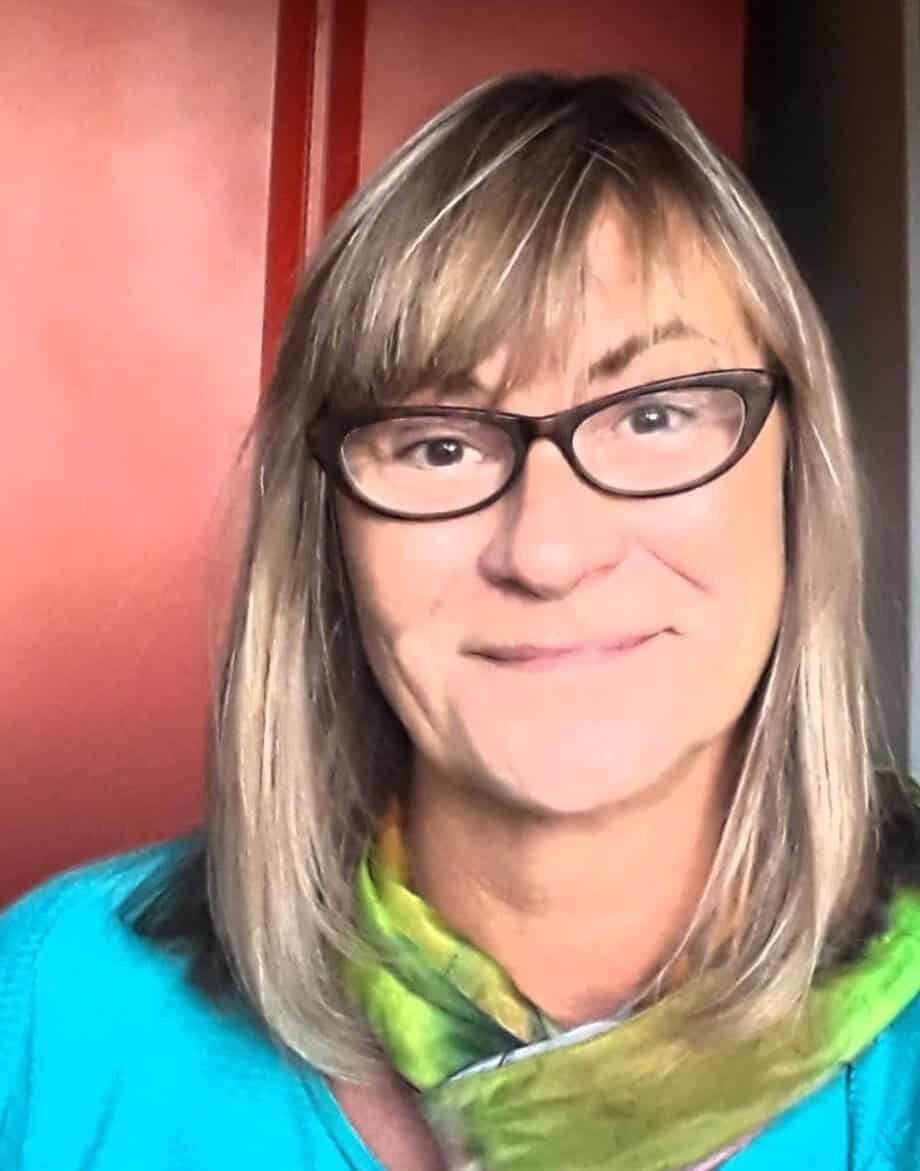
Jules Ellison

She/her
Global Ecovillage Network logo with interconnected loops in blue.
Global Ecovillage Network logo with a globe and leaf symbol.
Operations Leader, IERI Director

About me

  • I do academic research about ecovillages
  • I am looking for an ecovillage
  • I am a professional that can offer a skill to ecovillages

Jules is a creative strategist, educator and social enterprise adviser with more than 20 years’ experience helping people and organisations turn ideas into positive social and ecological impact. Since completing her MBA in 2002, she has focused on approaches that promote greater economic equality and the regeneration of people, communities and planet.

Alongside her role as Operations Lead for the Global Ecovillage Network, Jules is a Director of the International Ecovillage Research Institute (IERI). She has held academic and teaching roles in social enterprise, regenerative development and organisational design.

Jules is particularly interested in the Rights of Nature and how connecting with, learning from and designing with nature can help create regenerative organisations and cultures. She represents GEN in the Living Systems Alliance, a collaborative initiative developing tools and practices for nature-centric decision-making and governance.

My Upcoming Events

  • Events
1 month ago

IERI (International Ecovillage Research Institute) Research Lab

Logo of the Global Ecovillage Network with a stylized flower design.
The Research Lab is a new space for connection, exchange, and inspiration, bringing together researchers, practitioners, and students interested in ecovillages and regenerative communities. Our intention is to create a vibrant laboratory where we can learn from one another, strengthen collaborations, and advance collective knowledge. 📅 Date: Wednesday September 23rd🕓 Time: 10:30 Brazil / 13:30 UTC / 15:30 CEST (1.5 hour) Zoom link: https://unibas.zoom.us/j/61404061682   Register Here: https://unibas.zoom.us/meeting/register/io_jg3SJQGqRAaIi0eXazw Transitions towards the pluriverse: Place, difference, alliances and autonomy in two Latin American ecovillages Presented by Dr. Rebeca Roysen Professor at the Graduate Program in Tourism and Hospitality, Co-leader of the Sustainability Transitions and the Pluriverse of Alternatives (TranS-PlurAL) research group, Universidade do Vale do Itajaí (UNIVALI), Brazil This study proposes an alternative analytical framework for sustainability transitions research by drawing on critical scholarship on grassroots innovations and post-development studies. Rather than focusing on scalable innovations and socio-technical regime change, it introduces the concept of Transitions Towards the Pluriverse (TTP)—a bottom-up, decolonial, and context-sensitive approach that recognizes the diversity of transition pathways and places local communities and grassroots innovations at the center of transformations. Through two case studies of Latin American ecovillages, Dr. Roysen explores four key analytical dimensions—place, difference, alliances, and autonomy—to examine how ecovillages promote (or sometimes fail to promote) transitions towards the pluriverse. Whether you are an experienced researcher, a practitioner, or a student beginning your journey, you are warmly welcome to join us. We look forward to learning, exchanging ideas, and building this community together. Recent publications by Dr. Rebeca Roysen Roysen, R., Pereira Prado, M. M., Bruehwiler, N., Kos, L., & Koehrsen, J. (2026). Transitions towards the pluriverse: Place, difference, alliances and autonomy in two Latin American ecovillages. Sustainability Science. Roysen, R., Ayala, D. H. F., Ramos-Mejía, M., Kos, L., Bruehwiler, N., & Koehrsen, J. (2026). Replicating grassroots innovations in the Global South: A case study of ecovillages for marginalized groups in Colombia. Environmental Innovation and Societal Transitions. Roysen, R., Fagundes, G. M., Kos, L., Bruehwiler, N., & Koehrsen, J. (2025). Building a World-Ship: A decolonial approach to just energy transitions. Human Geography. More information: Ecovillage Research Global Ecovillage Network 

Jules Ellison

Promoted Needs and Offers

  • Events
12 years ago

Curso Estructuras Vegetales Naturale

Queremos ofrecer un Curso en el que aprender, experimentar y profundizar en algunos aspectos de la BioconstrucciĂłn, de manera profesional, familiar y cercana al mismo tiempo. En este curso aprenderemos sobre la construcciĂłn de estructuras tales como: domo geodĂ©sico, yurta, techos de cañizo, arcos y columnas de cañas, que pueden ser urilizadas para construcciĂłn de pĂ©rgolas, invernaderos, sombreados, escenarios y mucho más….; todo ello con materiales locales vegetales: caña y pita (ágave). Domo geodĂ©sico. ConstrucciĂłn paso a paso de un domo geodĂ©sico: selecciĂłn y recolecciĂłn de materiales cañas, tipos de domos y elecciĂłn de tamaño, construcciĂłn de segmentos “palos” en sus diferentes fases, montaje de un domo. Hablaremos tambiĂ©n de las posibilidades de acondicionamiento para vivienda: puertas, ventas, suelos, cubierta, aislamiento, etc Yurta. ConstrucciĂłn paso a paso de la estructura de una yurta: selecciĂłn y preparado de materiales vegetales locales ej. madera de pita, construcciĂłn de la “khana” los muros (vaporizado y doblaje ), construcciĂłn de vigas del techo “uni”, construcciĂłn de la corona, tipos de yurtas y elecciĂłn de tamaño, montaje de la estructura de la yurta. Hablaremos tambiĂ©n de las posibilidades de acondicionamiento para vivienda: puertas, ventas, suelos, cubierta, aislamiento, etc..; cambio de tamaño de la yurta. Arcos y colunmas de cañas. Nos familiarizaremos con la caña: selecciĂłn, recolecciĂłn, limpieza, preparaciĂłn y usos. Herramientas y materiales. Diferentes tĂ©cnicas de construcciĂłn de arcos y colunmas de diversas dimensiones. Experimentar sus diversas funciones y posibilidades. Veremos como estas estructuras se pueden utilizar para crear pĂ©rgolas, invernaderos, incluso escenarios y puentes. Y veremos algunos de ellos in situ. Usos tradicionales de las cañas. Techos cañizos y vallas. Veremos tambiĂ©n como trabajar las cañas para construir techados para exterior o interior y vallas para huerta. AquĂ­ veremos tambiĂ©n: selecciĂłn, recolec
  • Events
14 years ago

Gaia Education -

Gaia Education promotes a holistic systems approach to education for sustainable development by: developing curricula to empower change makers with inner and outer skills to redesign human presence in a sustainable world. facilitating the delivery of transformative learning programmes in response to emerging needs disseminating grass-roots wisdom through learning communities. Gaia Education’s Design for Sustainability curriculum integrates the social, ecological, economic and worldview dimensions of sustainability, providing an education which is universal in scope and local in application. Gaia Education offers state-of-the-art study guides, training manuals, books, webinars, presentations and a quarterly newsletter to facilitate the delivery of on-line and on-site transformational learning opportunities for community development. Since 2006, Gaia Education has successfully supported the delivery of more than 190 programmes in 34 countries over 6 continents, reaching thousands of people. Its programmes have been offered in settings ranging from tribal women and traditional communities to children and youth, ecovillages, urban slums, universities and resilience training centers. Gaia Education works in partnership with global educators, government and nongovernment agencies, ecovillages, universities, and the United Nations to bring sustainable development solutions to communities and ecosystems everywhere. Gaia Education’s flagship curriculum is an official contribution to the UN Decade of Education for Sustainable Development. Video presentation Gaia Education: http://youtu.be/ZrZzBFUXnFY Gaia Education´

Update to a Public Profile

  • Log in
  • Go to your profile page
  • Toggle on the "Put me on the People Map"
  • Save your profile

Information

Communities

A residential project: people live here as their primary home.

Organizations

An institution, business, network, or project that isn’t a residence (e.g. a learning center, farm, or network with no one living there full-time).

Become a + Community Member

  • Find people based on your community tool
  • Post Needs & Offers Listings and Events
  • Access to resources in the Members Library
  • Member badge on your community profile
  • View communities detailed reviews
  • Create Private Groups
I am an official member of this community
Disclaimer
I affirm that my information is accurate and I am authorized to manage this listing

Free Plan

Free plan
Free

Intentional Advertising

  • Subtotal

    {{ currencyFormat( pricing_summary.total_amount ) }}

Become a + Member

  • Find communities based on your profile tool
  • Post Needs & Offers Listings and Events
  • Access to free resources in the Members Library
  • Member badge on your profile
  • View communities detailed reviews
  • Create Private Groups