Himalayan Permaculture Centre

Global Ecovillage Network logo with a flower and leaf design in purple and blue.
  • Communities

About the Communities

  • Established
  • English
  • Ecological
  • Rural

Founding year

  • 2010

What we do

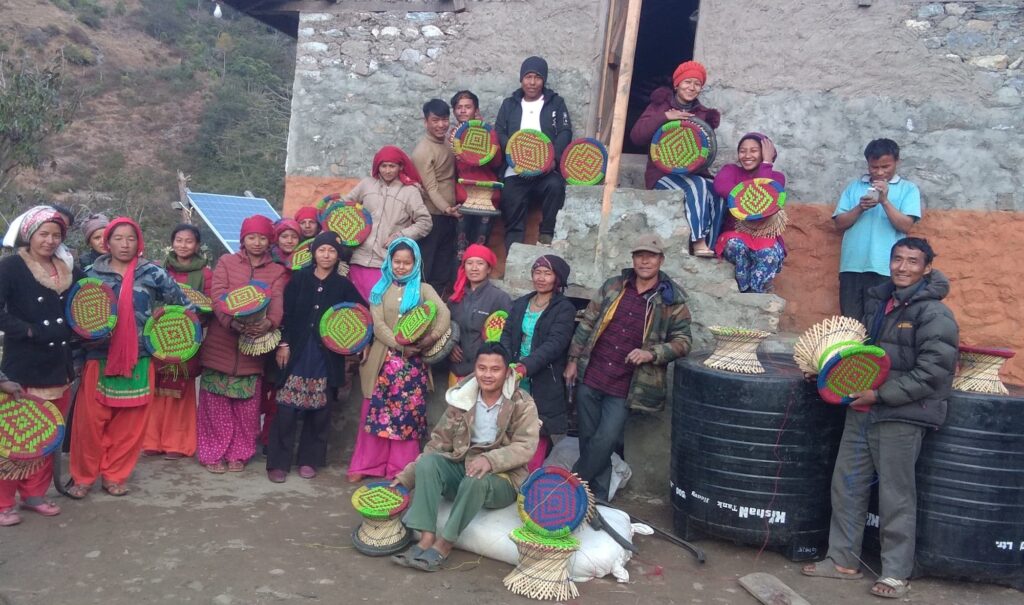
The Himalayan Permaculture Centre (HPC) is a grassroots non-government
organization (NGO) set up by trained and motivated farmers from Surkhet district
(Mid-Western Nepal) in 2010 to implement sustainable rural development programs in Nepal.
In Nepal, over 90% of the working population is dependent on agriculture for their livelihood. Subsistence agricultural practices have developed to be finely in tune with local climate, landscape, and people’s needs. Such practices are intimately interwoven with the forest and other natural resources to provide basic needs of food, fuel, fodder, timber, medicines, etc. Nationalization of the forests, rising population, and inappropriate aid programs, which often try to replace traditional practices with “something better” has combined to undermine the sustainability of traditional agriculture. The results are disempowered people with unequal access to basic needs, struggling to make ends meet despite working all hours, and yet not even able to grow enough food to last the year.
These communities can be seen as “marginal” – lacking access to key resources such as education, health care, food security and credit. At the same time, the physical areas where they live can also be described as marginal – high altitude, remote and steep, with zero infrastructure of roads, power, and communications. These are the people and places where HPC has prioritized its work, where small inputs of appropriate technology and appropriate education can make huge differences.

  • Purpose
  • Ecological
  • Languages
  • English
  • Community type
  • Ecovillage
  • Land-Based Communities
  • Activities
  • Permaculture
  • Education

Commemorative dates

  • January 1, 2010
  • Started living together

Video

  • Not open to new members
  • Open to visitors
Total
5000

How to join

These are traditional villages comprising indigenous peoples of the region. Visitors and volunteers are welcome. HPC charge a small fee to cover accommodation and food.

Guest Book

Written reviews are available for plus members. Click here to upgrade.

Our Members

Nripal Adhikary

Bamboo village of the future
Nepal

Location

  • Nepal

Himalayan Permaculture Centre

Promoted Needs and Offers

  • Events
10 years ago

Permaculture Design Course

Der Permakultur-Designkurs vermittelt den TeilnehmerInnen die planerischen und fachlichen Grundlagen, um Gärten, Betriebe, Projekte und Unternehmen nach den Prinzipien der Permakultur zu gestalten. Auch in der Bau- und Stadtplanung können die Prinzipien Anwendung finden, um eine zukunftsfähige Lebensweise zu fördern. Dabei steht das Verständnis der natĂĽrlichen Kreisläufe und Prozesse im Vordergrund, welches die Grundlage des Permakultur-Designs ist. Der Lernweg einer tiefen Naturverbindung wird während des Kurses beschritten, um den Menschen im ökologischen Netzwerk der Erde wieder einzubinden. Dabei ist auch die Gemeinschaftsbildung ein wichtiger Bestandteil dieses ökologischen Geflechts, die während des Kurses eine bereichernde Erfahrung fĂĽr die TeilnehmerInnen sein wird. Der Intensivkurs umfasst alle Module des Permakultur-Designkurses nach dem internationalen Curriculum und schafft somit die Voraussetzungen fĂĽr die Ausbildung zum/zur Permakultur Designer/in. Inhalte: – EinfĂĽhrung in die Permakultur – Permakulturplanungsinstrumente und Designprozesse – Selbstversorgung mit Permakultur – Bauen, Wohnen und Leben in der Permakultur – Permakultur in Dörfern, Städten und Gemeinschaften – Natur- und SinneswahrnehmungsĂĽbungen – Pflanzenkunde, Kompostieren, essbare Waldgärten und vieles mehr weitere Infos auf www.alpine-permakultur.ch Preis: Seminarpreis: CHF 1600.- FrĂĽhbuchpreis bis 1. Mai 2016 CHF 1400.- Kost & Logis inkl. Vollpension: – Mehrbettzimmer CHF 95.- – Zelt CHF 70.-/Nacht FĂĽr wenig Verdienende: – Sommer: Zelt CHF 60.- – FrĂĽhling, Herbst, Winter: Mehrbettzimmer CHF 85.- Mitnehmen: – Schreibutensilien – wetterfeste Kleidung – gutes Schuhwerk Buchung: Per e-mail an in**@**********lp.ch oder online ĂĽber die Webseite bis 3 Wochen vor Kursbeginn Ort: Verein Zentrum der Einheit Schweibenalp CH-3855 Brienz Telefon: +41 (0) 33 952 2000 E-Mail: in**@**********lp.ch Telefonzeiten: Mo. – Fr. 10.00 – 12.00 Uhr und 1
  • Events
11 years ago

Ecological Design Thinking

This postgraduate programme in Ecological Design Thinking will help to create a global network of design educators and practitioners able to respond to pressing economic, social and ecological challenges. It will enable students to play an active and transformative role in communities as we meet the challenge of transitioning to low carbon, high well-being and resilient places and systems. Never has there been a more important time for a new approach to design. students on an ecological design courseThe programme is rooted in an exploration of ecosystem dynamics, trends and behaviour, and socio-cultural systems and dynamics. It will focus on the design of the built environment and the connected ecological and social systems and services, but students will also be encouraged to apply lessons from nature to the design of all of our systems – political, economic, educational and sociocultural. Together, we will explore how transdiscplinary, collaborative teams can solve complex problems, and how using approaches from nature to shape all of our relationships might help us to create healthy, durable, resilient, just, and prosperous communities. Students will experiment with new ways of working first in studio where they will apply the principles of Ecological Design, and then through a series of short placements with partner organisations. They will be introduced to facilitation and participation techniques, and will be involved in the co-production of both the design, and the full lifecycle of projects. There will be a particular focus in the studio sessions on the design of settlements and the connected ecological and social systems and services. Taught elements will include input from leaders in the fields of ecological design, ecology, climate change, new economics and social change from around the world. This programme is the fourth postgraduate programme to be developed at Schumacher College and will contribute to and enhance the ongoing collaborative i

Update to a Public Profile

  • Log in
  • Go to your profile page
  • Toggle on the "Put me on the People Map"
  • Save your profile

Information

Communities

A residential project: people live here as their primary home.

Organizations

An institution, business, network, or project that isn’t a residence (e.g. a learning center, farm, or network with no one living there full-time).

Become a + Community Member

  • Find people based on your community tool
  • Post Needs & Offers Listings and Events
  • Access to resources in the Members Library
  • Member badge on your community profile
  • View communities detailed reviews
  • Create Private Groups
I am an official member of this community
Disclaimer
I affirm that my information is accurate and I am authorized to manage this listing

Free Plan

Free plan
Free

Intentional Advertising

  • Subtotal

    {{ currencyFormat( pricing_summary.total_amount ) }}

Become a + Member

  • Find communities based on your profile tool
  • Post Needs & Offers Listings and Events
  • Access to free resources in the Members Library
  • Member badge on your profile
  • View communities detailed reviews
  • Create Private Groups