Kék Tanya / Blue Farm: Farmstead in the Great Hungarian Plain

  • Communities

About the Communities

  • Established
  • Hungarian
  • Ecological
  • Rural

Founding year

  • 2012

What we do

The Blue Farm project has been ongoing since 10 years. In these times many people have taken part in the making and many skills have been shared to bring together knowledge on how to live in the Southern Plains of the Carpathian Basin.
The VÁTÉSZ NFE – Folkschool Organisation was formed for this reason, and is part of a Hungarian national network throughout the Carpathian Basin, also to withstand emigration.
Beside gardening, animal husbandry has been in the main focus as is traditional in this region. The best thriving animals are horses, cattle, racka sheep, donkeys, mangalica pigs and poultry. They graze freely on the Ice age fields.
The horses are a new breed within a system experimenting to reestablish a kind of indigenous plains’ horse. They are very durable and fit for longrides, but also herding.
Cultural grants sponsor some of our events. Our motto is: “History. Tradition. Sustainability.”
Masters of crafts are invited from all over the Carpathian Basin alongside historical re-enactment groups, persons dealing with Hungarian species, anthropologists to give speeches and performances introducing their knowledge.
Many crafts can be found incorporated into the Blue Farm, such as pottery, weaving, costuming, spinning, knitting, crochet, and others. This is because sustainability also compromises of master craftsmanship of utensils and material. The greater portion of the Farm is built in this way. Many craftsmen dealing with wood, clay, reed, straw have also contributed to the building of the farm. In the organisation there are people dealing with many other craft knowledge as well, that they teach.
The yearly cycle is incorporated in daily life, observing tradition.
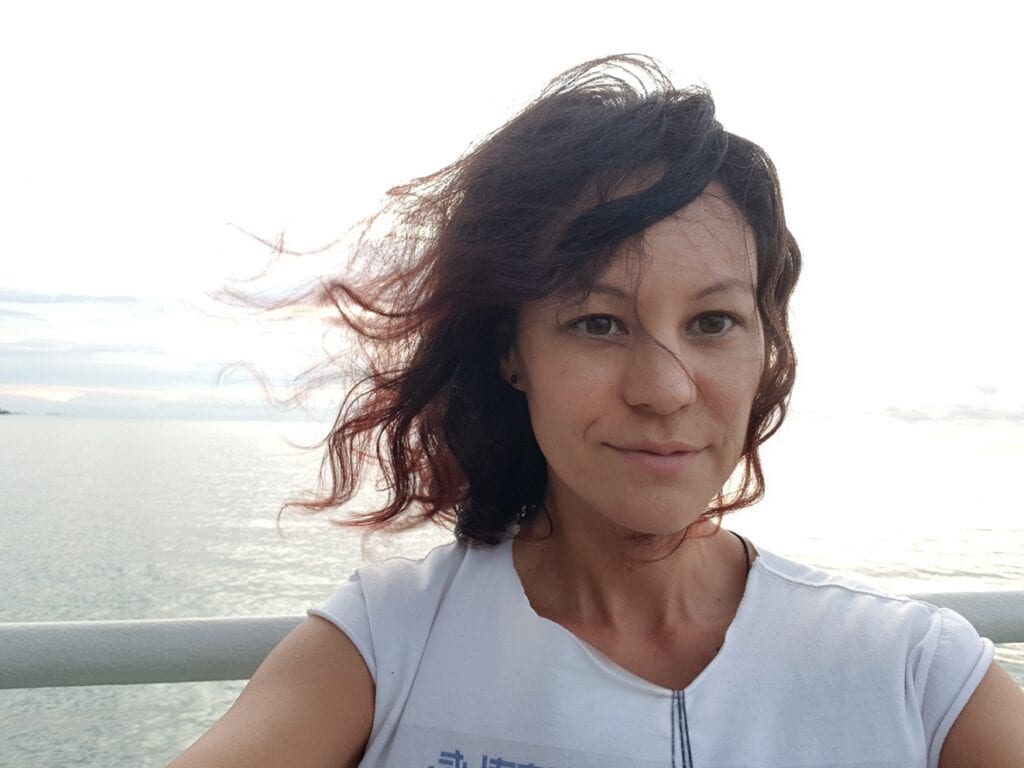
I am searching for people to share the farm residence with, or farmsitters. There is an extra farmbuilding for volunteers, however I would be open to sharing it with a family, or person longterm who wishes to try themselves in this environment that is getting richer with each visitor.
Thank you,
Nóra

  • Purpose
  • Ecological
  • Languages
  • Hungarian
  • English
  • French
  • German
  • Community type
  • Cohousing
  • Land-Based Communities
  • Activities
  • Ecological Restoration
  • Education

Commemorative dates

  • January 1, 2012
  • Started living together
  • Open to new members
  • Open to visitors
Total
4

How to join

First and foremost the Blue Farmstead and it’s complex has been running off personal effort and involvement of family, friends, volunteers, small craftsmen and small businesses. Everyone has brought their best quality to the homestead. Also, everyone has a different way of communication and understanding one-another.
It is possible to try living in the extra farmbuilding on the site. In exchange I ask that the farm is maintained in a homely, clean, liveable state. Farmsitting would be needed in case I am away teaching pottery or textile courses. This can be a matter of exchange upon agreement, especially if the renovated farmhouse and it’s surroundings are really cared for, or further renovated and in accordance utilised for livestock.
The garden project running again since 2024 would be best done together, also involving volunteers. It is possible that I need help with animals – in this case it is usually a learning process for the new half. If not, it should also be a matter of agreement.
If it is possible to exchange crafts, it is a bonus as it is the heart of the farm!
There are many farm ruins in the larger area, their owners can be found in the city’s agricultural office. I am motivated to help a good neighbour find their new bearings and home!
***On the subject of Farmsitting, I would like to get to know the person(s) in advance and in that way discuss personally eachother’s needs!

Guest Book

Written reviews are available for plus members. Click here to upgrade.

Location

Kék Tanya / Blue Farm: Farmstead in the Great Hungarian Plain

Promoted Needs and Offers

  • Events
3 weeks ago

Womens Tiny Mud House Workshop

Ecovillage Network logo with sun and moon symbols in purple.
Ecovillage Network logo with green leaves inside a circle.
Logo of the Global Ecovillage Network with a stylized flower design.
I’m Na, a regenerative designer, earthen builder and educator with the Global Ecovillage Network. I’m passionate about helping people step into action, however big or small. A women’s build I joined back in 2015 was a much needed transformational experience that set me on this path. Offering this workshop is a way of coming full circle and passing that same spark on. Sat 16 to Fri 22 January 2027 This is a hands-on workshop where you’ll learn earthen building techniques and build a tiny house from the earth up, with your own hands. Why tiny? A tiny house requires careful, creative design and asks – what space do we actually need to live? It uses far less material and takes less time to build, so it’s practical and economical. This also allows us to experience all stages of a house build, from design and brick-making to building and finishing. You’ll get your hands into every part of the build. We’ll work with mud brick (adobe), cob and bamboo, then earth plasters and finishes. This workshop is open to women of all ages and abilities are welcome. Come if you’re new and curious, if you want more practice on specific parts of a build, or simply to play in the mud with wonderful people. It’s genuinely good fun. We’ll be in my little forest, a small house on the edge of a village and national park, 20 km south of Chiang Mai, Thailand. You can stay on site in simple earthen dorms or tents, and we’ll share home-cooked Thai food in the cool, bright days of Thai winter. Read more and register here 
January 16, 2027 00:00 – January 22, 2027 23:59
  • Events
7 months ago

From The Ground Up: Ecovillage Design Education

From The Ground Up is a 7-day residential Mini Ecovillage Design Education (EDE) at Entelechy, a 13.5-acre intentional community on Salt Spring Island, British Columbia, Canada. August 9–15, 2026. The course follows the Gaia Education EDE framework, covering four dimensions of sustainability: Ecological – Food systems, natural building, energy and water, appropriate technology. Social – Community governance, communication, conflict resolution, collective decision-making. Economic – Alternative economics, cooperative structures, local currencies, social enterprise. Worldview – The values, beliefs, and cultural frameworks that underlie sustainable community – why people want to live this way, and what has to shift for it to last. The course is facilitated by a graduate of both the full EDE and the Gaia Education Training of Trainers programme. It takes place at a working ecovillage where residents live what they teach. Participants stay on-site for the week in wall tents or camping. Communal meals sourced from local Salt Spring farms and Entelechy’s gardens are included. This course is for anyone interested in designing, joining, or strengthening sustainable communities — whether you’re starting from scratch, already involved in a project, or looking to go deeper than a Permaculture Design Course. Up to 22 spots. Application-based enrollment. Early bird: $950 CAD (before June 15, 2026) Regular: $1,149 CAD Payment plans, group discounts, and work-trade spots available. If interested, we invite you to apply here: https://www.entelechysaltspring.ca/ecovillage-design Salt Spring Island is accessible by BC Ferries from Tsawwassen (Metro Vancouver), Swartz Bay (Greater Victoria), and Crofton (mid-Vancouver Island). From the US Pacific Northwest, either by I-5 and ferry via Vancouver, or by taking Port Angeles ferry to Victoria and the
  • Events
3 months ago

IERI (International Ecovillage Research Institute) Research Lab

Logo of the Global Ecovillage Network with a stylized flower design.
The Research Lab is a new space for connection, exchange, and inspiration, bringing together researchers, practitioners, and students interested in ecovillages and regenerative communities. Our intention is to create a vibrant laboratory where we can learn from one another, strengthen collaborations, and advance collective knowledge. 📅 Date: Wednesday September 23rd🕓 Time: 10:30 Brazil / 13:30 UTC / 15:30 CEST (1.5 hour) Zoom link: https://unibas.zoom.us/j/61404061682   Register Here: https://unibas.zoom.us/meeting/register/io_jg3SJQGqRAaIi0eXazw Transitions towards the pluriverse: Place, difference, alliances and autonomy in two Latin American ecovillages Presented by Dr. Rebeca Roysen Professor at the Graduate Program in Tourism and Hospitality, Co-leader of the Sustainability Transitions and the Pluriverse of Alternatives (TranS-PlurAL) research group, Universidade do Vale do Itajaí (UNIVALI), Brazil This study proposes an alternative analytical framework for sustainability transitions research by drawing on critical scholarship on grassroots innovations and post-development studies. Rather than focusing on scalable innovations and socio-technical regime change, it introduces the concept of Transitions Towards the Pluriverse (TTP)—a bottom-up, decolonial, and context-sensitive approach that recognizes the diversity of transition pathways and places local communities and grassroots innovations at the center of transformations. Through two case studies of Latin American ecovillages, Dr. Roysen explores four key analytical dimensions—place, difference, alliances, and autonomy—to examine how ecovillages promote (or sometimes fail to promote) transitions towards the pluriverse. Whether you are an experienced researcher, a practitioner, or a student beginning your journey, you are warmly welcome to join us. We look forward to learning, exchanging ideas, and building this community together. Recent publications by Dr. Rebeca Roysen Roysen, R., Pereira Prado, M. M., Bruehwiler, N., Kos, L., & Koehrsen, J. (2026). Transitions towards the pluriverse: Place, difference, alliances and autonomy in two Latin American ecovillages. Sustainability Science. Roysen, R., Ayala, D. H. F., Ramos-Mejía, M., Kos, L., Bruehwiler, N., & Koehrsen, J. (2026). Replicating grassroots innovations in the Global South: A case study of ecovillages for marginalized groups in Colombia. Environmental Innovation and Societal Transitions. Roysen, R., Fagundes, G. M., Kos, L., Bruehwiler, N., & Koehrsen, J. (2025). Building a World-Ship: A decolonial approach to just energy transitions. Human Geography. More information: Ecovillage Research Global Ecovillage Network 

Update to a Public Profile

  • Log in
  • Go to your profile page
  • Toggle on the "Put me on the People Map"
  • Save your profile

Information

Communities

A residential project: people live here as their primary home.

Organizations

An institution, business, network, or project that isn’t a residence (e.g. a learning center, farm, or network with no one living there full-time).

GeN logo with blue flower motif and plus sign in centre.

Become a + Community Member

  • Find people based on your community tool
  • Post Needs & Offers Listings and Events
  • Access to resources in the Members Library
  • Member badge on your community profile
  • View communities detailed reviews
  • Create Private Groups
I am an official member of this community
Disclaimer
I affirm that my information is accurate and I am authorized to manage this listing
Global Ecovillage Network member banner with FIC circle logo.

Free Plan

Free plan
Free

Intentional Advertising

  • Subtotal

    {{ currencyFormat( pricing_summary.total_amount ) }}

GeN logo with blue flower motif and plus sign in centre.

Become a + Member

  • Find communities based on your profile tool
  • Post Needs & Offers Listings and Events
  • Access to free resources in the Members Library
  • Member badge on your profile
  • View communities detailed reviews
  • Create Private Groups