Port Townsend EcoVillage

Global Ecovillage Network logo with a turtle and leaf design.
  • Communities

About the Communities

  • Established
  • English
  • Social
  • Urban

Founding year

  • 2003

What we do

Port Townsend EcoVillage is a community of people dedicated to living in harmony with each other and with the earth, exploring together ways to live more sustainably and joyfully.
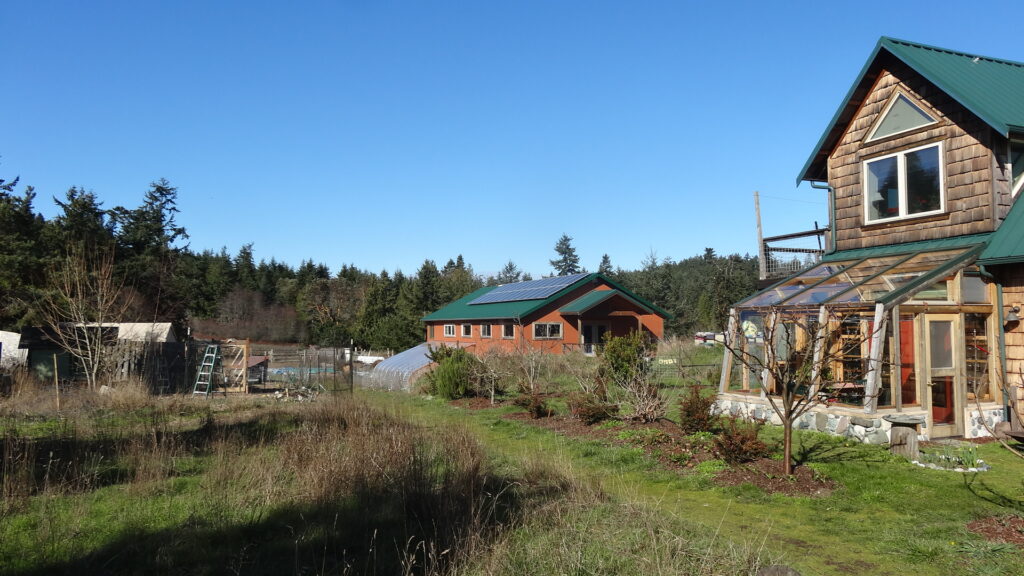
We are a small-town intergenerational urban ecovillage on 7.5 acres in Port Townsend, WA USA. As of March 2018, 28 adults and 10 children (ages 5-15) live in dwellings varying from “tiny houses,” small homes and duplexes to rooms in a cooperative house, built using a variety of earth-friendly, energy-efficient designs and materials.
Our abundant edible landscape, including annual and perennial vegetables, berries and fruits, and chickens, thrive under the care of everyone in the village. We are building the soil, experimenting with no/low till growing methods and exploring acquiring more animals for restorative agriculture systems.
As a Homeowners Association, we have 12 lots with each lot owner also owning 1/12th of the commons. After more than 15 years of development and outreach, as of April, 2020, all of our Lots and rental spaces are spoken for. One tiny house and the house on the final lot will be built in 2020. We began building our common house in 2019 with an anticipated completion in 2020.
We use an intentional and inclusive system of self-governance, meet as a community once or twice monthly, and participate in regular work parties. In 2018, we began experimenting with Sociocracy, using the “Circle” system to ensure that we get the every day work of the village done, care for the health of the village and one another, and support us continuing to complete our building process. Having previously used Consensus for decision-making, we are exploring ways to share power fairly and empower smaller groups to make decisions.
We welcome visitors – see our website for more info.

  • Purpose
  • Social
  • Languages
  • English
  • Spanish
  • Community type
  • Intentional Neighborhoods

Commemorative dates

  • January 1, 2003
  • Started living together
  • Open to new members
  • Open to visitors
Total
38

How to join

Work Exchange welcome,

Guest Book

Written reviews are available for plus members. Click here to upgrade.

Location

  • United States

Port Townsend EcoVillage

Promoted Needs and Offers

  • Events
12 years ago

Curso Estructuras Vegetales Naturale

Queremos ofrecer un Curso en el que aprender, experimentar y profundizar en algunos aspectos de la BioconstrucciĂłn, de manera profesional, familiar y cercana al mismo tiempo. En este curso aprenderemos sobre la construcciĂłn de estructuras tales como: domo geodĂ©sico, yurta, techos de cañizo, arcos y columnas de cañas, que pueden ser urilizadas para construcciĂłn de pĂ©rgolas, invernaderos, sombreados, escenarios y mucho más….; todo ello con materiales locales vegetales: caña y pita (ágave). Domo geodĂ©sico. ConstrucciĂłn paso a paso de un domo geodĂ©sico: selecciĂłn y recolecciĂłn de materiales cañas, tipos de domos y elecciĂłn de tamaño, construcciĂłn de segmentos “palos” en sus diferentes fases, montaje de un domo. Hablaremos tambiĂ©n de las posibilidades de acondicionamiento para vivienda: puertas, ventas, suelos, cubierta, aislamiento, etc Yurta. ConstrucciĂłn paso a paso de la estructura de una yurta: selecciĂłn y preparado de materiales vegetales locales ej. madera de pita, construcciĂłn de la “khana” los muros (vaporizado y doblaje ), construcciĂłn de vigas del techo “uni”, construcciĂłn de la corona, tipos de yurtas y elecciĂłn de tamaño, montaje de la estructura de la yurta. Hablaremos tambiĂ©n de las posibilidades de acondicionamiento para vivienda: puertas, ventas, suelos, cubierta, aislamiento, etc..; cambio de tamaño de la yurta. Arcos y colunmas de cañas. Nos familiarizaremos con la caña: selecciĂłn, recolecciĂłn, limpieza, preparaciĂłn y usos. Herramientas y materiales. Diferentes tĂ©cnicas de construcciĂłn de arcos y colunmas de diversas dimensiones. Experimentar sus diversas funciones y posibilidades. Veremos como estas estructuras se pueden utilizar para crear pĂ©rgolas, invernaderos, incluso escenarios y puentes. Y veremos algunos de ellos in situ. Usos tradicionales de las cañas. Techos cañizos y vallas. Veremos tambiĂ©n como trabajar las cañas para construir techados para exterior o interior y vallas para huerta. AquĂ­ veremos tambiĂ©n: selecciĂłn, recolec
  • Events
14 years ago

Gaia Education -

Gaia Education promotes a holistic systems approach to education for sustainable development by: developing curricula to empower change makers with inner and outer skills to redesign human presence in a sustainable world. facilitating the delivery of transformative learning programmes in response to emerging needs disseminating grass-roots wisdom through learning communities. Gaia Education’s Design for Sustainability curriculum integrates the social, ecological, economic and worldview dimensions of sustainability, providing an education which is universal in scope and local in application. Gaia Education offers state-of-the-art study guides, training manuals, books, webinars, presentations and a quarterly newsletter to facilitate the delivery of on-line and on-site transformational learning opportunities for community development. Since 2006, Gaia Education has successfully supported the delivery of more than 190 programmes in 34 countries over 6 continents, reaching thousands of people. Its programmes have been offered in settings ranging from tribal women and traditional communities to children and youth, ecovillages, urban slums, universities and resilience training centers. Gaia Education works in partnership with global educators, government and nongovernment agencies, ecovillages, universities, and the United Nations to bring sustainable development solutions to communities and ecosystems everywhere. Gaia Education’s flagship curriculum is an official contribution to the UN Decade of Education for Sustainable Development. Video presentation Gaia Education: http://youtu.be/ZrZzBFUXnFY Gaia Education´

Update to a Public Profile

  • Log in
  • Go to your profile page
  • Toggle on the "Put me on the People Map"
  • Save your profile

Information

Communities

A residential project: people live here as their primary home.

Organizations

An institution, business, network, or project that isn’t a residence (e.g. a learning center, farm, or network with no one living there full-time).

Become a + Community Member

  • Find people based on your community tool
  • Post Needs & Offers Listings and Events
  • Access to resources in the Members Library
  • Member badge on your community profile
  • View communities detailed reviews
  • Create Private Groups
I am an official member of this community
Disclaimer
I affirm that my information is accurate and I am authorized to manage this listing

Free Plan

Free plan
Free

Intentional Advertising

  • Subtotal

    {{ currencyFormat( pricing_summary.total_amount ) }}

Become a + Member

  • Find communities based on your profile tool
  • Post Needs & Offers Listings and Events
  • Access to free resources in the Members Library
  • Member badge on your profile
  • View communities detailed reviews
  • Create Private Groups