Ousmane Pame

He/Him
Global Ecovillage Network logo with blue cross in center.
Global Ecovillage Network logo with interconnected loops in blue.
Ecovillage Network logo with a tree ring and flower design in blue and brown.
Logo of the Global Ecovillage Network with a stylised flower and earth motif.
GEN International Trustee

About me

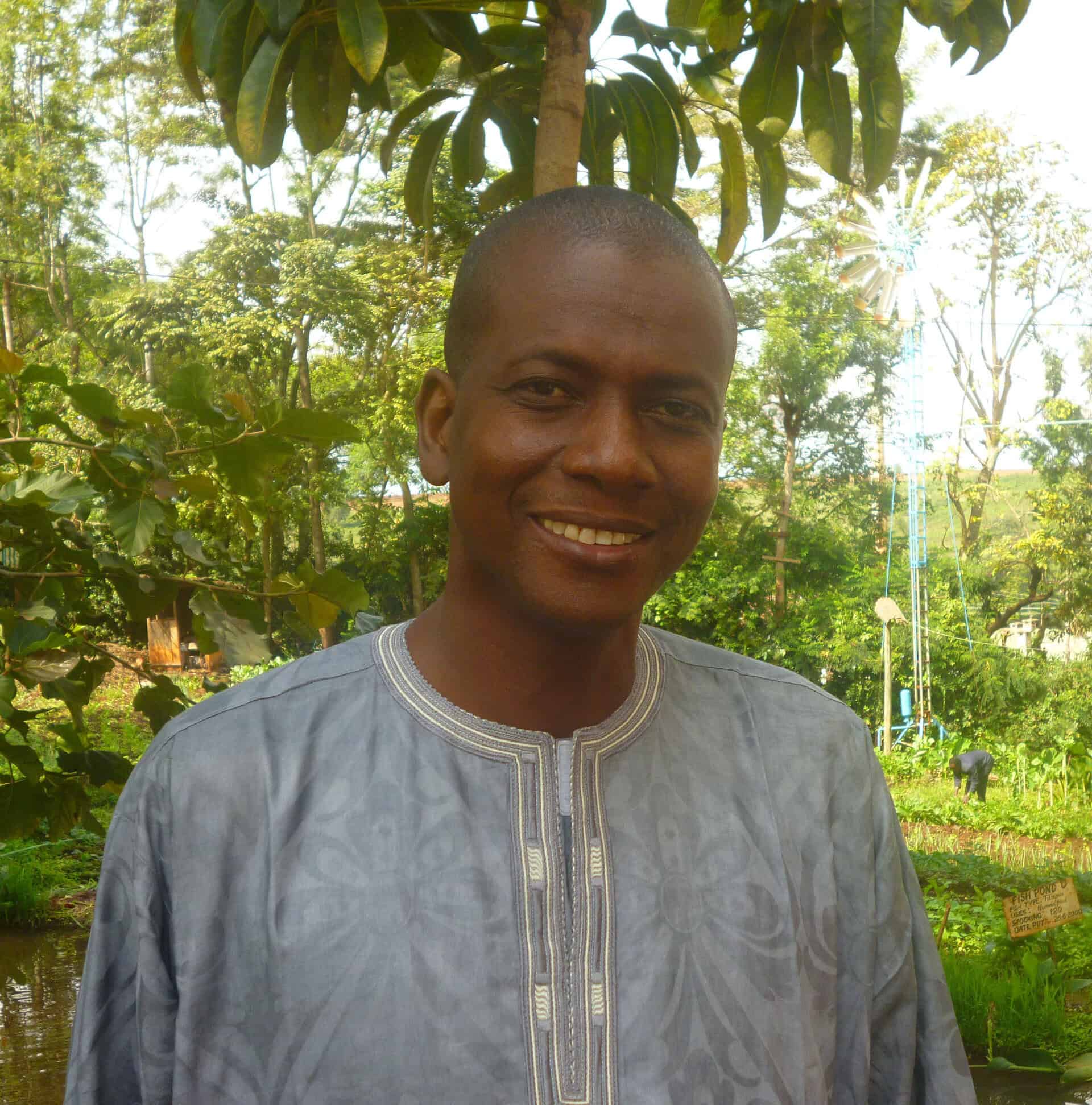
Dr. Ousmane Pame is an educator and a community leader. He worked as the resident Academic Director of Living Routes at the Dakar Earth Rights Ecovillage Institute. He is the director of academic programme in ecovillages which engage international and local students on rural community projects. Since 1997, Dr Pame has been actively involved in community development projects in Senegal (capacity building, permaculture, agroforestry, fish farming, drinking water, nutrition and food processing programmes for rural areas,). He has been supporting deprived school children in his region through distribution of free school and classroom construction materials. Thirty-five villages have benefited from his programmes. In December 2007, after participating in an ecovillage design course in Auroville (India), he introduced the ecovillage concept to his community (7000 people). Two years later, he was
elected as mayor of the Guédé Chantier, the first in the history of his community. During his
mandate, he strived to transition his municipality in an eco-community. He also supported the
transition of other communities in the West African region. He is a founding member and
President of the Global Ecovillage Network/ Africa and of REDES (Network for Ecovillage
Emergence and Development in the Sahel.

Ousmane Pame

Promoted Needs and Offers

Need
Offer
  • Events
2 months ago

IERI (International Ecovillage Research Institute) Research Lab

Logo of the Global Ecovillage Network with a stylized flower design.
The Research Lab is a new space for connection, exchange, and inspiration, bringing together researchers, practitioners, and students interested in ecovillages and regenerative communities. Our intention is to create a vibrant laboratory where we can learn from one another, strengthen collaborations, and advance collective knowledge. 📅 Date: Wednesday September 23rd🕓 Time: 10:30 Brazil / 13:30 UTC / 15:30 CEST (1.5 hour) Zoom link: https://unibas.zoom.us/j/61404061682   Register Here: https://unibas.zoom.us/meeting/register/io_jg3SJQGqRAaIi0eXazw Transitions towards the pluriverse: Place, difference, alliances and autonomy in two Latin American ecovillages Presented by Dr. Rebeca Roysen Professor at the Graduate Program in Tourism and Hospitality, Co-leader of the Sustainability Transitions and the Pluriverse of Alternatives (TranS-PlurAL) research group, Universidade do Vale do Itajaí (UNIVALI), Brazil This study proposes an alternative analytical framework for sustainability transitions research by drawing on critical scholarship on grassroots innovations and post-development studies. Rather than focusing on scalable innovations and socio-technical regime change, it introduces the concept of Transitions Towards the Pluriverse (TTP)—a bottom-up, decolonial, and context-sensitive approach that recognizes the diversity of transition pathways and places local communities and grassroots innovations at the center of transformations. Through two case studies of Latin American ecovillages, Dr. Roysen explores four key analytical dimensions—place, difference, alliances, and autonomy—to examine how ecovillages promote (or sometimes fail to promote) transitions towards the pluriverse. Whether you are an experienced researcher, a practitioner, or a student beginning your journey, you are warmly welcome to join us. We look forward to learning, exchanging ideas, and building this community together. Recent publications by Dr. Rebeca Roysen Roysen, R., Pereira Prado, M. M., Bruehwiler, N., Kos, L., & Koehrsen, J. (2026). Transitions towards the pluriverse: Place, difference, alliances and autonomy in two Latin American ecovillages. Sustainability Science. Roysen, R., Ayala, D. H. F., Ramos-Mejía, M., Kos, L., Bruehwiler, N., & Koehrsen, J. (2026). Replicating grassroots innovations in the Global South: A case study of ecovillages for marginalized groups in Colombia. Environmental Innovation and Societal Transitions. Roysen, R., Fagundes, G. M., Kos, L., Bruehwiler, N., & Koehrsen, J. (2025). Building a World-Ship: A decolonial approach to just energy transitions. Human Geography. More information: Ecovillage Research Global Ecovillage Network 

Update to a Public Profile

  • Log in
  • Go to your profile page
  • Toggle on the "Put me on the People Map"
  • Save your profile

Information

Communities

A residential project: people live here as their primary home.

Organizations

An institution, business, network, or project that isn’t a residence (e.g. a learning center, farm, or network with no one living there full-time).

GeN logo with blue flower motif and plus sign in centre.

Become a + Community Member

  • Find people based on your community tool
  • Post Needs & Offers Listings and Events
  • Access to resources in the Members Library
  • Member badge on your community profile
  • View communities detailed reviews
  • Create Private Groups
I am an official member of this community
Disclaimer
I affirm that my information is accurate and I am authorized to manage this listing
Global Ecovillage Network member banner with FIC circle logo.

Free Plan

Free plan
Free

Intentional Advertising

  • Subtotal

    {{ currencyFormat( pricing_summary.total_amount ) }}

GeN logo with blue flower motif and plus sign in centre.

Become a + Member

  • Find communities based on your profile tool
  • Post Needs & Offers Listings and Events
  • Access to free resources in the Members Library
  • Member badge on your profile
  • View communities detailed reviews
  • Create Private Groups