
(Español abajo!)
COP30: progress has been made, but the Earth’s call has not yet been fully heard. This year, the COP returned to the heart of the Amazon, the most powerful water system on the planet. The Amazon River discharges 224,000 m³/s, more than five times the flow of the Ganges, making it the second largest river in the world (estimates coincide with data from the U.S. Geological Survey and the Brazilian National Water Agency).
But the Amazon is not just water: it is one of the most important biodiversity banks in the world and one of the purest sources of ancestral knowledge that exists. The Amazonian peoples have raised their voices, but it seems that the call of the Earth is still not being heard.
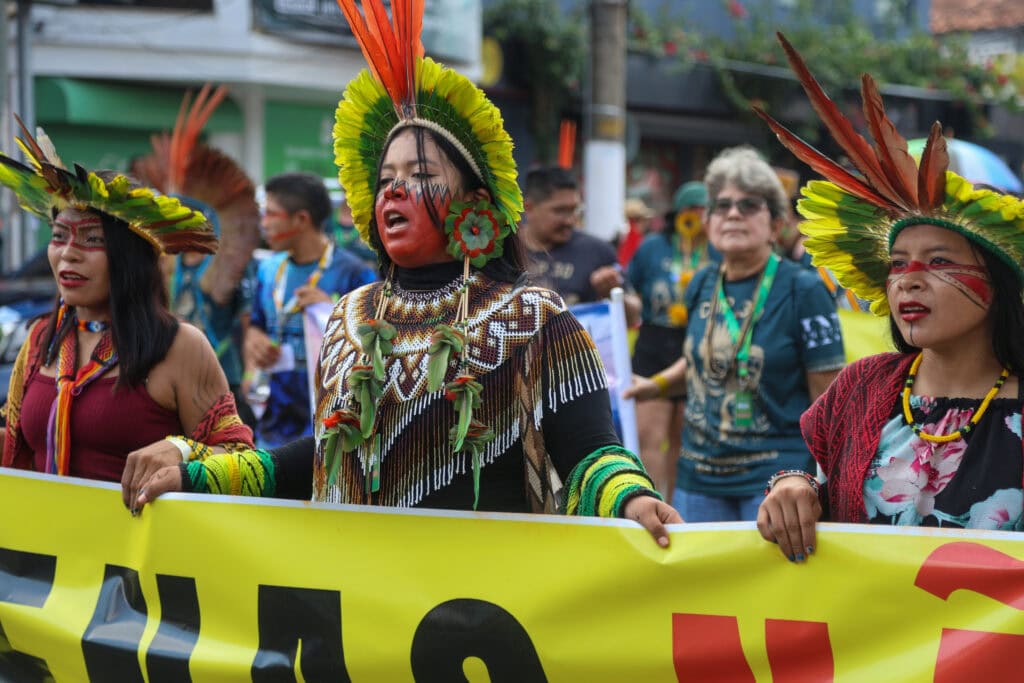
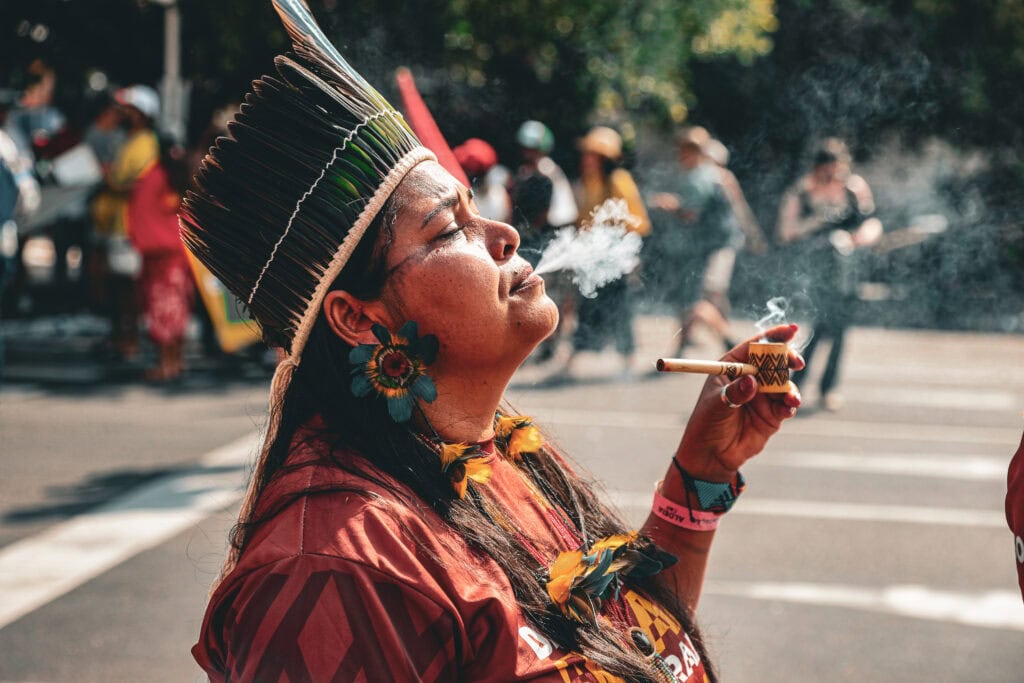
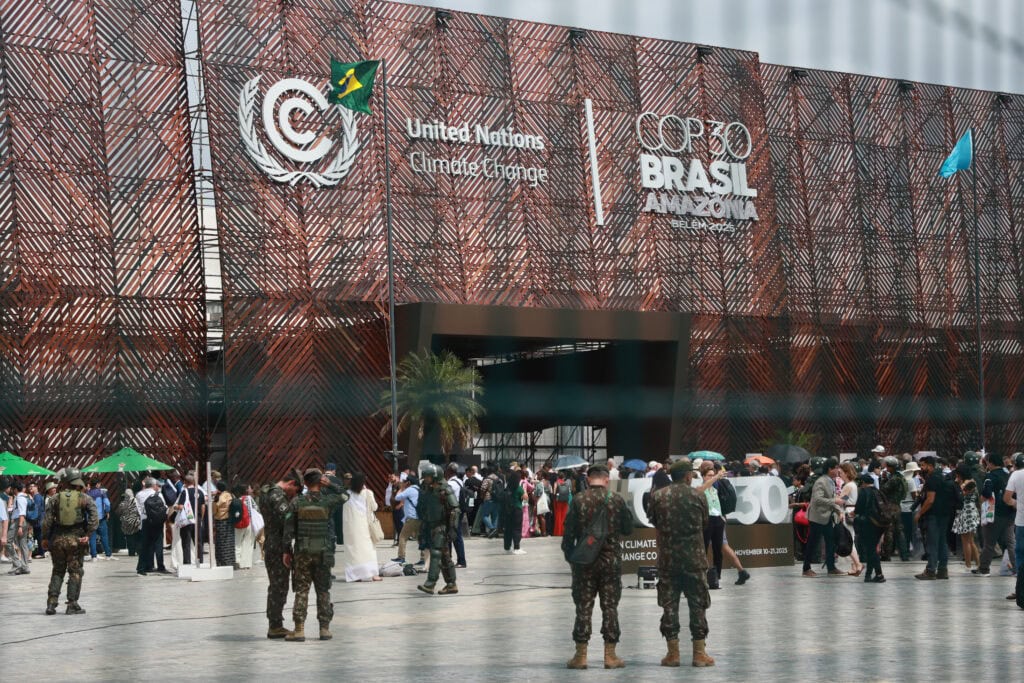
Photos provided by Ivan Sawyer García
Progress made at COP30
What did COP30 achieve?
• Tripling funding for adaptation by 2035.
• Approving 59 global resilience indicators.
• And celebrating that 194 countries remain committed to the Paris Agreement.
Outstanding issues and contradictions:
• We still have nothing concrete in place for a sensible and sober energy transition.
• Few clear definitions on loss and damage. How are we going to internalise the cost of ecosystem regeneration?
• And, even though we are in the Amazon, we continue to reduce everything to ‘carbon’, as if the climate were a number and not a living system in which we are all included.
The root is what is missing; everything starts with the soil and how we relate to it. We continue to act as if climate, economy, nature and culture were separate issues. They are not. Every economy begins with the soil and the right way to relate to the land.
And the key is this: nature does not work in absolutes. There is no such thing as “ecology”, but rather the ecologies of each ecosystem.
What if we treated places philosophically, the way we treat people? Everyone has a certain way they would like to be treated. “Anything goes” is not a respectful way to relate to either people or the Earth.

Photo provided by Ivan Sawyer García
Thinking in terms of energy, there is no such thing as ‘always good’ energy or ‘always bad’ energy. Sustainability depends on the place, not the material. Some examples illustrate this clearly:
• Oil in arid areas – In dry ecosystems, without sensitive aquifers and with little biodiversity, extracting oil can cause less damage than dynamiting entire mountains for lithium, silica, copper or rare earths required by many of today’s technologies, including those designed to produce ‘clean energy’.
• Oil in fragile ecosystems – Doing so in the Amazon, in a mangrove swamp or in a wetland would be ecologically absurd.
• Solar or wind energy depending on the territory- On a certain scale and in certain ecosystems, they work very well. But in regions where geothermal energy is abundant, it may be unnecessary or even counterproductive, just as covering fertile soils or biodiverse areas with photovoltaics or wind turbines is clearly irrational.
• Natural gas emerging from the ground – In some places, gas naturally rises to the surface. If it is not harnessed, it is released as methane. Capturing it requires minimal infrastructure, and using it is better than letting it escape.
The same is true of volcanic lands… as in the case of central Mexico and many other places. Why would you connect to an electricity grid produced by burning fuel oil when you could connect to the heat of your land, which offers you abundant and much ‘cleaner’ energy?
This demonstrates something fundamental: The key is not to ban or demonise a concept; the key is to interact with each territory according to its nature.
Responsibly taking advantage of what is abundant in each place. There is enough land area suitable for sharing with the world in abundance what each place can give us, from fruit, wood, seeds and meat to silica, oil, gases, limestone and metals. All this within full recognition, and legitimate respect, for the limits dictated by the natural vocation of each soil.

Consistency is still lacking
Sober and sensible solutions also mean putting an end to hypocrisy: how many of us who preach ecology and/or magical solutions such as ending fossil fuels or meat consumption live in a house made of steel and concrete? Don’t we know that to obtain these materials, mountains must be exploited, which in many cases are home to thousands of birds, reptiles, insects, mammals, trees, fungi and lichens?
We all have to share a little bit of the good (natural and renewable resources) and a little bit of the bad (non-renewable resources) in order to coexist in harmony with the Earth.
Being sensible and sober forces us to seek balance as a means and an end, while being idealistic leads us to pursue the unattainable: a promised land where there is only good and only light exists. Life is complex, and we still do not work in harmony with that complexity.
There is no solution: there are solutions
There is no single solution to the climate crisis—especially if we understand it as an intrinsically ecological and social crisis. What does exist is a range of diverse solutions: local and international, simple and complex, each adapted to the ecologies, realities, and cultures of the territories where they are conceived and implemented. Diversity is one of the essential characteristics of nature; if we aspire to live in balance with it, we must embrace that diversity as a guide and work with equally diverse solutions, designed to respond to the complexity of living systems and not to single, homogeneous formulas that reproduce, in thought, the same error we criticise in the field. Just as monoculture eradicates everything that existed before and impoverishes the soil, a climate monoculture — focused only on CO₂, methane or fossil fuels — impoverishes our understanding and limits our ability to act in the face of the true complexity of the planet.
The Lessons of COP30
The climate cannot be fixed from the air. It must be fixed from the ground up, always seeking harmony with its natural vocation.
Land use decisions have an impact on the network of everything that exists as a consequence: water, vegetation, biodiversity, territory, economy, society, atmosphere and even the intangible resource of knowledge building.
And although the big decisions are global, each territory can contribute to conservation and share some of its biotic and abiotic resources, but in its own unique and unrepeatable way, without upsetting the delicate balance of its environment.
Una mirada personal a lo que nos deja COP30
Amazonía: el escenario y el mensaje
COP30: hay avances, pero aún no se termina de escuchar el llamado de la Tierra. Este año la COP volvió al corazón de la Amazonía, el sistema hídrico más poderoso del planeta. El río Amazonas descarga 224,000 m³/s, más de cinco veces el caudal del Ganges como segundo río más grande del mundo (estimaciones coinciden con datos del U.S. Geological Survey y la Agencia Nacional del Agua de Brasil).
Pero el Amazonas no es solo agua: es uno de los bancos de biodiversidad más importantes del mundo y una de las fuentes de conocimiento ancestral más puras que existen. Los pueblos amazónicos han elevado la voz y parece que aún no se termina de escuchar el llamado de la Tierra.
Avances logrados en COP30
¿Qué sí logró COP30?
• Triplicar el financiamiento para adaptación hacia 2035.
• Aprobar 59 indicadores globales de resiliencia.
• Y celebrar que 194 países siguen comprometidos con el Acuerdo de París.
Los pendientes y contradicciones
¿Qué vuelve a fallar?
• Nada concreto sobre una transición energética sensata y sobria.
• Pocas definiciones claras sobre pérdidas y daños. ¿Cómo vamos a internalizar el costo de la regeneración de los ecosistemas?
• Y, aun estando en la Amazonía, seguimos reduciendo todo a “carbono”, como si el clima fuera un número y no un sistema vivo donde estamos todos incluidos.
El verdadero punto de partida: el suelo
La raíz es lo que falta; todo empieza en el suelo y cómo nos relacionamos con él. Seguimos actuando como si clima, economía, naturaleza y cultura fueran temas separados. No lo son.
Toda economía inicia en el suelo y en la forma correcta de relacionarse con el territorio.
Y la clave es que: La naturaleza no funciona en absolutos — no existe “la ecología”, sino las ecologías de cada ecosistema.
Una metáfora necesaria
¿Y si filosóficamente tratáramos a los lugares como tratamos a las personas?
Cada quien tiene una manera como le gusta que lo/la traten.
“TODO SE VALE” no es una forma respetuosa de relacionarse con la gente ni con la Tierra.
Pensar en términos de energía
No existe una energía “buena siempre” ni una energía “mala siempre”.
La sostenibilidad depende del lugar, no del material.
Algunos ejemplos lo ilustran con claridad:
• Petróleo en zonas áridas
En ecosistemas secos, sin acuíferos sensibles y con poca biodiversidad, extraer petróleo puede causar menos daño que dinamitar montañas enteras para litio, sílice, cobre o tierras raras que requieren muchas de las tecnologías actuales, incluidas las destinadas a producir “energías limpias”.
• Petróleo en ecosistemas frágiles
Hacerlo en la Amazonía, en un manglar o en un humedal sería ecológicamente absurdo.
• Energía solar o eólica según el territorio
A cierta escala y en determinados ecosistemas funcionan muy bien. Pero en regiones donde abunda la energía geotermal puede resultar innecesario o incluso contraproducente, del mismo modo que cubrir suelos fértiles o zonas biodiversas con fotovoltaicos o hélices resulta claramente irracional.
• Gas natural que emerge del suelo
En algunos lugares el gas sale naturalmente a la superficie. Si no se aprovecha, se libera como metano. Captarlo requiere infraestructura mínima, y utilizarlo es mejor que dejarlo escapar.
Lo mismo sucede con tierras de volcanes… como el caso de México central y muchos otros lugares. ¿Por qué te conectarías a una red eléctrica producida con la quema de combustóleo cuando podrías conectarte al calor de tu tierra, quien te ofrece energía abundante y por mucho mas “limpia”?
El principio fundamental
Esto demuestra algo fundamental:
La clave no es prohibir o demonizar un concepto; la clave es interactuar con cada territorio según su naturaleza.
Aprovechar de manera responsable lo que abunda en cada lugar. Existe suficiente superficie terrestre apta para compartir con el mundo en abundancia lo que cada lugar nos puede dar desde frutos, madera, semillas y carne hasta sílice, petróleo, gases, piedra caliza y metales. Todo ello dentro del pleno reconocimiento —y del respeto legítimo— a los límites que dicta la vocación natural de cada suelo.
La coherencia que sigue haciendo falta
Soluciones sobrias y sensatas también implican terminar con la hipocresía: ¿cuántos que predicamos la ecología y/o soluciones mágicas como acabar con los combustibles fósiles o con el consumo de carne viven en una casa hecha con acero y concreto? ¿Acaso no sabemos que para obtener esos materiales se deben explotar montañas que en muchos casos albergan el hogar de miles de aves, reptiles, insectos, mamíferos, árboles, hongos y líquenes?
Todos tenemos que compartir un poquito de lo bueno (los bienes naturales y renovables) y un poquito de lo malo (los recursos no renovables) para coexistir en armonía con la Tierra.
Ser sensatos y sobrios nos obliga a buscar el equilibrio como medio y como fin, mientras que ser idealistas nos lleva a perseguir lo inalcanzable: una tierra prometida donde solo hay bien y solo existe la luz. La vida es compleja y seguimos sin trabajar en armonía con la complejidad.
No hay solución: hay soluciones
No existe una sola solución a la crisis climática —y mucho menos si la entendemos como una crisis intrínsecamente ecológica y social. Lo que sí existe es un abanico de soluciones diversas: locales e internacionales, simples y complejas, cada una adaptada a las ecologías, realidades y culturas de los territorios desde donde se conciben e implementan. La diversidad es una de las características esenciales de la naturaleza; si aspiramos a vivir en equilibrio con ella, debemos asumir esa diversidad como guía y trabajar con soluciones igualmente diversas, diseñadas para responder a la complejidad de los sistemas vivos y no a fórmulas únicas y homogéneas que reproducen, en el pensamiento, el mismo error que criticamos en el campo. Así como el monocultivo erradica todo lo que existía antes y empobrece el suelo, una monocultura climática —centrada solo en el CO₂, el metano o los combustibles fósiles— empobrece nuestra comprensión y limita nuestra capacidad de actuar frente a la verdadera complejidad del planeta.
El aprendizaje de COP30
El clima no se arregla desde el aire.
Se arregla desde el suelo,
buscando siemopre la armonía con su vocación natural.
Las decisiones del uso del suelo son las que repercuten sobre la red de todo lo que existe por consecuencia: agua, vegetación, biodiversidad, territorio, economía, sociedad, atmósfera y hasta el recurso intangible de la construcción del conocimiento.
Y aunque las grandes decisiones sean globales, cada territorio puede aportar tanto a la conservación como compartir un poco de sus bienes bióticos como sus recursos abióticos, pero a SU manera, única e irrepetible, sin salirse del delicado equilibrio de su entorno.




Leave a Reply