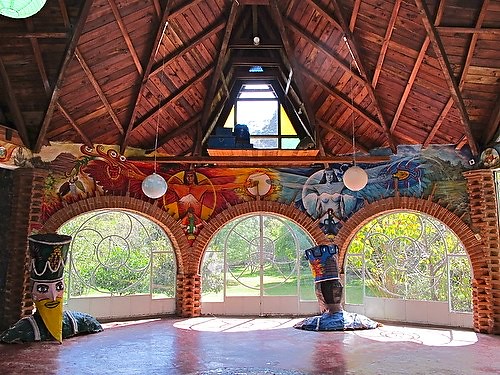
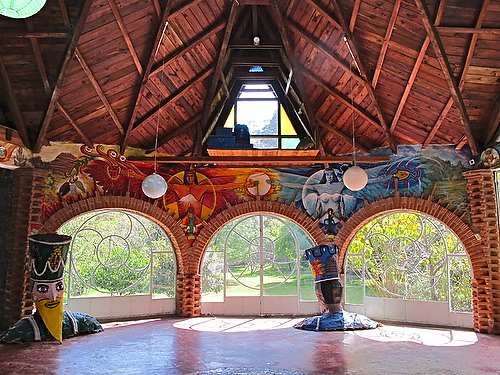
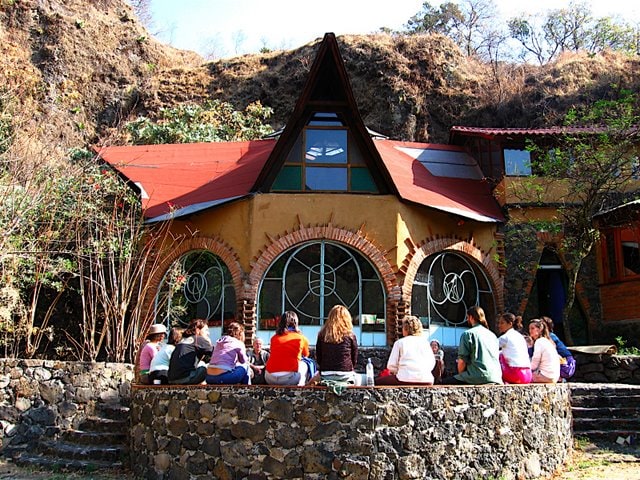
Interior of a brick arch hall with mural art and stained glass windows.

Ecoaldea Huehuecoyotl

  • Communities

About the Communities

  • Established
  • Spanish
  • Ecological
  • Rural

Founding year

  • 1955

What we do

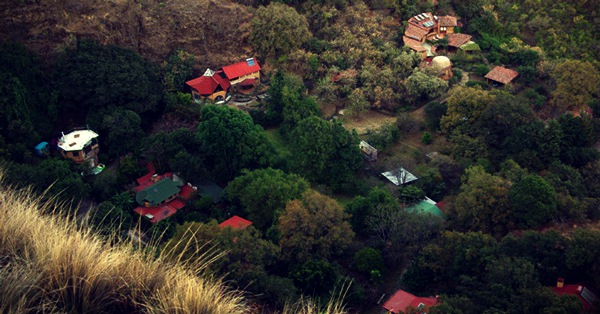
Huehuecoyotl se encuentra en Tepoztlán, en el estado de Morelos, al sur de Ciudad de México. Es conocida como la “tribu de los coyotes”, que existe desde hace casi cuatro décadas. Su nombre significa “coyote viejo”.
En esta ecoaldea cada familia renta su espacio y el dinero recolectado es usado para pagar servicios de administración en labores como el mantenimiento de sus zonas comunes. Algunos de los miembros ofrecen sus servicios, también se organizan cursos y talleres de capacitación. Cuentan con una huerta orgánica donde siembran lechuga, cebolla, zanahorias, hortalizas, frijol, tomate, plantas medicinales, y todos los que habitan allí pueden aportar para que se mantenga esta producción con la posibilidad de acceder a ella y consumirla, generando hábitos de alimentación orgánica, sana y equilibrada.
En sus terrenos poseen un bosque comestible, que cuenta con veinte tipos diferentes de árboles frutales, algunos endémicos, otros con especies adaptadas, de los cuales se abastecen durante todo el año.
En Huehuecoyotl cuentan con baños secos, que a través de la compostación y la desecación degrada la materia fecal, evitando el desperdicio de agua. Además, mediante biofiltros purifican y recolectan el agua de lluvia para su reutilización. Para ello poseen una cisterna que almacena hasta 400 litros, de esta forma se autoabastecen de este líquido.
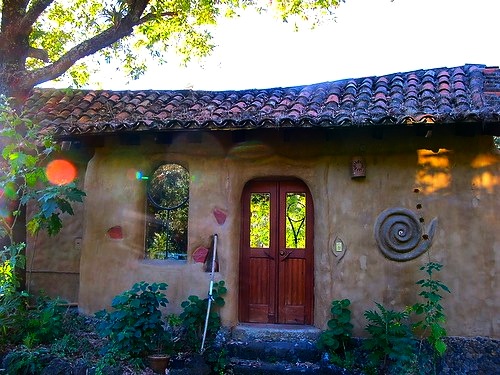
Cuando fue creada la ecoaldea en el terreno que hoy ocupan, éste fue distribuido entre los fundadores construyendo casas de 300 y 600 metros cuadrados, dependiendo si estaban solos o en pareja, para mantener la equidad. Hoy son 14 casas, y hay otros espacios comunitarios como un teatro, una casa comunal, una cocina, y algunas habitaciones reservadas para huéspedes.
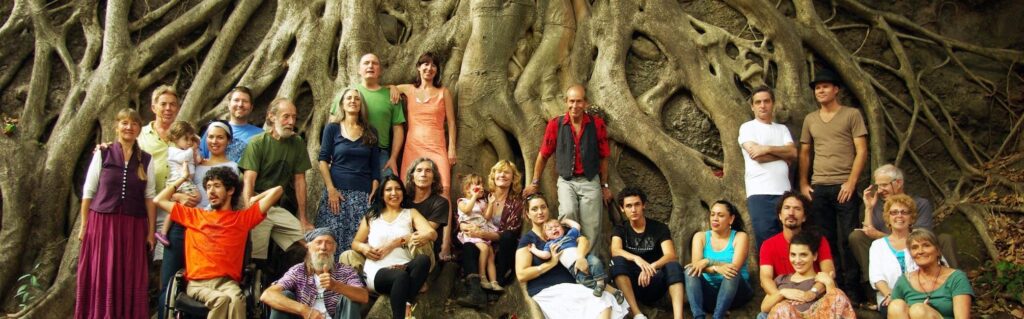
Allí habitan algunos de los abuelos de la comunidad, quienes son los fundadores de la ecoaldea, y también algunos de sus hijos y sus nietos.
Por todas estas razones… ¡Ven a conocer Huehuecoyotl!
https://huehuecoyotl.net/

  • Purpose
  • Ecological
  • Languages
  • Spanish
  • Danish
  • English
  • Community type
  • Cohousing
  • Ecovillage
  • Intentional Neighborhoods

Commemorative dates

  • January 1, 1955
  • Started living together

Video

Gallery

  • Open to new members
  • Open to visitors
Total
20

How to join

Los invitados son bienvenidos. Casas de alquiler disponibles en ocasiones. Posibilidad de nuevas afiliaciones / Guests welcomed. Rental houses available on occasion. New memberships possible.

Guest Book

Written reviews are available for plus members. Click here to upgrade.

Our Members

Portrait of a woman with dark hair and a warm smile.

claudia Brindis

Claudia Brindis UN Expert and ELC´s partner
Mexico

Location

  • Mexico

Ecoaldea Huehuecoyotl

Promoted Needs and Offers

  • Events
1 month ago

New Zealand Ecovillage Tour: March 10-19, 2027

Ecovillage Network logo with sun and moon symbols in purple.
Ecovillage Network logo with green leaves inside a circle.
Ecovillage Network logo with a heart-shaped handshake symbol.
Logo of the Global Ecovillage Network with a stylized flower design.
Logo of the Global Ecovillage Network with interconnected figures.
March 10–19, 2027 | Nelson–Tasman, New Zealand Discover some of New Zealand’s most inspiring intentional communities Spend 10 days exploring nine intentional communities and ecovillages across the beautiful Nelson–Tasman region of New Zealand’s South Island. Visit communities including Riverside Community, Tui Community, Kōwhai Cohousing, Braemar Ecovillage, Rainbow Valley Community, Atamai Village and WantooWantoo Community, with rare behind-the-scenes access made possible through longtime relationships with local community leaders. Experience a diverse range of approaches to intentional living from one of New Zealand’s longest-running communities to cohousing, permaculture-based settlements and a residential yoga community. Meet founders and residents and learn firsthand about natural building, regenerative land stewardship, shared decision-making, food systems, cooperative businesses and the practical realities of creating and sustaining community over time. Along the way, experience the spectacular landscapes and culture of New Zealand’s South Island, including local markets, organic gardens, sacred springs and Māori culture. With overnight stays in several of the communities, the tour offers an immersive opportunity to experience what community life actually feels like rather than simply visiting from the outside. A great fit for: Prospective community members, community founders, people interested in sustainable and regenerative living, and travelers looking for an immersive introduction to intentional community in one of the world’s most beautiful natural settings. Learn more about this tour: https://www.ecovillagetours.com/new-zealand
March 10, 2027 00:00 – March 19, 2027 23:59
  • Events
3 months ago

IERI (International Ecovillage Research Institute) Research Lab

Logo of the Global Ecovillage Network with a stylized flower design.
The Research Lab is a new space for connection, exchange, and inspiration, bringing together researchers, practitioners, and students interested in ecovillages and regenerative communities. Our intention is to create a vibrant laboratory where we can learn from one another, strengthen collaborations, and advance collective knowledge. 📅 Date: Wednesday September 23rd🕓 Time: 10:30 Brazil / 13:30 UTC / 15:30 CEST (1.5 hour) Zoom link: https://unibas.zoom.us/j/61404061682   Register Here: https://unibas.zoom.us/meeting/register/io_jg3SJQGqRAaIi0eXazw Transitions towards the pluriverse: Place, difference, alliances and autonomy in two Latin American ecovillages Presented by Dr. Rebeca Roysen Professor at the Graduate Program in Tourism and Hospitality, Co-leader of the Sustainability Transitions and the Pluriverse of Alternatives (TranS-PlurAL) research group, Universidade do Vale do Itajaí (UNIVALI), Brazil This study proposes an alternative analytical framework for sustainability transitions research by drawing on critical scholarship on grassroots innovations and post-development studies. Rather than focusing on scalable innovations and socio-technical regime change, it introduces the concept of Transitions Towards the Pluriverse (TTP)—a bottom-up, decolonial, and context-sensitive approach that recognizes the diversity of transition pathways and places local communities and grassroots innovations at the center of transformations. Through two case studies of Latin American ecovillages, Dr. Roysen explores four key analytical dimensions—place, difference, alliances, and autonomy—to examine how ecovillages promote (or sometimes fail to promote) transitions towards the pluriverse. Whether you are an experienced researcher, a practitioner, or a student beginning your journey, you are warmly welcome to join us. We look forward to learning, exchanging ideas, and building this community together. Recent publications by Dr. Rebeca Roysen Roysen, R., Pereira Prado, M. M., Bruehwiler, N., Kos, L., & Koehrsen, J. (2026). Transitions towards the pluriverse: Place, difference, alliances and autonomy in two Latin American ecovillages. Sustainability Science. Roysen, R., Ayala, D. H. F., Ramos-Mejía, M., Kos, L., Bruehwiler, N., & Koehrsen, J. (2026). Replicating grassroots innovations in the Global South: A case study of ecovillages for marginalized groups in Colombia. Environmental Innovation and Societal Transitions. Roysen, R., Fagundes, G. M., Kos, L., Bruehwiler, N., & Koehrsen, J. (2025). Building a World-Ship: A decolonial approach to just energy transitions. Human Geography. More information: Ecovillage Research Global Ecovillage Network 
Offer

Update to a Public Profile

  • Log in
  • Go to your profile page
  • Toggle on the "Put me on the People Map"
  • Save your profile

Information

Communities

A residential project: people live here as their primary home.

Organizations

An institution, business, network, or project that isn’t a residence (e.g. a learning center, farm, or network with no one living there full-time).

GeN logo with blue flower motif and plus sign in centre.

Become a + Community Member

  • Find people based on your community tool
  • Post Needs & Offers Listings and Events
  • Access to resources in the Members Library
  • Member badge on your community profile
  • View communities detailed reviews
  • Create Private Groups
I am an official member of this community
Disclaimer
I affirm that my information is accurate and I am authorized to manage this listing
Global Ecovillage Network member banner with FIC circle logo.

Free Plan

Free plan
Free

Intentional Advertising

  • Subtotal

    {{ currencyFormat( pricing_summary.total_amount ) }}

GeN logo with blue flower motif and plus sign in centre.

Become a + Member

  • Find communities based on your profile tool
  • Post Needs & Offers Listings and Events
  • Access to free resources in the Members Library
  • Member badge on your profile
  • View communities detailed reviews
  • Create Private Groups