
Ghana Permaculture Institute

Global Ecovillage Network logo with Earth and eco-friendly design.
  • Communities

About the Communities

  • Established
  • English
  • Rural

Founding year

  • 2004

What we do

In early 2004, Permaculture teacher Greg Knibbs was invited to Ghana by the Abbott of Kristo Buase Benedictine Monastery to teach Permaculture Design Courses (PDCs) and to help redesign the Monastery’s 430 acre farm. On the course, Greg met Paul Yeboah, the farm manager at the time. Greg and Paul became good friends and together worked to set up the non-profit Ghana Permaculture Network (since then renamed Ghana Permaculture Institute).
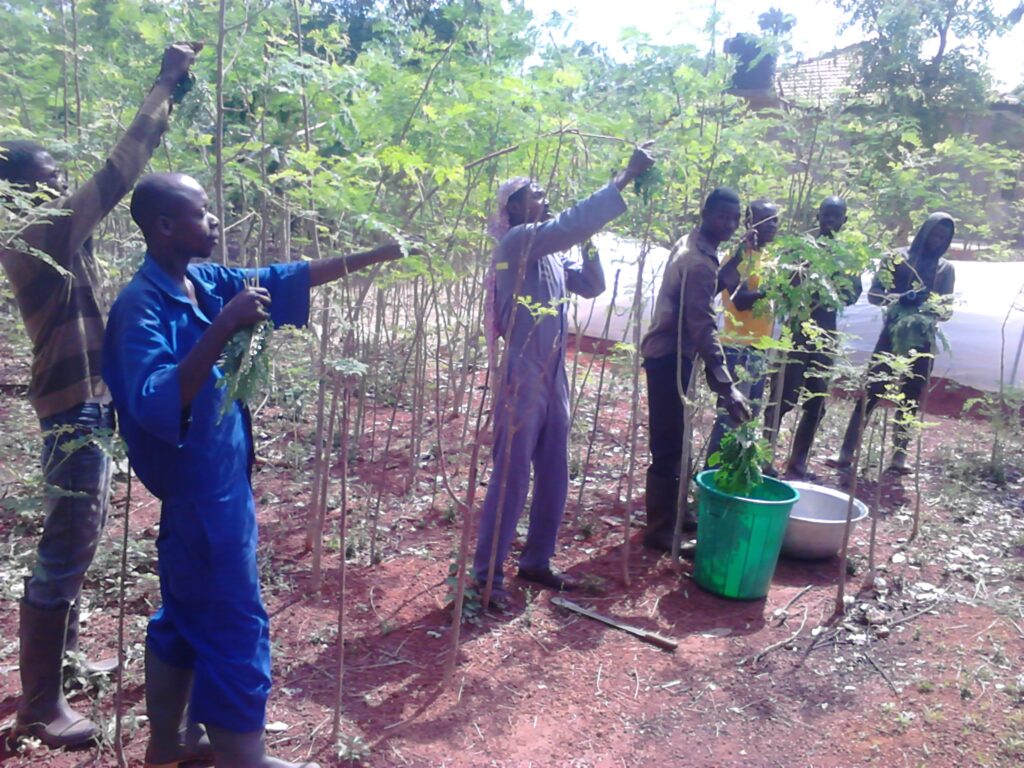
The Institute trains people in local communities on strategies for earth restoration, food security systems, economic stability, and the care of people using Permaculture Design ethics and principles. We assist farmers in our institute with supplies of appropriate seeds, trees, and cereal grains. We share practical knowledge on how to develop their farms so they can improve yields using local, simple and reproducible techniques. We also help farmers to search for buyers who pay fair and better prices, freeing them from the need for a middleman. All of this work helps to foster self-reliance and self-employment, thereby improving income and living standards for the local people.
We discourage bush burning and encourage the old tradition of crop rotation, as well as encouraging tree planting as a means to check soil erosion and generally protect our environment. We slowly introduce more complicated, sophisticated, and productive permaculture agroforestry systems to the farmers over time. We also carry out research on the nutritional and medicinal values of various local plants.
Since 2004 the Institute has set up 50 community tree nurseries and offers advice and training to local farmers. Currently we are networking with over 5,000 farmers. We are also introducing Permaculture to schools, teaching children about earth care. We have donated trees to schools, community organizations, and also farmers. For a more detailed background on our projects and activities, see https://ecovillage.org/ghana-permaculture-institute/ or our website.

  • Languages
  • English
  • Activities
  • Education

Commemorative dates

  • January 1, 2004
  • Started living together
  • Open to new members
  • Open to visitors
Total
5000

Guest Book

Written reviews are available for plus members. Click here to upgrade.

Our Community Members

Location

  • Ghana

Promoted Needs and Offers

  • Events
13 years ago

Taller de energias renovables

Taller de energias renovables e inventos caseros (energías convencionales y energías naturales de siempre) Si estás pensando en simplificar tu vida y salir de la ciudad, este es tu curso… Contacto: inma.morales(arroba)gmx.net Se profundizará en los siguientes temas: – Paneles solares, molinos de viento, turbinas, inversores, baterías, etc. – Recursos naturales: sistemas de calefacción solar (muro trombe, masa térmica, etc.). Ventilación natural (refrescar-calentar ambientes, fresqueras, etc.). Radiadores de agua caliente, bombas caseras. – Información practica sobre autoconstrucción referente a: cargador de baterías con bici-dinamo, bici-lavadora, radiador solar casero de agua caliente, bomba de ariete, bomba solar de impulsos, experiencias personales sobre la construcción de motor magnético y otros inventos posibles. – Contaminaciones electromagnéticas: Agentes contaminantes (telefonía móvil, sistemas inalámbricos, cables de alta tensión, electrodomésticos,…). Interferencia en los seres vivos. Cómo protegerse. – Energía en los números: Geometría sagrada, perfección en las proporciones de la naturaleza. El taller esta pensado como una convivencia, un compartir, una interacción dinámica entre tod@s, más que como alguien que imparte y otr@s que reciben. Imparte Zenshin Giacchetta (Milán), monje zen, técnico en electrónica industrial y apasionado investigador de lo renovable, auto constructor con balas de paja. Colaboradores: Taller Karuna, Elías Klimberg y Samuel. Alojamiento en habitaciones de 3-4/ 6-7, (si vienes con tu pareja no podemos garantizar que os alojaremos en la misma habitación). También puedes montar tu tienda de campaña o traer tu caravana (la contribución es la misma). L@s niñ@s menores de seis años no pagan. La alimentación será vegetariana, los perros no están permitidos, lo sentimos. Contribución Taller: 75 € Para las personas con problemas económicos existe la posibilidad de reducir el precio del taller.
  • Events
9 years ago

Zambia - Ecovillage Development Training

The Ecovillage Development Programme inspires communities not only to adapt to Climate Change but also to improve their quality of life and lift them towards resilience. GEN inspires local authorities and governments to include ecovillage development programmes in their strategies for the implementation of SDGs and the Paris Climate Agreement. We have learned that, while there is no one way of being an ecovillage, there are 3 core practises shared by all: Being rooted in local participatory processes Integrating social, cultural, economic and ecological dimensions in whole systems approach to sustainability Actively restoring and regenerating their social and natural environments Together, we will Explore the ecovillage concept and the work and contributions of different types of ecovillages across the world Understand ecovillage development as a tool for climate change adaptation and reaching the UN Sustainable Development Goals Become familiar with a framework for holistic sustainability grounded in decades of hands-on experience and design of resilient communities worldwide Practice participatory whole-systems design, using the Ecovillage Playing Cards Explore assets, needs and potential next steps of a group, project or community in each dimension of sustainability Select specific learning areas (demand driven training) e.g. community building skills, seed multiplication, social entrepreneurship, water catchment systems, etc. to dive into You can choose to join us only for the first week or for the whole training. Facilitation Team: Kosha Joubert, Mugove Walter Nyika, Linda Kabaira, … and more! More information and registration: re*****@************ls.org Phone: +260 978402378 700 dollars for food, accommodation and training materials for 3 weeks (12 free places fo
  • Events
18 years ago

Asamblea, 2000

A la asamblea constituyente de Madrid acudieron los siguientes colectivos: Amayuelas (Palencia), La Carrucha Cultural (Huesca), La Osa (Asturias), Permacultura Montsant (Tarragona), Valdepiélagos (Madrid), Matavenero (León), La Garrotxa (Girona), Vettonia (Salamanca), Jardines de Acuario (Murcia), GEA, Bajo el Asfalto está la Huerta (Madrid), Cosas de la Luna (Madrid), Mas Noguera (Castellón). No estuvieron en la reunión, pero manifestaron su deseo de pertenecer a la Red: Los Arenalejos (Málaga), Más Lluerna (Lérida), El Pardal (Jaén), Habioclima (Lérida), Valberzoso (Palencia), As.Macrobiótica PAM (Huesca), Equi-libre (Tarragona). En la reunión se decidió hacer una página web, que se instalaría en el servidor del GEN Europa. Los contenidos de la página incluirán información de los proyectos existentes y otras informaciones útiles para la Red y para las personas de fuera. Todavía pendiente de hacer. La Red tomará el nombre de Red Ibérica de Ecoaldeas, RIE. Se han hecho contactos con personas de Portugal que están dentro del movimiento de ecoaldeas y no han puesto ningún reparo al nombre, aunque consideran prematuro unirse a la RIE. De momento prefieren formar la Red portuguesa de ecoaldeas. Se decidió también formar parte de la Red Global de Ecoaldeas, GEN Europa, con la que ya teníamos contactos. La Carrucha (ahora Selba) lleva la coordinación entre la RIE y el GEN Europa. Ulysses informó de que el directorio de ecoaldeas estaba prácticamente terminado. Sólo faltan algunas fotos y algunos datos. Se recordó a todos los miembros de la RIE que contamos con dos revistas impresas, La Osa y GEA (a partir del otoño de 2001, GEA desaparece y tendremos en su lugar una revista de mayor tirada para la difusión de la RIE: ReHabitar). Por último se decidió que el siguiente encuentro sería en la ecoaldea Los Arenalejos (Málaga), del 23 al 26 de agosto de 2001.

Information

Communities

A residential project: people live here as their primary home.

Organizations

An institution, business, network, or project that isn’t a residence (e.g. a learning center, farm, or network with no one living there full-time).

Become a + Community Member

  • Send Direct Messages and see contact information
  • Find communities based on your profile tool
  • Post Needs & Offers Listings and Events
  • Access to resources in the Members Library /// like vetted documents uploaded by communites (e.g. bylaws )
  • Member badge on your profile
  • View communities detailed reviews
  • Create Private Groups
I am an official member of this community
Disclaimer
I affirm that my information is accurate and I am authorized to manage this listing

Free Plan

Free plan
Free

Intentional Advertising

  • Subtotal

    {{ currencyFormat( pricing_summary.total_amount ) }}

Become a + Member

  • Send Direct Messages and see contact information
  • Find communities based on your profile tool
  • Post Needs & Offers Listings and Events
  • Access to free resources in the Members Library
  • Member badge on your profile
  • View communities detailed reviews
  • Create Private Groups