
There are moments when a dream stops being something you carry alone and becomes something the world can finally hold. This is one of those moments.
The launch of the International Ecovillage Research Institute marks a threshold that many people have been walking toward for years — researchers, practitioners, activists, and community builders who refused to separate what they knew from how they lived. Anne-Kathrin Schwab’s keynote address for this founding occasion carries all of that history: the gratitude, the vision, the naming of the people and the places and the relationships that made this possible.
What she describes is not simply a new institution. It is a new way of doing research — one that honours indigenous knowledge, centres the Global South, and asks what it would mean for science to be genuinely in service of life. A way of being she calls, with precision and warmth, a scientivist.
Read this as what it is: a love letter to a movement, and an invitation to everyone who has ever felt that knowledge should be rooted in care.
Keynote speech for IERI launch – Anne-Kathrin Schwab.
It has been a dream for such a long time.
And today, standing here together with all of you, also with Abbie Caldas and Jules Ellison, who founded the institute last year, I feel deeply that we are standing on the shoulders of giants. This dream did not begin with us. Many people have carried it before us—over years, over decades—nurturing it, shaping it, believing in it.
As the Brazilian bishop Dom Hélder Câmara once said:
“If one person dreams alone, it is only a dream. If many dream together, it is the beginning of a new reality.”
And this—what we are doing here today—is exactly that: the beginning of a new reality.
It is especially meaningful that we are standing here with strong connections to Brazil. There are many who have been dreaming this dream with us for years—creating spaces for exchange, for dialogue, for research. I want to name Taisa Mattos and Rebeca Roysen, who are joining us online, and also Bea, who is here on site and has supported this vision for such a long time. Our collaboration has been so rich, so alive, and so meaningful.
In many ways, this institute could just as well be founded in Brazil. And I want to place a marker here today: as soon as this institute stands on a strong foundation, we will work together to create a partner institution in Brazil—an expression of our commitment to collaboration, to indigenous knowledge, and to the Global South.
We are truly standing on the shoulders of giants. Giants like Kosha Joubert, Anna Kovasna, Macaco Tamarice, Camilla Nielsen-Englyst, Daniel Greenberg, Daniel Wahl, Iris Kunze, Flor Avelino, and Lara Monticelli—people who have been holding and shaping this dream for so long, who have contributed their energy, their competence, their wisdom, and their deep commitment to the Global Ecovillage Network.
We also continue to honour Ross Jackson’s support within the movement and as well for supporting the founding of this institute.
I also want to mention Rehema White, Professor at the University of St Andrews, who has brought so much beautiful energy into this process. We send her all our love, strength and wellness.
What we are building here is only possible because of all that has been created before us—the energy, the care, the dedication to healing and transforming this world.
And now, we have the opportunity to take this further.
We are not only founding an institute.
We are creating a new reality—for GEN, for academia, and for research itself.
This is about rethinking how we do research. Moving beyond isolated careers, beyond competition, toward communication, collaboration, and co-creation. Toward a way of being that integrates scholarship and activism. I like to call it: being a scientivist.
This institute is not only about researching ecovillages.
It is a response—a living answer—to how research can be done, to what it means to be a scientist, and to how we can support each other in becoming who we truly want to be.
It is an opportunity to do something meaningful in this world:
to generate knowledge, to mobilize resources, and to support the initiatives and organizations we care about—GEN, ECOLISE, Gaia Education, and so many others that have laid the groundwork before us.
At a time when the world feels increasingly unstable, uncertain, and full of crises, this institute is also an answer to what is needed now.
Here, we can develop responses together—aligned with our values.
Values that have been shaped collectively by a group of researchers, rooted in the values of GEN. Values that honor indigenous knowledge, that recognize the wisdom of the Global South, that build on lived practices in ecovillages, and that reach beyond the limitations of current political systems.
I truly believe that we can create something extraordinary together—
if we continue to dream,
if we hold our values high,
if we nurture this community of researchers,
and if we remain grounded in gratitude, admiration, and love for all those who have contributed to this journey.
Thank you to all of you—those who are here, and those who could not be here.
I am deeply proud of what we have created together.
And I am so much looking forward to the future—
to a flourishing institute, shaped by our dreams, our values, and our shared commitment.
This can only become something truly wonderful.
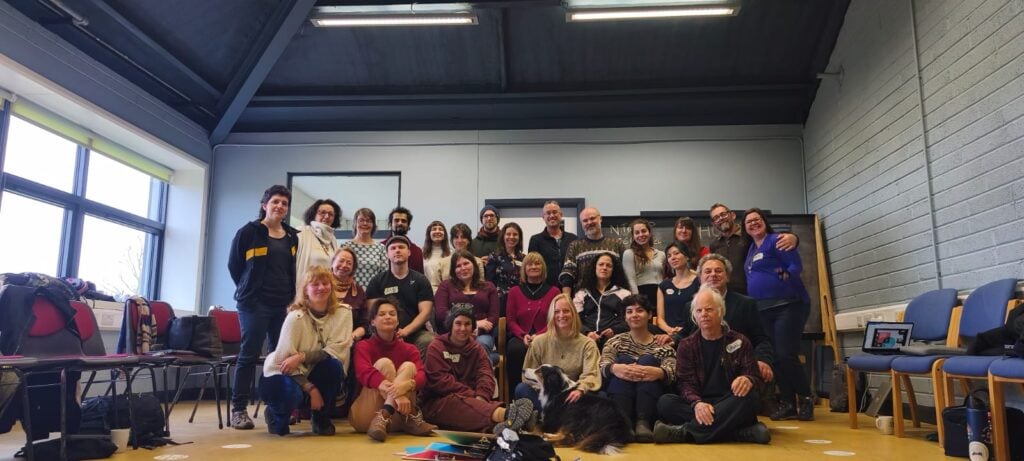
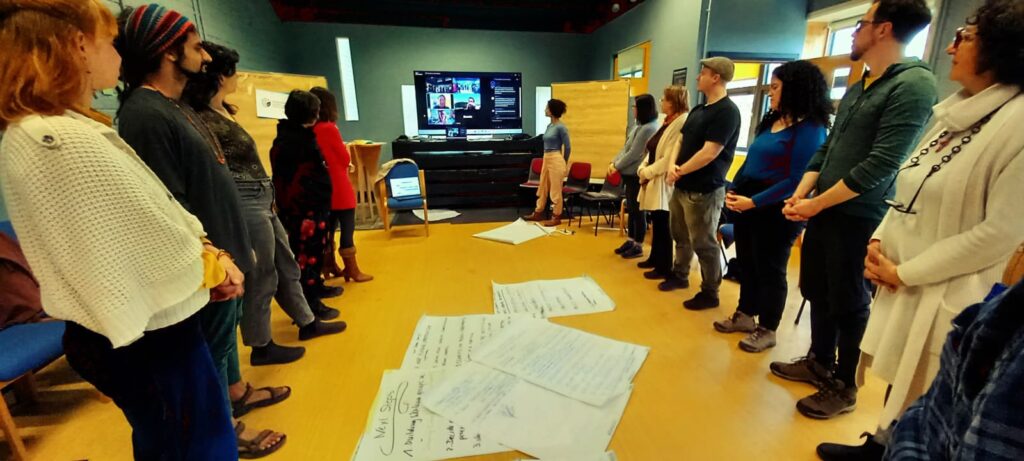
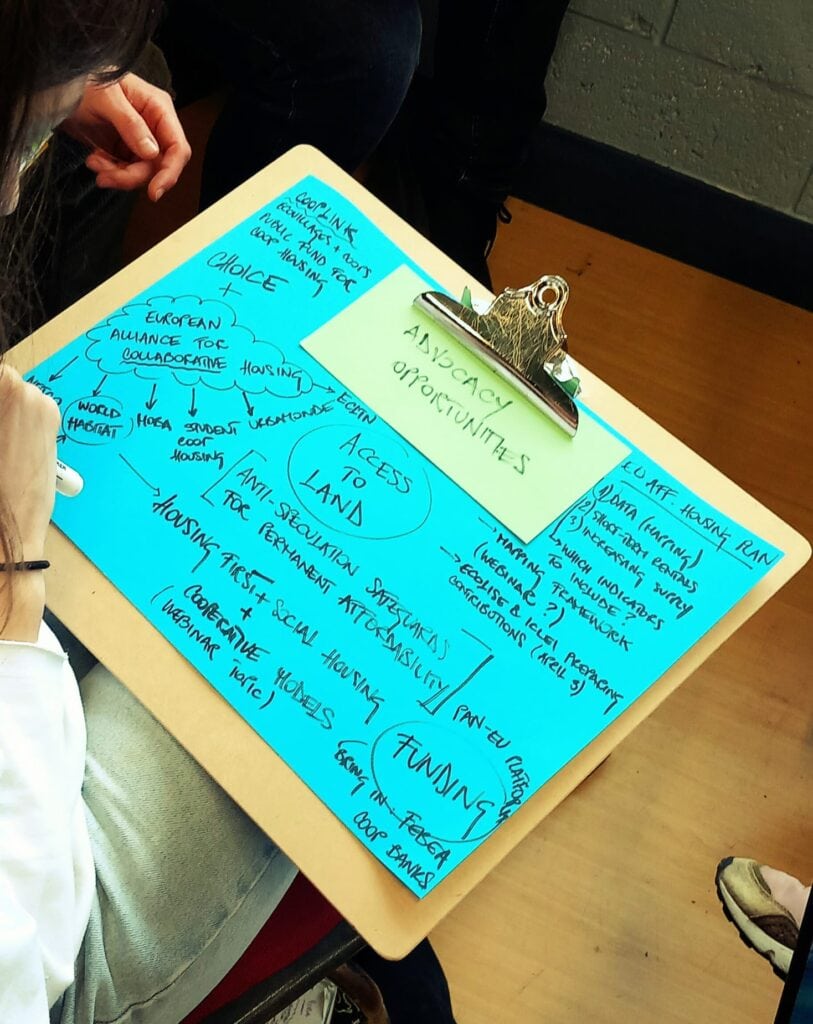
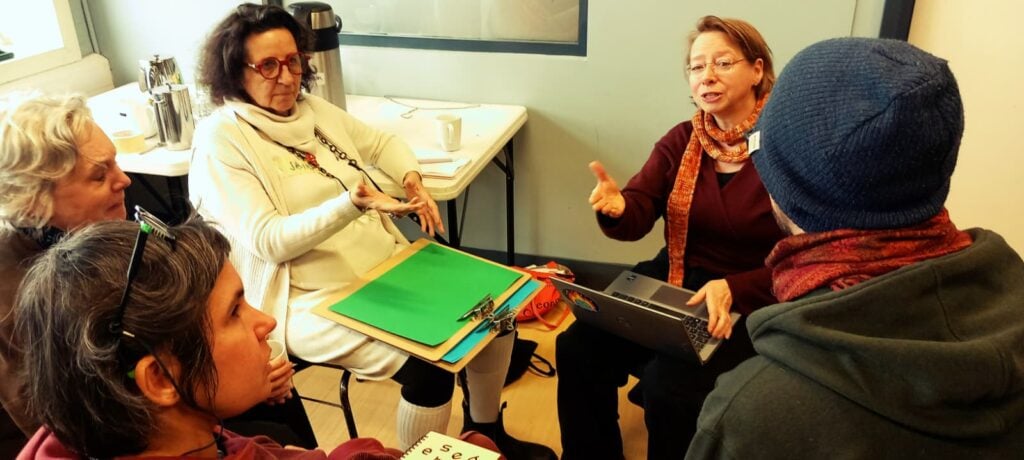
Get to know the Participants of the IERI Launch Event
Bruna Bevilacqua
is a PhD candidate in Environmental Education at the Federal University of Rio Grande, Brazil. Her research explores environmental education processes within ecovillages and their networks, with a focus on the CASA Latina network (Council of Sustainable Settlements of Latin America). Beyond academia, she has been actively involved in international networks such as the Global Ecovillage Network (GEN), contributing to collaborative processes, governance, and knowledge exchange across Latin America and beyond. She is interested in connecting with others working on community-led sustainability, transformative education, and regenerative cultures.
Abbie Caldas
has been part of GEN since 2016, contributing across communications, education, and outreach. She currently serves as Projects Lead and sits in the Education Circle and Core Circle and is supporting the initial creation of IERI, including the co-organising of this launch event. Her work includes initiating and leading education-focused projects, coordinating the annual Hildur Jackson Award, and contributing to the Resilience Project, Keystone Communities Project, and the Living Systems Alliance. She holds a Master’s in Sustainable Development and has spent time in over 30 ecovillages, including Cloughjordan, intentional communities, and permaculture projects.
Anna Devereux
is the Education Development Manager at Sustainable Projects Ireland, the NGO behind Cloughjordan Ecovillage. She has spent most of her career in international development and in the humanitarian sector, working at the intersection of design, evidence and implementation, including six years at War Child’s Research and Development department. Her educational background is in Anthropology and Politics (B.A), and Social Policy & Social Interventions (MSc). She is currently studying Service Design (PDip) in NCAD. Her catch phrase at the moment is “multi-pronged approach”.
Sergey Dmitriev
spent 12 years in IT/Telecom/Education industries as an engineer, analyst, community builder, university relations coordinator, educator, writer, and social entrepreneur. He then started to live a simple life in the countryside researching and practising approaches to ecology, self-sufficiency, and zero-waste. See his Blog https://sergeydmitriev.substack.com/ and Outreach activities on https://telegra.ph/Sergey-Dmitrievs-outreach-02-12. Since 2022, he has moved from Karelia bioregion of the Russian Federation to the Balkans (mostly to Serbia), where he prepares the ‘soil’ for Symbiocenic Environment prototypes (next generation nature reserves that involve long-term inclusion of ecovillages and universities https://sergeydmitriev.medium.com/da1696ddddc1
As a volunteer at Zeleno Doba he contributes to such collaboration within South Eastern Europe as well as serving for the regional ecovillage network. Since 2025, Sergey is a member of the International Ecovillage Research Institute’s steering group, as he initiated and led a workshop at the European Ecovillage Gathering on collaboration between ecovillages and universities https://sergeydmitriev.medium.com/93742d5348b1
Paula Duffy
is a Lecturer in Geography and Environment at the University of Aberdeen, Scotland. Her research explores place-based approaches to sustainability and environmental transition. Working primarily in rural and coastal settings, they examine how communities understand, negotiate, and shape sustainable futures — from social and demographic change to solar energy transitions and marine decommissioning. A central concern is how community engagement connects meaningfully to wider planning and governance processes, and how local publics are included in — or excluded from — landscape-level decisions about energy and environment. Methodologically, Paula draws on mixed methods approaches, combining qualitative and participatory inquiry with survey methods to understand both the depth of local experience and broader public perceptions of sustainable futures.
Ana Margarida Esteves
is the coordinator of the Sustainable Societies research group at Instituto Universitário de Lisboa (ISCTE-IUL), Centro de Estudos Internacionais, Lisboa, Portugal. She has a Ph.D. in Sociology from Brown University (Providence, RI, USA), and held Visiting Research Fellowships at Université Catholique de Louvain-la-Neuve (Belgium) and Scuola Normale Superiore (Florence, Italy). Before her current appointment, she held university teaching and research positions in the USA (Tulane University, New Orleans, LA), Brazil and Malaysia. Her research and teaching approaches the climate crisis, increasing financial, sanitary and food system instability, and widening economic and political polarization as interconnected symptoms of a “polycrisis” (Edgar Morin and Anne Brigitte Kern, 1999, Homeland Earth: A Manifesto for the New Millennium). Such “polycrisis” is rooted in the inadequacy of globalized supply chains, based on extractivism, commodification and accumulation, of town-down systems of governance, as well as of the grand narratives of linear “progress” and “development” to deal with the place-based complexities of territories, societies, and cultures. Such approach supports her research on how place-based responses to the global manifestations of such “polycrisis”, including strategies of commoning, forms of solidarity economy and transition initiatives, organize across national borders to impact incumbent economic, cultural and institutional regimes.
Judit Farkas
is a cultural anthropologist and professor in the Department of European Ethnology and Cultural Anthropology at the University of Pécs, Hungary. She instructs undergraduate, graduate, and doctoral students, and coordinates the Human Ecology MA program at the university. She also leads the Research Centre for Contemporary Challenges and serves as vice-leader of the Environmental Humanities Research Group at the University of Pécs.
Her primary research interests include rural eco-communities, ecovillages, permaculture, and the environmental humanities. Find out more at https://www.researchgate.net/profile/Judit-Farkas-2
Amandine Gameiro,
based in Portugal, has a background in environmental engineering w/ a MA in ecological restoration. In her early years, she explored pioneering territories in practical sustainability, regeneration and communities. For over a decade, she has practised, trained and taught permaculture in depth, while also exploring the social realms with the Transition movement where she has been a co-catalyst for the Portuguese network and a trainer for Transition. During this time, she also co-founded an ecovillage, in which she lived for 8 years, developing skills in a variety of subjects, and coordinated the Educational Centre for Practical Sustainability. After ecovillage experience and since 2017, she has explored ways of strengthening collaborative paths, trained in governance methods and emergent practices (eg TRP Regenerative Practices). She was a tutor for Municipalities in Transition (MIT and Local Transformation Toolkit) from 2020 to 2021. Since 2022, she has been an Action Researcher at CEI-Iscte in Lisbon, researching networked social movements (eg GEN and TM), and has collaborated on various research projects, including EuroRegen, Regen4All e-community platform and Ecoprise – her central project at the moment as a developer/coordinator/tutor of a MOOC based on permaculture, EDE and regenerative design (GEN is also a partner). https://ecoprise.eu/ . The most recent article that she collaborated on: https://www.tandfonline.com/doi/full/10.1080/13511610.2025.2599231
André de Freitas Girardi
is a PhD candidate in Political Science with a research focus on sustainability transitions, grassroots innovation movements, and translocal networks. His work examines how community-led initiatives interact with institutional frameworks—particularly through processes of projectification and engagement with public funding schemes—to diffuse sustainable practices across contexts.
He holds a Master’s degree in Innovation and Entrepreneurship, where he developed a strong foundation in social innovation, sustainability, and entrepreneurial ecosystems. His research combines qualitative methods, including participatory action research and in-depth case studies, with theoretical frameworks from sustainability transitions and grassroots innovation literature.
André has conducted empirical research on ecovillages and transnational networks such as GEN-Europe, exploring their role as incubators for regenerative development. He has also gained experience in applied research environments, contributing to projects on societal transitions and policy-oriented initiatives. His work aims to bridge academic inquiry and practical transformation by advancing understanding of how community-driven innovations can scale, diffuse, and influence broader socio-ecological systems.
Peadar Kirby
has lived in Cloughjordan Ecovillage, Ireland, for over 17 years and held the positions of director, chair of the board, and educational co-ordinator. Currently he is the research co-ordinator managing those who come to do research in the ecovillage. A database of completed research is on Cloughjordan’s website at: www.thevillage.ie/about-us/research-publications/. Peadar has been a journalist and an academic and retired as Professor of International Politics and Public Policy at the University of Limerick in 2012. Since then he has published a number of books and articles, among them ‘The Political Economy of the Low-Carbon Transition: Pathways Beyond Techno-Optimism’ (written with Tadhg O’Mahony), Palgrave Macmillan, 2018 and ‘Karl Polanyi and the Contemporary Political Crisis: Transforming Market society in the Era of Climate Change’ (with a forward by the then President of Ireland, Michael D. Higgins), Bloomsbury, 2021. A chapter he wrote entitled ‘Cloughjordan Ecovillage: Community-Led Transitioning to a Low-Carbon Future’ was published in D. Robbins et al. (eds): ‘Ireland and the Climate Crisis’, Palgrave Macmillan, 2020, pp. 287-303. He contributed a chapter entitled ‘Karl Polanyi in the transition to a low-carbon and biodiverse society’ to ‘The Routledge Handbook on Karl Polanyi’, Routledge, 2024, pp. 361-72. His first novel (in Irish) entitled ‘Misean go Peñiscola’ won a prize in the Oireachtas literary competition in 2024 and is currently being prepared for publication.
Iris Kunze,
PhD, has been a leading academic researcher and educator in the fields of intentional communities, ecovillages, transformative social innovation and socially and ecologically sustainable ways of living since 2002. She has taught and researched mainly at universities in Germany and Austria, in international projects (e.g. EU Project TRANSIT), combining academic inquiry with practical experience. Since 1997, she has lived in various communities—including Sieben Linden in Germany and others in Austria. Iris has co-initiated the GEN research group in 2013 and is a board member in ICSA. Iris is currently affiliated to the university of Vechta—and works internationally as a project manager, author, coach and facilitator. Find Iris research results and publications on communal living, Videos, her Youtube channel on community research and more on: http://community-research.eu/
Angel Matilla
has lived at Arterra Bizimodu ecovillage in Spain since 2017 while serving as IT Manager for GEN Europe, where he promotes ethical digital culture and IT sovereignty through self-hosted free and open source software (FOSS) solutions. He helps the network meet its IT needs while upholding values of digital autonomy and regeneration. Focusing on developing solutions to the polycrisis, Angel explores regenerative alternatives through communal living, seeking resilient pathways toward a more equitable future.
Taisa Mattos
is a Brazilian educator and ecovillage researcher. She served as Education, Research and Consultancy Coordinator at the Global Ecovillage Network (GEN International) from 2019 to 2024. She was the Project Manager for the ReGEN4All project – Regenerative Communities for All (GEN Europe) and currently works with Gaia Education as Gaia Schools Coordinator. Taisa has coordinated and taught Ecovillage Design Education (EDE) programmes since 2009, contributing to over 30 programmes across Latin America, Europe, North America, and Africa. She is a Board Member of the International Communal Studies Association (ICSA), and the author of `Ecovillages: Building a Regenerative Culture`. She holds a Master’s degree in Communities and Social Ecology and a Bachelor’s degree in Social Communication from the Federal University of Rio de Janeiro (UFRJ). Since 2004, she has been actively engaged in the ecovillage movement, contributing to transition initiatives in both urban and rural contexts. She is a co-founder of Terra Una Ecovillage (Brazil) and has supported the development of small urban communities in Rio de Janeiro.
Annie Messer
is a young and new researcher on ecovillages! She is originally from Germany, currently living in the Netherlands, following a masters programme in Sustainable Business and Innovation at Utrecht University. Along with her thesis supervisor Flor Avelino, she is now writing a master thesis on gendered power relations in ecovillages. She is very excited to get to know researchers to learn more and more about the topic, gather insights about her topic and make new connections. She is passionate about living in different countries, learning new languages, making more experiences in nature and is trying her best to combine this with a balanced and sustainable lifestyle! Find her on Linkedin: https://www.linkedin.com/in/ann-kathrin-messer
Camila Nielsen-Englyst
is a founding member of Hillingelillie Ecovillage in Denmark, which is now in it’s 11th year. She is known as a “powerhouse” in the Danish Ecovillage Network and is a long-time contributor to GEN’s work. With a background in Educational Studies from Roskilde University, she is a grassroots activist rooted in the ecovillage and cohousing movements. For the past decade, herwork has focused on connecting research, development, and practice. She has co-led several EDEs and was a lead contributor to the CLIPS programme.
Catarina Rosa
is an Portugal-born ecologist, activist, communicator and facilitator, with a background in biology and dance. She co-founded the environmental association Dunas Livres and collaborates with rural regenerative initiatives and networks in Southern Europe. She created the Ecovillage Tours in Portugal and Greece, and co-weaves in the Ecoversities Alliance. She is currently in the first year of a PhD in Sustainability Transitions in ISCTE-IUL with a scholarship for her praticipatory-action-research project on transition of rural food systems. https://bio.site/cat_rosa
Sonja Rossman
has a multidisciplinary background spanning global and public health, climate change, and sport science. Her work sits at the intersection of human and planetary well-being. She currently works as a Project Officer at the Climate Action Accelerator in Geneva, Switzerland where she supports healthcare systems in becoming more climate-resilient while reducing their environmental footprint. Her recent work has focused on applying Climate Vulnerability and Capacity Assessments to co-develop locally adapted strategies and climate action plans. Previously, she conducted research on climate and health at UMIT TIROL University in Austria and contributed as a consultant to a One Health initiative at GIZ in Bonn, addressing zoonotic disease risks linked to wildlife trade. She holds a Bachelor’s degree in Sport Science and a Master’s in International Health and Social Management. Her master’s thesis explored “Health Co-Benefits of Climate Mitigation Practices in Ecovillages,” reflecting my long-standing interest in community-led, regenerative approaches to living. Over the past years, she has visited several ecovillages across different countries, deepening her curiosity about how humans can live in balance with nature and other species. She is particularly interested in how ecovillages can serve as living laboratories for sustainable, health-promoting, and resilient ways of life.
Rebeca Roysen
is an ecovillage researcher and member of the ecovillage of Instituto Biorregional do Cerrado, in Brazil. She was also a key team member of the earlier GEN Research Circle and has supported much of the background work of GEN’s Research focus. She has a PhD in Sustainable Development from Universidade de Brasília and an MSc in Social Psychology from Universidade de São Paulo. She is particularly interested in the role of ecovillages and other grassroots innovations in sustainability transitions. She is also interested in decolonial theories and transdisciplinary methodologies. She is a member of the thematic group Transitions in the Global South within the Sustainability Transitions Research Network; of the Global Ecovillage Network and the Conselho de Assentamentos Sustentáveis Brasileiro (CASA Brasil) research groups. She worked as a researcher and lecturer at the University of Basel, where she coordinated the research project “Ecovillages as Incubators for Sustainability Transitions” (EVIST). Find more of her publications at https://www.researchgate.net/profile/Rebeca-Roysen-2
Sabina Santovetti,
is 67, Italian, lives in Rome, and is the founder of the Feminine Wisdom MatriCulture School in Narni, Umbria, that offers courses for women’s empowerment and healing through MatriCultural values. She is a mother of a 35 years old son, architect, designer, artist, spiritual eco-feminist, environmental activist, Matriarchal Mystery Festivals Priestess and university professor with 5 M.A. in all the above disciplines and a Doctorat de Troisieme Cycle from the Sorbonne in Paris in Histoire de l’Art et Archéologie. Her life has thoroughly changed in 2018 when she started reading the IPCC reports in depths. From being a professional architect, this deep crisis brought her to be an activist in Extiction Rebellion and a volunteer in all her activities. She became president of the Association no-profit BestUp APS and through the practice in courses of Maternal Gift Economy, The Work That Reconnects, Gaia Education, Transition Town, bio-architecture and Matriarchal Values, her classes are a cocktail of transformative non-formal education oriented in changing the patriarchal paradigm. She is also lecturer in Modern Matriarchal Studies organizing SHE-EDEs with focus on women, decolonizing patriarchal values and ReMatriating the Great Turning Model. She believes in education as a healing tool of change in society.
Rehema White
is a Professor and sustainability scholar at the University of St Andrews, Scotland. She holds a PhD from University of Adelaide, Australia; MSc from the University of Manitoba, Canada; and BSc (Agric) from the University of Aberdeen, Scotland. She has lived and worked in the UK, other parts of Europe, South Africa, Australia, Canada and Mexico so she has experienced different approaches to sustainability, nature and culture. Her research focuses on knowledge co-production (including learning for sustainability, transdisciplinarity, nature connectedness); sustainability governance (including regenerative communities, Indigenous ontologies); and practice in contested areas (including development and conflicts). She explores integrative analysis and novel links across these different fields, drawing on her experiences across the natural and social sciences. Much of her recent work involves gathering together academics, practitioners, policy makers and communities in innovative ways to co-design collaborative solutions to specific challenges. Recent leadership includes Chair of Scotland’s UNU Regional Centre of Expertise in Education for Sustainable Development, coordinator of the Sustainable Futures Research Group, facilitator of Sustainability in Curriculum Committee and Steering Group member for SDG Network Scotland. She remains grounded through community initiatives and nature walks.
Katila Vilar
is an Angolan‑Portuguese designer and urban planner with a PhD in Architecture and Urban Planning, specialised in urban sociology and the social sustainability of vulnerable communities, with experience mainly in Angola and Portugal, and additional work in Chile and Colombia. Earlier in her path she developed a master’s thesis on “Ecovillage in the Lands of Ngola: A Model of Sustainable Architecture for Developing Countries”, proposing low‑cost rural architectures as a way to support community livelihoods and mitigate uncontrolled urbanisation in the Global South. Her research has since evolved from socially oriented urban development and participatory planning toward digital interfaces and UX/UI, where she explores how citizen‑led platforms and data‑informed design can support socially sustainable and regenerative urban transitions She is particularly interested in systems thinking and innovation, civic participation, social housing, and South‑Global development perspectives, in order to foster socially and environmentally innovative responses to unregulated urban growth, socio‑spatial inequality, and decolonial urban and rural futures.




Leave a Reply